Ballymena Riot Arrests: One in Seven Later Reported for Domestic Abuse
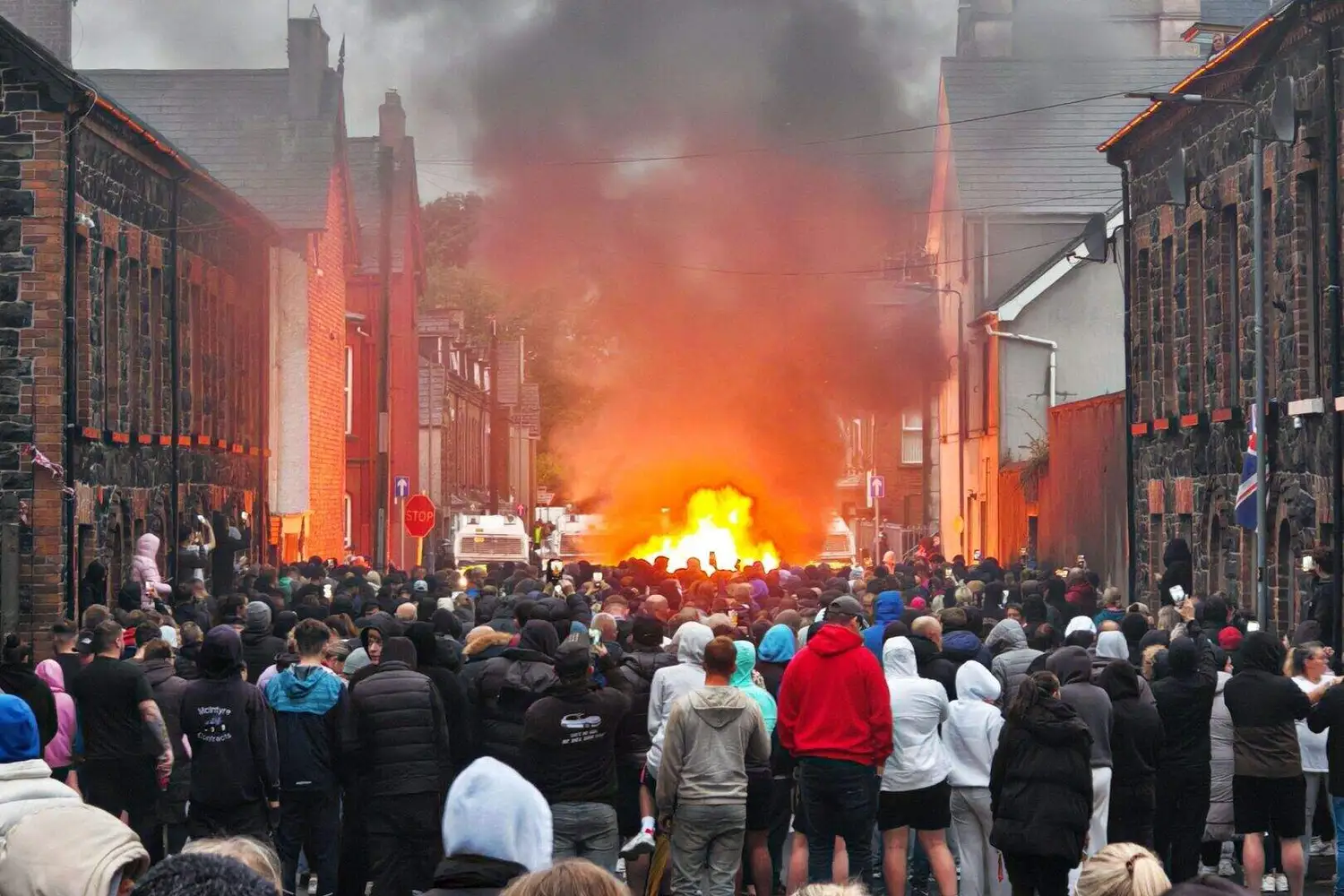
Fourteen of the 100 people arrested during the racial violence in Ballymena and surrounding towns in June 2025 were reported to police for domestic abuse in the 13 months that followed, according to PSNI figures released under freedom of information laws.
A previous disclosure had already established that a third of those arrested had a domestic abuse history before the disorder. The riots erupted after protests over an alleged sexual assault of a teenage girl by two 14-year-old boys who used a Romanian interpreter in court. The Public Prosecution Service later dropped charges, citing significant evidential developments.
Several hundred people took part in multiple days of violence that spread to neighbouring towns. Ethnic minority families' homes were set alight and 107 police officers were injured. A third of those arrested were under 18, though police data indicates minors account for less than four per cent of domestic abuse cases each year.
One adult convicted was Martin Alan Kerr, 41, who used a metal pole to smash a police car window. He was sentenced to six months in prison in November 2025 after a judge refused bail, describing it as unrealistic for him to live in the town where he was accused of significant racial rioting. Released by March 2026, Kerr was later convicted of one count of threats to damage property and one count of attempted criminal damage and is now subject to a two-year restraining order.
Megan McClure of the Women's Resource and Development Agency said the attempt to frame racist violence as a response to concerns about violence against women and girls is harmful and dishonest. She stated that far-right actors exploit public concern to advance divisive agendas, and that the Ballymena events showed how they hijack narratives about male violence to promote hostility towards migrants.
Zoë McKee, the PSNI's head of public protection, told the Northern Ireland Affairs Committee that during the disorder women and children were disproportionately forced from their homes and suffered crimes. She also detailed how specialist officers were diverted from public protection duties to support frontline policing. A total of 67 officers of sergeant and constable rank were redeployed over 12 days, logging 2,778 hours, the equivalent of 347 eight-hour shifts. The PSNI's public protection branch handles serious cases including child abuse, domestic abuse, sexual violence and the monitoring of sex offenders.
The force recorded 31,558 domestic abuse incidents in the 2025/26 financial year, handling a domestic abuse call every 17 minutes on average. Police data for 2024/25 shows that 96 per cent of offenders were white and 90 per cent were UK or Irish nationals.
Further racial violence erupted in Belfast in June 2026, the third consecutive summer of such disorder in Northern Ireland. More than a quarter of those arrested in the Belfast disorder were under 18, and the Children's Commissioner highlighted cases of children with paramilitary drug debts being transported to take part in riots. Despite similar concerns about child coercion during the Ballymena disorder, the PSNI did not make a single referral to the government mechanism for identifying victims of child criminal exploitation.