Belfast Girls Develop Jenga-Style Game to Address Violence Against Women and Girls
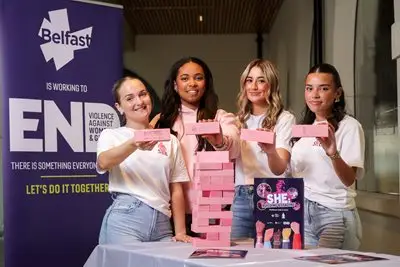
Female members of RCITY Belfast at the Spectrum Centre have created SHE: Building and Leading, a Jenga-style puzzle game. Belfast City Council funded the project through its Local Change Fund. The game forms part of 50 community initiatives receiving nearly £600,000 to combat violence against women and girls via culture, arts, sport and participation. These efforts align with the Northern Ireland Executive's seven-year strategic framework.
Youth and community groups can use the free game to discuss consent, health, wellbeing and feminism. Participants answer questions or read information on each block to understand causes of violence and actions to ensure safety for women and girls.
Lord Mayor of Belfast, Councillor Tracy Kelly, praised the SHE Ambassadors, the young female leaders behind the game. She noted their use of personal experiences to produce a resource that aids conversations among peers.
The SHE Ambassadors also joined the SHE SAFE programme for girls aged 13 to 16. It covers online safety, self-defence, emotional wellbeing and career security. Game topics match programme content, equipping participants to lead peer discussions.
Tori Haveron, Youth Development Co-ordinator at RCITY Youth, stated that resources like this game support vital talks on equality, safety, identity, confidence, justice and wellbeing.
At the launch, Dr Siobhán McAlister from Queen's University Belfast Centre for Children's Rights described research showing frequent gender-based violence, including harassment in public and online spaces, often viewed as normal by young women. Dr Gail Neill from Ulster University Centre for Youth Research and Dialogue added that their work with RCITY produced guidance for youth leaders using the game.
Since March 2024, hundreds attended Belfast events such as training for groups, area initiatives with women's organisations and sessions on men, boys, bystander intervention and outdoor space design. The council manages the Executive Office's Regional Change Fund, aiding eight organisations with £1.2 million in programming.