Exhibition linking Wounded Knee and Gaza opens at Féile an Phobail
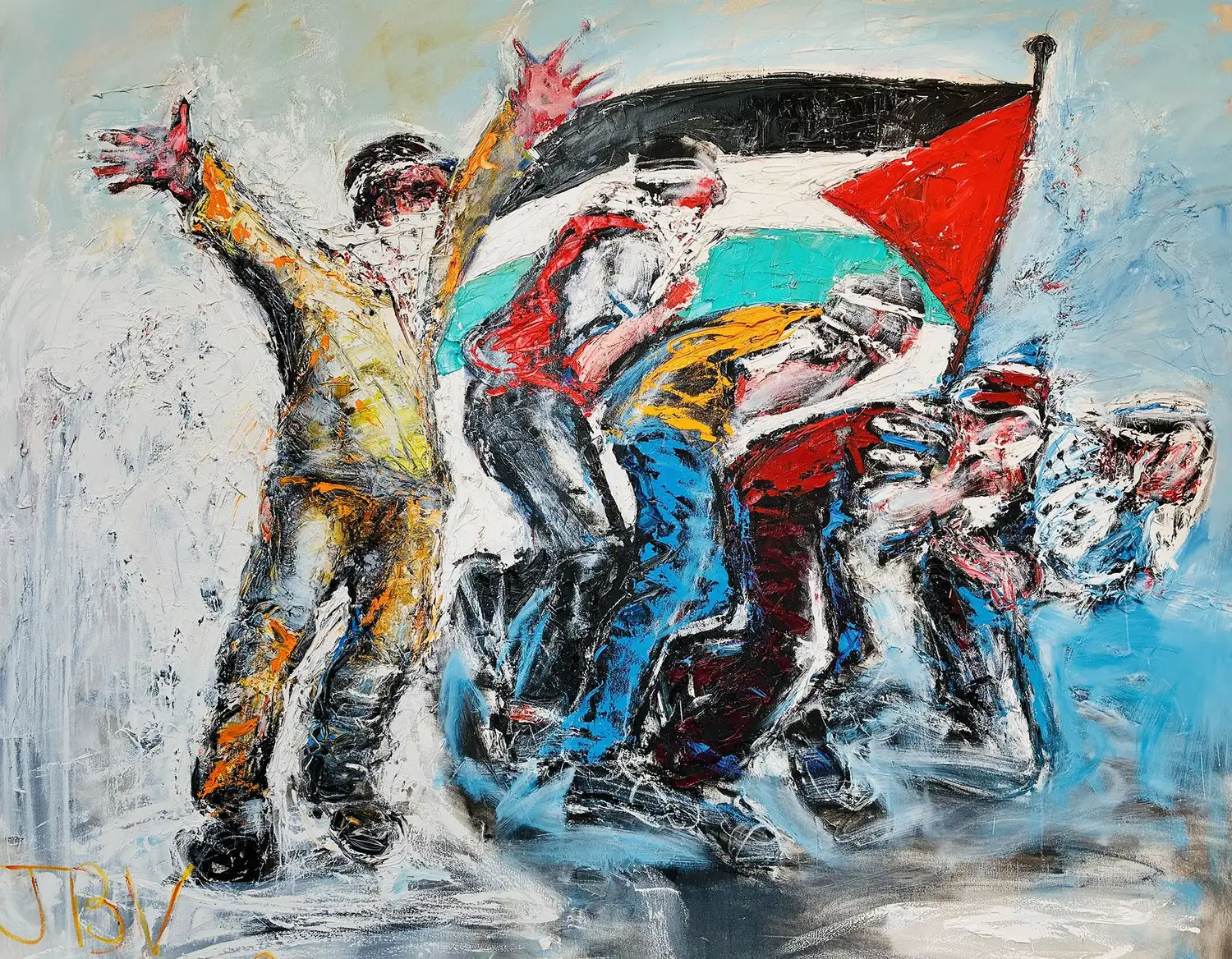
An exhibition by Armagh artist John B. Vallely exploring connections between the 1890 Wounded Knee massacre and the conflict in Gaza is on view as part of Féile an Phobail.
The exhibition, titled 'From Wounded Knee to Gaza', is hosted at St Mary's University College in west Belfast from Thursday 30 July to Friday 7 August.
Vallely, aged 85, presents 19 paintings that draw parallels between the treatment of Native Americans by white colonisers and Israeli actions in Gaza. The series includes works such as 'A Little Butterfly Named Hind Rajab', referencing a five-year-old Palestinian girl who died after an attack on her family's car, and 'The Butterflies of Gaza', using the butterfly motif Hind Rajab mentioned during a call to rescuers. Another subject is Zintkála Nuni, the infant found alive strapped to her dead mother four days after the Wounded Knee massacre.
A film of the same name, produced by Armagh filmmaker Antaine Ó Donnaile, will be screened at St Mary's on Thursday 6 August at 5pm, followed by a panel discussion. The panel, chaired by college principal Peter Finn, features Vallely, Ó Donnaile, and Iranian academic Azadeh Sobout, a post-doctoral research fellow at Queen's University Belfast whose work examines culture, identity and political expression.
Vallely, who was imprisoned for taking part in civil rights protests in the late 1960s and is a founding member of the Armagh Palestinian group, said the concept for the exhibition struck him suddenly when he considered the two genocides together. He holds that creative people have a duty to speak out and should not be constrained by convention.
Ó Donnaile, who spent days filming in Vallely's studio, said it was a privilege to document the work of an artist he described as one of Ireland's most important painters. He remarked on Vallely's consistent support for the underdog and suggested that influencing even a few individuals can shift public thinking, drawing a parallel with the Dunnes Stores workers' anti-apartheid strike.
Vallely also expressed the view that the Irish people, because of a long history of oppression, naturally identify with oppressed populations worldwide rather than with the powerful.