QUB Shares Low-Cost 3D-Printed Battery Design to Boost Global Energy Storage Research
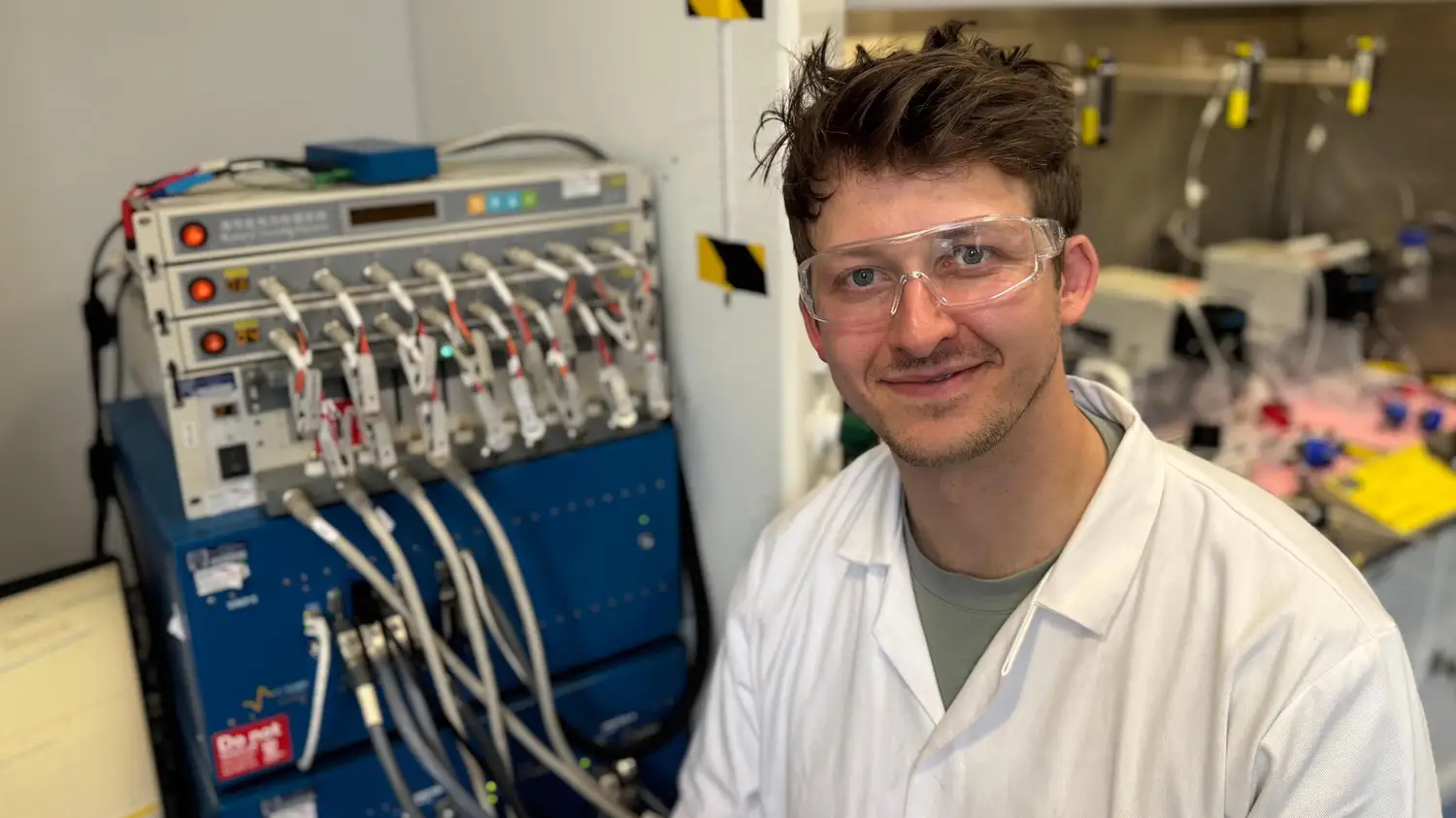
Researchers at Queen’s University Belfast have designed a 3D-printed flow battery cell and made the blueprints freely available to scientists worldwide. The initiative aims to standardise testing and speed up the development of large-scale renewable energy storage.
Post-doctoral researcher Hugh O’Connor developed the device after discovering that a commercial flow battery for his PhD work would cost between £2,000 and £3,000. He began producing his own cells using a 3D printer, refining the design through trial and error. The final version, which uses iron instead of the more expensive and geopolitically constrained vanadium, costs around £74 to assemble from roughly ten components.
The team has distributed the cells along with a step-by-step instruction manual, drawing comparisons to an Ikea assembly guide. O’Connor said the decision to share the design without charge, rather than selling it, was taken to expand the international research network and support the technology.
Flow batteries store energy in liquid electrolytes, making them suitable for smoothing out the intermittent supply from wind and solar power. The QUB cell allows laboratories around the world to replicate experiments using identical hardware, producing more reliable and comparable results.
Josh Bailey, an Illuminate Fellow at the university’s School of Chemistry and Chemical Engineering, is leading multi-institution studies that use the printed cells. He stated that consistent standards can accelerate deployment of flow batteries, helping to meet the target of net zero emissions by 2050. Wider adoption of energy storage would also reduce the number of occasions when wind turbines need to be shut down to protect the grid during periods of low demand.
Global renewable generation exceeded coal for the first time last year, and the United Kingdom recorded its highest ever share of electricity from renewable sources. Researchers at QUB are now scaling up the technology by testing larger stacks of cells, moving from single-cell chemistry experiments toward industrial application.