Rare Bird Egg Collection from Castle Espie Heads to Natural History Museum
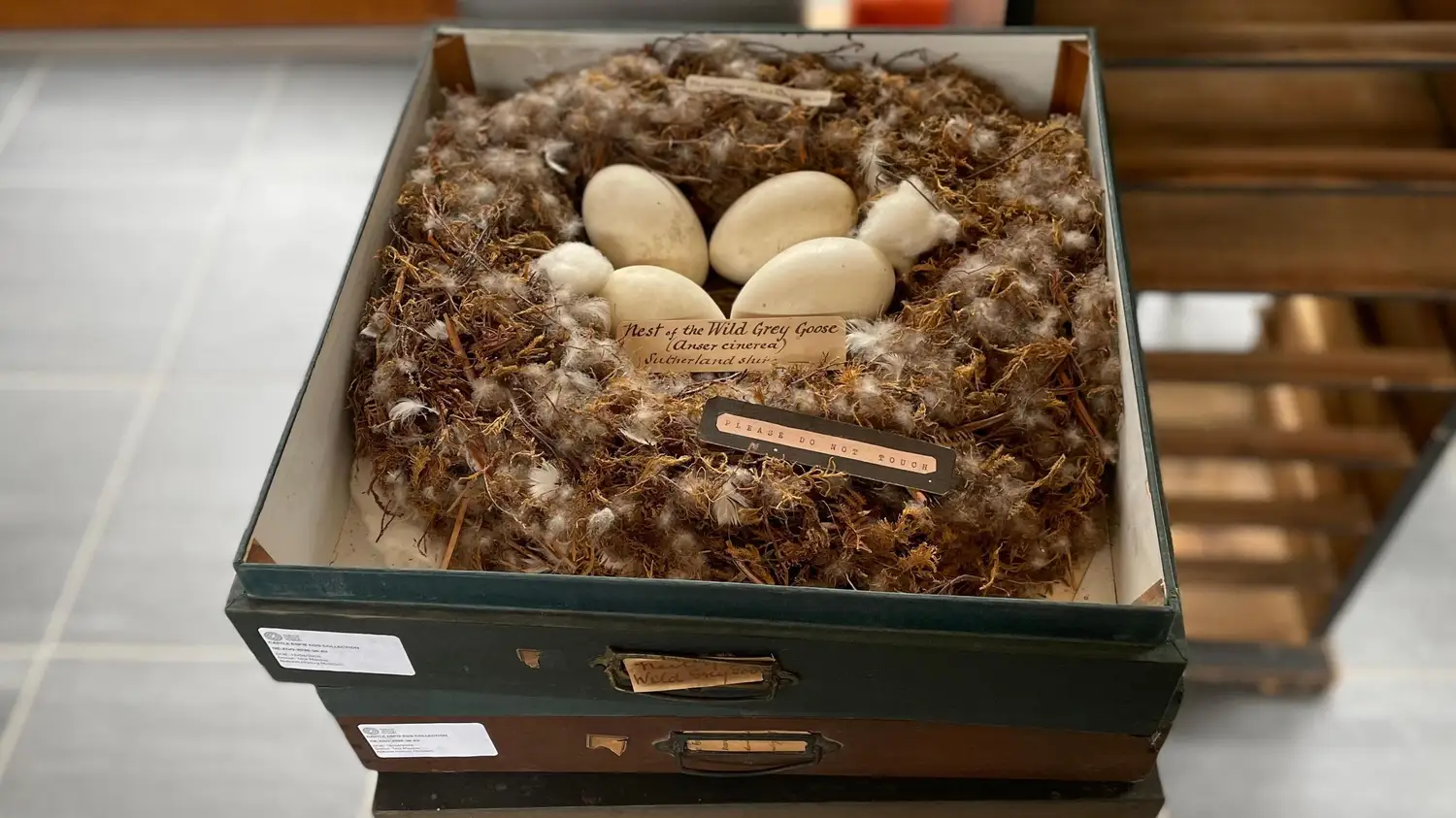
A collection of thousands of bird eggs and nests, assembled by 19th-century naturalist Robert Henry Read, will move from storage in Northern Ireland to the Natural History Museum's bird collections at Tring in Hertfordshire.
Paddy Mackie acquired the collection in 1977 when he purchased Castle Espie, a site in County Down later transformed into a wetland centre by the Wildfowl and Wetlands Trust. The eggs and nests remained with the Mackie family after that change and stayed in an attic for 50 years.
The collection fills 36 cabinets and boxes. Handwritten notebooks record Read's travels in Scotland and Europe. Specimens include five snow goose eggs from June 1909 and an Eurasian eagle-owl egg from Romania dated April 1891.
Tara Mackie, daughter of Paddy Mackie, stated that her father took responsibility for the collection upon buying the property because the previous owner could not relocate it. She noted that experts from the Natural History Museum assessed it as one of the finest they had examined in a century.
Douglas Russell, senior curator at the Natural History Museum who specializes in egg and nest collections, visited in 2024. He described the items as a valuable record of past bird populations due to Read's detailed notes and practice of collecting eggs with their nests.
Russell said the archive offers data on historical environments and will support studies on biodiversity shifts and climate effects. He called it a preserved snapshot from the 1800s for scientific analysis.
Egg collecting became illegal in Northern Ireland in 1985 after earlier use for research and recreation.