Assembly Pays Tribute to Femicide Victims as MLAs Demand Urgent Action on Violence Against Women
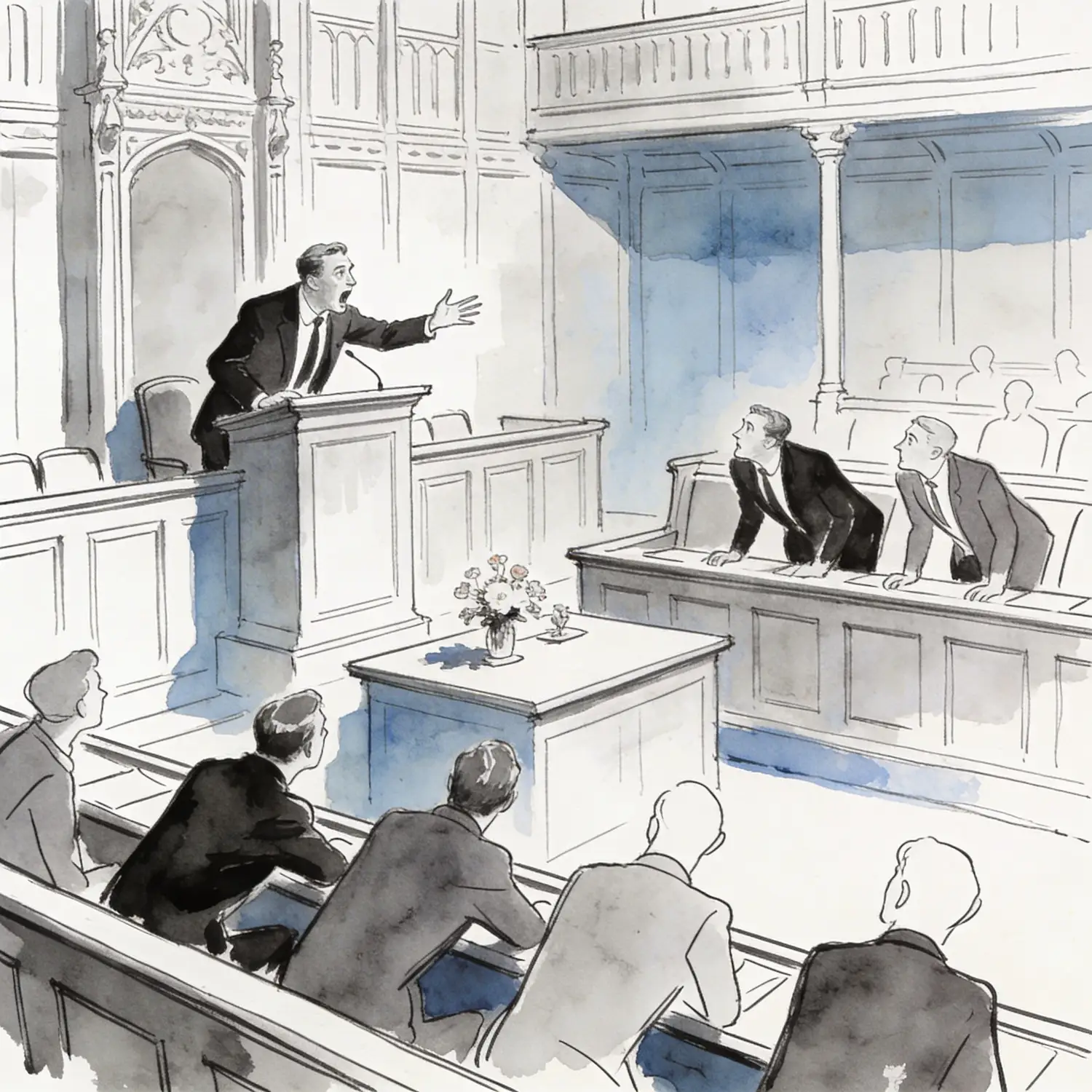
The Northern Ireland Assembly opened with a powerful and emotionally charged debate on violence against women and girls following the murders of Amy Doherty in Derry and Ellie Flanagan in Enniskillen, with Members across all parties demanding urgent government action as the death toll of women killed in Northern Ireland since 2020 reached 30. The matter of the day was brought by Claire Sugden MLA, who returned to the chamber after a period of ill health and received a warm welcome from the Speaker. Sugden told the Assembly: "We are still not prepared to confront clearly enough what is at the heart of this: misogyny, male aggression and the normalisation of both," and argued that the current response remained weighted towards reacting after violence had occurred rather than preventing it.
Members across the chamber named Amy Doherty, a young mother of two and care worker from Derry, and Ellie Flanagan, aged 23, from Enniskillen, calling for their lives to be honoured through concrete political action. Mark Durkan MLA said he had visited Amy Doherty's family the night before the debate and "struggled to find words of comfort." He told the Assembly: "Women are being silenced, broken down and murdered in their homes, because the system too often does not catch them when they are falling and support does not come until it is too late." Sinead McLaughlin Ferguson MLA declared that "the North has the highest rate of femicide in Europe" and called on all members of society to challenge misogynistic behaviour.
Several Members drew attention to what they described as chronic underfunding of frontline organisations. Timothy Gaston MLA highlighted that there is "no core funding for the groups that provide services daily for those who suffer domestic violence" and criticised the absence of PSNI domestic violence specialists as a matter of course. Diane Dodds Armstrong MLA called directly on the Justice Minister and the First and deputy First Ministers to "act decisively," warning: "We are living in an emergency." Gerry Carroll MLA criticised the Executive for "defunding the very services that help women to survive, such as Nexus and Women's Aid," and described the North as "the only part of these islands without consistent public funding for groups such as Women's Aid."
Phillip Brett MLA argued that the justice system was both too slow and too soft, saying: "It is no coincidence that we have the slowest and softest justice system and the highest rate of femicide in the United Kingdom." He called for reforms including preventing convicted domestic abusers from changing their name and greater use of police powers to publish information about perpetrators. Paula Bradshaw MLA noted that Justice Minister Naomi Long was absent due to a family funeral and confirmed that the Alliance Party viewed violence against women and girls as a systemic issue requiring a whole-society response.
The Budget Act (Northern Ireland) 2026 was confirmed to have received Royal Assent on 20 March 2026, with the Speaker announcing this at the start of proceedings. The Assembly also passed, without division, the Renewables Obligation (Amendment) Order (Northern Ireland) 2026, which switches the inflation index used in the Northern Ireland renewables obligation scheme from the retail price index to the consumer price index, bringing Northern Ireland into line with equivalent schemes in England, Wales and Scotland.
During private members' business, Declan McAleer MLA introduced the Second Stage of the Areas with Natural Constraints (Payments) Bill, which would place a statutory duty on the Department of Agriculture, Environment and Rural Affairs to establish a payment scheme for farmers in upland and disadvantaged areas. McAleer told the Assembly that beef cattle numbers in Northern Ireland had fallen by 21% over the past decade to their lowest level in 55 years, and that the loss of ANC payments since 2018 was a contributing factor. He declared a personal interest as a small farmer. The Bill was supported in principle by the Ulster Unionist Party, though with significant caveats around funding and environmental conditionality, while the DUP and the Alliance Party both announced opposition at Second Stage.
Michelle McIlveen MLA, speaking for the DUP, argued that the Bill contained no credible funding plan and warned it could result in money being shifted away from lowland farmers. She said: "Reintroducing ANC support without additional funding would redistribute already limited support in the sector, create inequality between farm types and undermine confidence in the sustainable agriculture programme." John Blair MLA for the Alliance Party said his party could not support the Bill due to the absence of environmental safeguards and the risk of diverting funds from programmes such as Lough Neagh restoration. The debate was suspended before its conclusion to allow Question Time to proceed, with further contributions expected after 3.30pm.
During Education Question Time, Minister Paul Givan confirmed that no new major capital school building projects would be announced in the near future due to budget constraints, and that several schools already at pre-construction stage could not proceed to construction without additional capital funding. He faced repeated questions from Members about deteriorating school buildings, including Rosetta Primary School in South Belfast, where a school hall has been unusable for an extended period. The Minister acknowledged the pressures but said the Education Authority was working through the necessary processes.
Givan also updated the Assembly on progress towards a dedicated managing authority for controlled schools, confirming that Executive agreement had been secured in late February to begin drafting legislation for a new organisation. He cited a consultation in which 91% of respondents agreed that support for controlled schools must improve and 84% backed a new dedicated body. The Minister read into the record a statement of support for the proposal from the Council for Catholic Maintained Schools, saying it represented a "compelling and persuasive endorsement." He faced questions from Alliance MLA Andrew Mathison about whether the new body was necessary given the existing controlled sector unit in the Education Authority, which the Minister rejected, saying the evidence for change was "overwhelming."
In Economy Question Time, Minister Conor Murphy confirmed that a consultation on a new aviation strategy would be published within days. She updated the Assembly on the ongoing energy cost crisis, confirming that a scheme to deliver a £30 discount on household electricity bills, modelled on a comparable British scheme, was due to go live on 1 July, subject to Executive agreement. She acknowledged that the £17 million support package announced by the British Government was "clearly inadequate" and said she would continue to press London for additional funding. Matthew O'Toole MLA challenged the Minister, saying that communities felt the Executive were "sitting on their hands," while the Minister defended her record of consistent engagement with British ministers. The Minister also confirmed that the Good Jobs employment rights Bill was near completion and would be introduced to the Assembly before the summer recess.
Members' statements covered a wide range of topics including the murder of Constable Harry Beckett and Constable Gary Meyer in 1990 and a BBC Spotlight programme that had falsely alleged RUC Special Branch involvement in their deaths, which the Police Ombudsman had taken ten years to disprove. Deputy First Minister Emma Little-Pengelly used her statement to describe her St Patrick's week visit to Washington DC, where she said she engaged with over 22 meetings and events including senior figures in the US administration. Her statement drew a sharp response from Matthew O'Toole MLA, who criticised the DUP and others for engaging with the Trump administration while oil prices were rising and hitting Northern Ireland households.