Appeal overturns council refusal of Ballymena HMO linked to football club players
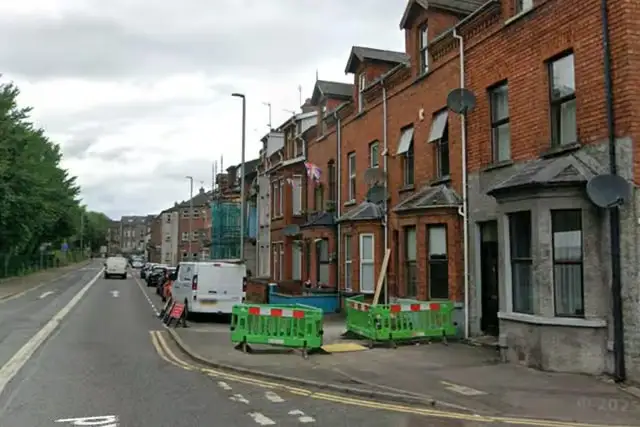
A Planning Appeals Commissioner has overturned a refusal by Mid and East Antrim Borough Council for a house in multiple occupation (HMO) at 49 Waveney Road in Ballymena.
The decision allows the change of use of a three-storey, red-brick terraced property from a four-bedroom dwelling to a five-bedroom, five-person HMO. The council's Planning Committee had refused permission in January.
The application drew 40 objections citing increased density, loss of character, parking provision and HMO licensing. Two letters of support came from Ballymena United Football Club, which indicated the property would be used by some players during the playing season.
Commissioner Gareth McCallion examined whether the proposal would intensify parking requirements, inconvenience road users or impact local environmental quality. He noted that planning policy supports conversions to flats or apartments if they provide a high-quality residential environment, safeguard amenity, respect character and ensure satisfactory access and parking.
The council had argued that the absence of off-street parking would over-rely on on-street parking in an area already experiencing constraints, as identified by DfI Roads. However, the commissioner found that parking standards are not absolute and can be flexible where alternatives exist.
McCallion said the council had not demonstrated that the proposal would cause unacceptable congestion, displacement parking, servicing difficulties or road safety concerns. He noted there was no objection from DfI Roads and that survey evidence submitted at appeal provided location-specific parking capacity.
He also rejected objections that the loss of a four-bedroom dwelling would reduce family housing supply, stating that no persuasive evidence showed material effect on the area or Ballymena generally.
On infrastructure concerns, the commissioner said NI Water did not object and the dwelling could accommodate the proposed occupancy. He gave little weight to worries about anti-social behaviour or noise, saying planning decisions must be based on land-use consequences rather than assumptions about future residents.
Addressing precedent concerns, McCallion said each application is determined on its own merits.
He concluded that no substantive evidence showed harm to residential amenity, local character, parking, road safety or infrastructure, and that objections were speculative and unsupported by objective evidence.