Stormont in crisis as Drumcree parade blocked and First Minister joins unlawful protest
Northern Ireland's devolved institutions are under severe strain after a weekend of protests and a police blockade prevented a lawful Orange Order parade from proceeding down the Garvaghy Road in Portadown. The Parades Commission had granted permission for a restricted parade, and the decision was upheld by the High Court, but nationalist residents blocked the route, leading to a stand-off that continued into Monday. First Minister Michelle O'Neill joined the protest, which police described as unlawful and unnotified.
Portadown District LOL No 1 had been granted permission for 35 members to march silently along the Garvaghy Road, the first time in 28 years. However, hundreds of protesters occupied the road, preventing the parade. Police said they did not forcibly clear the protesters because an assessment indicated that removing around 1,000 people, including women and children, would have required disproportionate force and risked serious injuries and disorder.
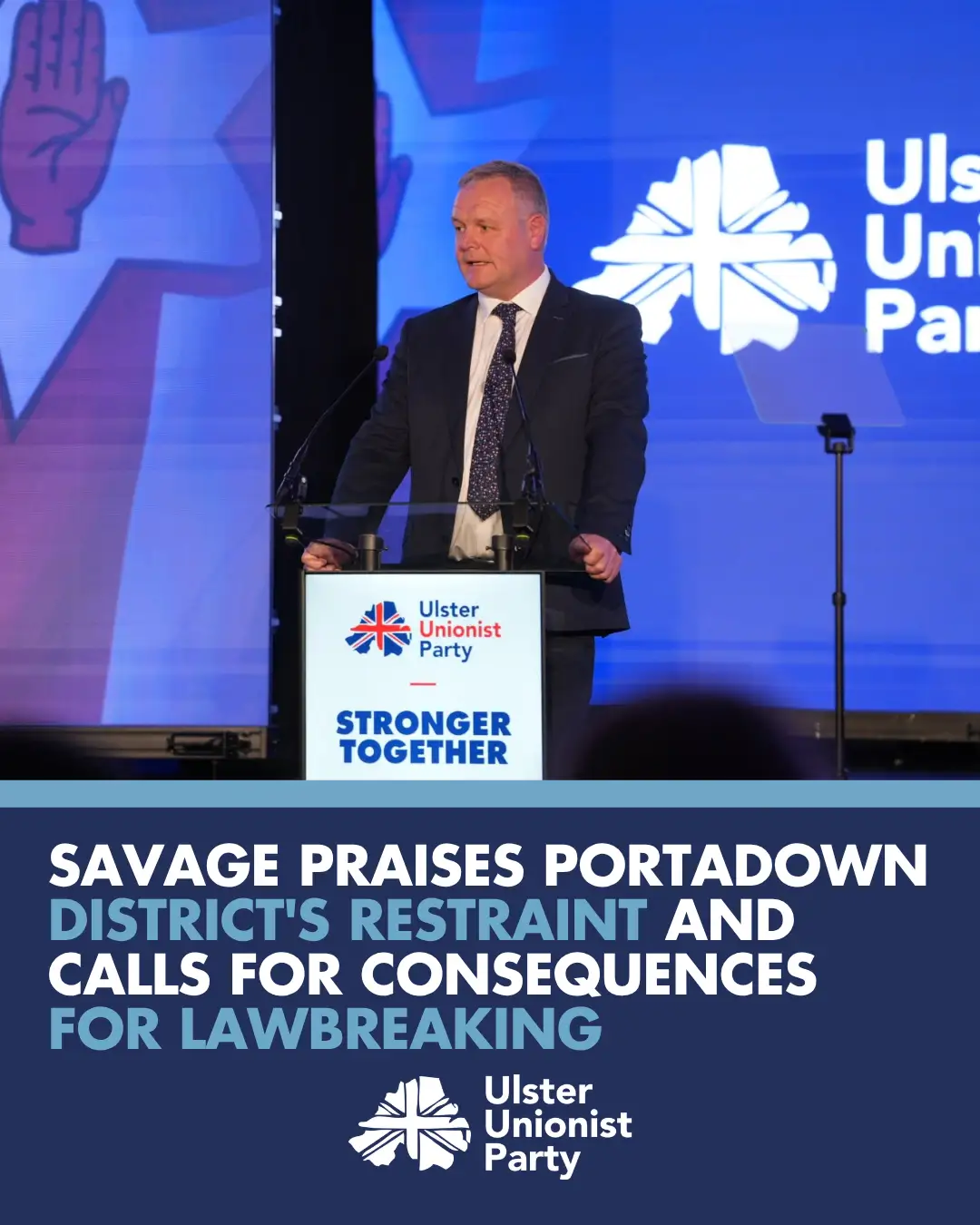
O'Neill's participation drew sharp criticism from unionists. DUP leader Gavin Robinson accused her of breaking the law and said there must be consequences. He said his party would not be reckless, but would pursue complaints to the Assembly's standards commissioner, censure motions, and no-confidence motions. He also called for police to prosecute anyone who broke the law.
O'Neill defended her actions, saying she was proud to stand with the Garvaghy Road residents and that the community did not want the march. She described the weekend's events as a victory for the right to live free from sectarian harassment. Sinn Féin said she attended in her role as party vice president, not as First Minister.
Portadown District issued a statement accusing the PSNI of an abject failure to uphold a lawful determination and called for Chief Constable Jon Boutcher to resign. District Master Nigel Dawson said the district had applied lawfully, gone to court, and abided by the outcome, and had agreed to mediation without preconditions. He said the offer of mediation remains open, but only after the current parade is completed.
Northern Ireland Secretary Sir Chris Bryant held meetings on Monday with the Orange Order, residents' representatives, and political parties. He described the talks as very positive and said he was exploring every option to find a solution. Breandán Mac Cionnaith of the Garvaghy Road Residents' Coalition said the residents were open to mediation and wanted an international mediator involved.
The dispute has raised questions about the stability of power-sharing. TUV leader Jim Allister called for the DUP to bring down the institutions unless the parade is allowed to proceed. DUP MLA Jonathan Buckley said it cannot be business as usual at Stormont. The Speaker, Edwin Poots, appealed for moderation in language as MLAs debated the issue.
The Parades Commission determination allowed 35 participants, no supporters, no bands, and a start time of 8am. The parade was to leave Drumcree Church and proceed along the Garvaghy Road to Carlton Street Orange Hall by 9:30am. The Orange Order argues the permission remains valid, but police have not facilitated the parade.
The PSNI has established a dedicated inquiry team to review evidence gathered during the protest and will investigate any law-breaking. Assistant Chief Constable Ryan Henderson said the use of force to clear the road would have been disproportionate. Officers repeatedly warned protesters that they were liable for arrest for blocking the road.
Church leaders, including Catholic Archbishop Eamon Martin and Church of Ireland Archbishop John McDowell, issued a joint statement calling for a constructive and inclusive initiative to resolve the crisis. They emphasised respect for the rule of law and peaceful democratic processes.