Omagh bombing inquiry hears evidence on car's movements and checkpoint gaps
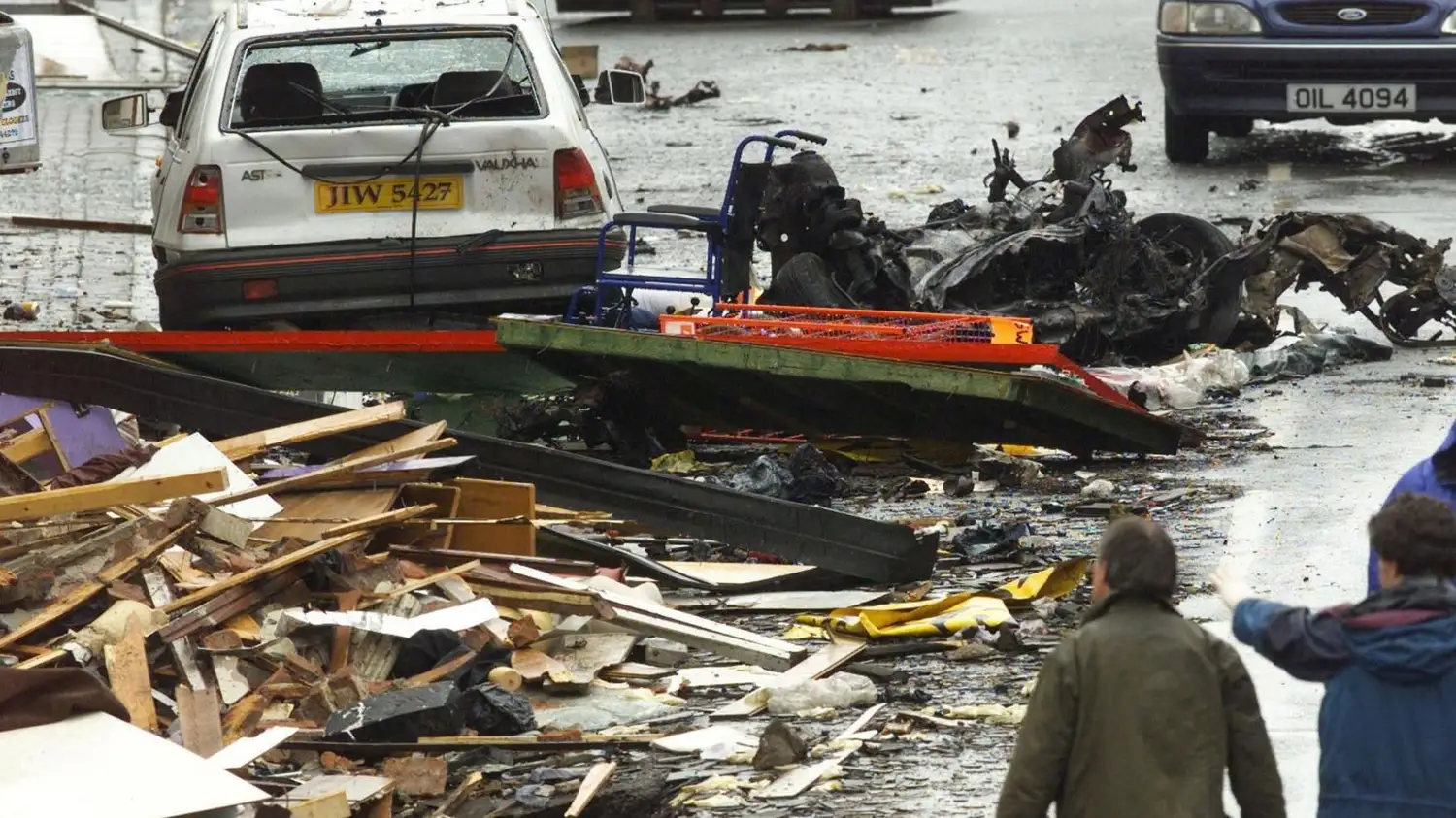
The Omagh Bombing Inquiry has heard further evidence about the movements of the car that carried the bomb which killed 29 people, including a woman pregnant with twins, on 15 August 1998.
Detective Superintendent Emmett Casserly of An Garda Síochána gave pre-recorded evidence about the Garda investigation into the car, a maroon Vauxhall Cavalier. The inquiry heard that Garda evidence did not establish the car's location after it was stolen in the early hours of 13 August until the bombing two days later. There was no conclusive eyewitness testimony about the route taken by the car or where it set off from to reach Omagh.
The Garda investigation tracked the car's likely route from County Monaghan and County Louth to Omagh and back, using mobile phone data and cell site masts. An expert from the Garda Mapping Section identified the most probable route as passing through Castleblayney in County Monaghan and Aughnacloy in County Tyrone.
The inquiry was also shown CCTV footage from a British Army checkpoint at Aughnacloy, but the bomb car was not captured on it. Footage from 13:30 to 14:00 BST on the day of the bombing was paused for a period, meaning approximately 8.5 minutes of traffic was not recorded. It is possible the car carrying the bomb passed through during that time.
Several eyewitnesses in Omagh described seeing the maroon Cavalier driving into the town and parking. Stephen Martin and his son George Martin told the inquiry they saw the car moving slowly along Market Street near the El Paso Bar around 2.20pm. The driver glanced at them, and they felt frustrated because the car was moving slowly at a green traffic light.
Robert Bridge, travelling from Enniskillen with his wife, noticed a maroon Cavalier in front of them on Church Street. He described the car travelling down George's Street and High Street, then turning left onto Bridge Street and onto Drumragh Avenue. He believed the vehicle was looking for a parking space. The Cavalier eventually turned right onto Market Street, while Mr Bridge turned left.
Ruth Buchanan, who was parked on Market Street, saw two men get out of the Cavalier and walk down Market Street before turning right onto Dublin Road. Some eyewitnesses were able to describe the two men in the vehicle.
Data analyst Mark Safranauskas of Greater Manchester Police gave evidence about mobile phone activity linked to Seamus McKenna and Seamus Daly. Phones linked to the two men were tracked from the Republic of Ireland to Omagh on the day of the bombing. The phones were allegedly given to them by Colm Murphy. All three men have previously faced legal proceedings connected to the bombing.
Two cars were involved in the journey: the maroon Vauxhall Cavalier carrying the bomb and a scout car which accompanied it and may have taken the two men back to the Republic of Ireland. Cell site analysis placed both vehicles near Castleblayney and then in the Emyvale area, moving north. Phones believed to have been used by those in the cars were detected by masts at Poundhill shop in Aughnacloy at 1.29pm, and later at Pigeon Top and the then Omagh College of Further Education at 1.57pm, 2.10pm, 2.14pm and 2.19pm.
Colonel Peter MacMullan, assistant head of operational legacy for the British Army, gave evidence on the Army's deployment in Northern Ireland in August 1998 and arrangements at the Aughnacloy border crossing. He had no involvement in the Omagh bombing while serving.
MacMullan said permanent vehicle checkpoints were a valuable source of intelligence, used when not all border roads were open to monitor traffic. The checkpoint at Aughnacloy was unmanned when the bomb car passed through and was managed remotely from the military base in Aughnacloy. There is no Ministry of Defence record of how many cameras were at the checkpoint or where they were located.
He said the failure to record every car was a flaw in the system, but it was the leading technology of its time. There was no indication of deliberate human interference with the recording. MacMullan said there was nothing to indicate the Army would not share checkpoint information with the RUC if requested, and that intelligence would be shared where a crime of this level had been committed.
The pre-recorded format for Garda evidence has been criticised by families of the victims, who say it removes the opportunity to cross-examine witnesses. Garda officers and other State witnesses were previously unable to speak to the inquiry due to national security concerns. In June, the Irish government introduced legislation allowing agreed questions to be put to Garda and other state witnesses in an Irish court, with answers recorded for the inquiry.