Harland & Wolff to spend £3m overhauling Samson and Goliath cranes
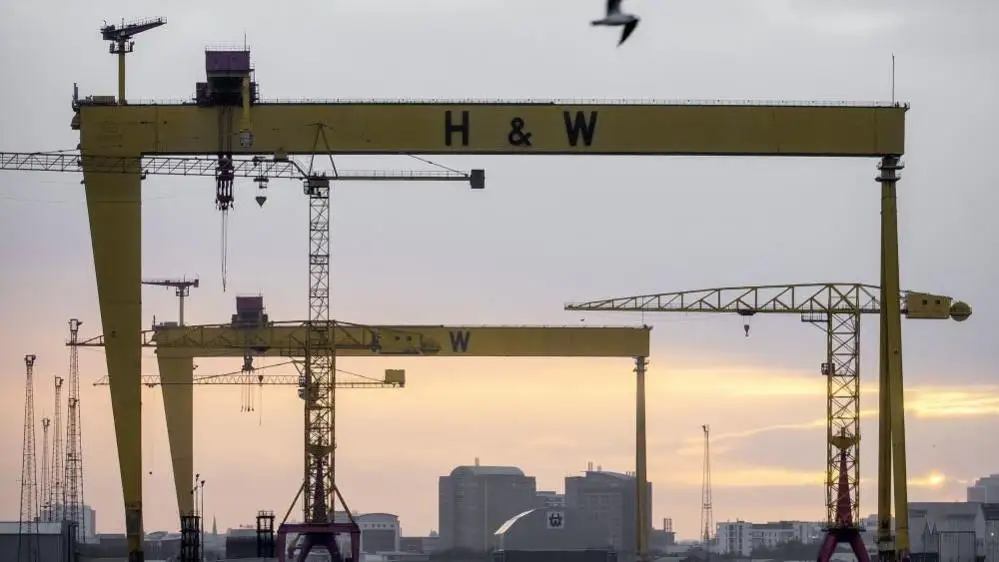
Harland & Wolff is to spend £3m refurbishing the Samson and Goliath cranes at its east Belfast yard.
Work has already begun on Goliath, the older crane, which was built in 1969. Samson was built in the early 1970s. Each crane stands around 100 metres tall and can lift 840 tonnes. They have not operated at full capacity for decades and were last used to build a ship in 2003.
The overhaul forms part of a wider investment of almost £100m by the yard's Spanish owner, Navantia, the state-owned shipbuilder that acquired the business in January 2025. Navantia has already expanded the fabrication hall and installed plasma cutting equipment.
Carlos Lopez Carregado, General Manager at Harland & Wolff, said the project will treat the cranes with utmost respect, replacing parts, updating technology, and testing them to ensure they can lift at full capacity. He described the mechanical, electrical, hydraulic and fabric maintenance programme as a major restoration. He added that Samson and Goliath, which he called symbols of Belfast, are about to be at their busiest for many years.
The yard is the integration and final assembly site for the Fleet Solid Support programme, under which three supply vessels for the Royal Navy are being built. The ships will be the largest in the fleet after the two aircraft carriers. Construction is already underway at other Navantia sites in Spain and in Devon, with blocks to be brought to Belfast by barge. Blocks for the first vessel, RFA Resurgent, are due to arrive in early 2027.
The shipyard currently employs 450 people. The company expects the workforce to rise to 1,500 by 2030.
Harland & Wolff was founded in 1861 and became one of the world's best-known shipbuilders. The yard is the former builder of the Titanic, which was launched in 1911.