PIP Tribunal Ruling Overturned After Commissioners Find Errors in Washing and Bathing Assessment
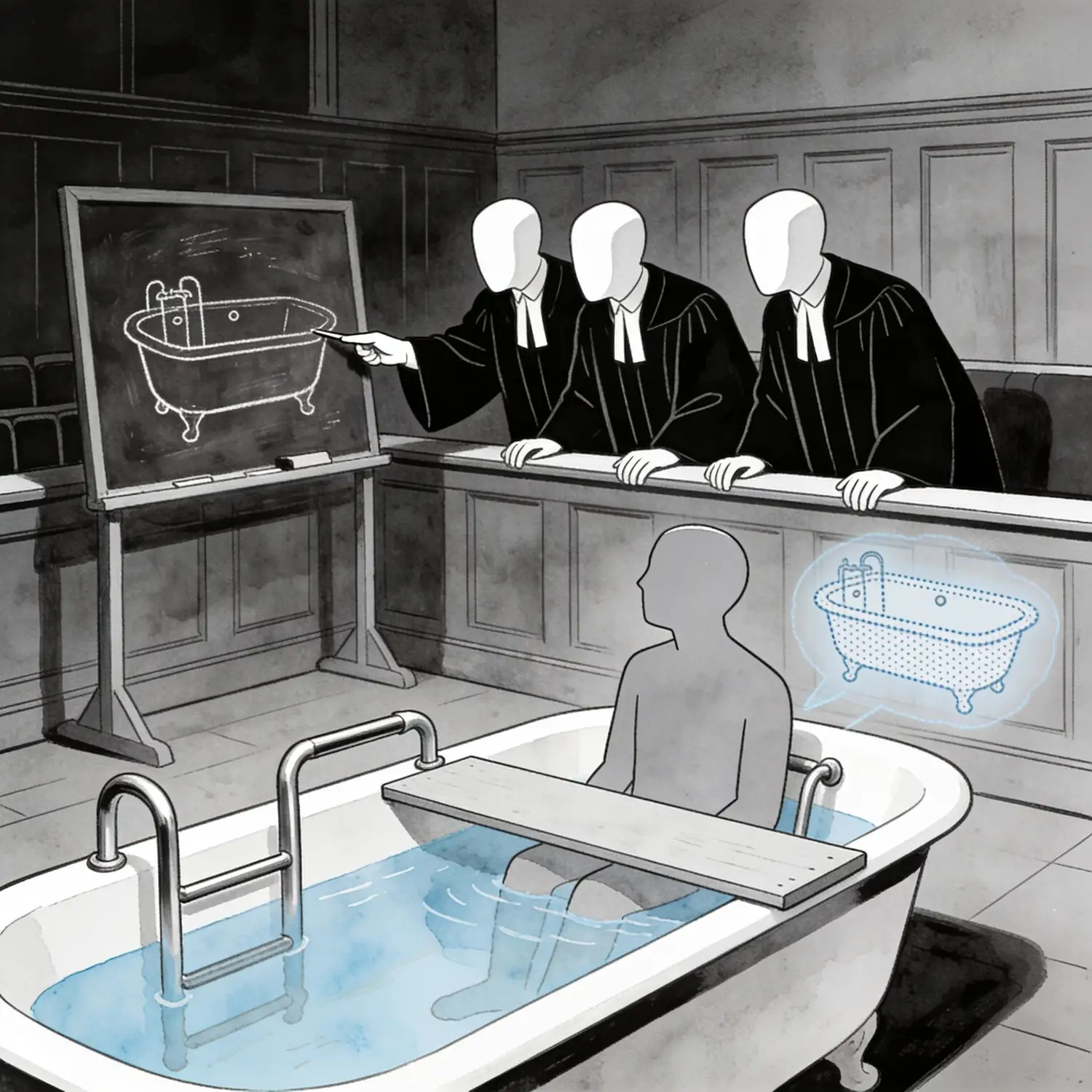
A Tribunal of Commissioners in Northern Ireland has overturned an Appeal Tribunal decision on Personal Independence Payment (PIP), finding that the tribunal made material errors of law in assessing a claimant's ability to wash and bathe. The case, RB v Department for Communities [2026] NICom 29, was decided by Chief Commissioner Fitzpatrick, Deputy Commissioner Wikeley and Deputy Commissioner Smith, and was authorised for issue on 28 July 2026.
The claimant had been receiving PIP at the standard rate for both the daily living and mobility components from 31 January 2018. Following a review in 2022, the Department for Communities revised her award, granting 11 points for the daily living component but zero points for mobility. She appealed, and an oral hearing was held on 8 May 2024 via video link. The Appeal Tribunal upheld the Department's decision, awarding the standard rate of the daily living component on an ongoing basis and no mobility component.
At the centre of the appeal was how the tribunal had assessed daily living activity 4, covering washing and bathing. The claimant had grab rails and a bath board in place, and the tribunal found that with those aids she could get in and out of the bath without assistance for the majority of the time. The Commissioners found this approach legally flawed. Under the Personal Independence Payment Regulations (NI) 2016, the term "bathe" is defined to include getting into or out of an unadapted bath or shower. The Commissioners found the tribunal had conflated descriptor 4(b), which covers needing an aid to wash or bathe, with descriptor 4(e), which covers needing physical assistance to get in or out of a bath or shower. The result was that the tribunal had not clearly determined whether the claimant needed assistance to get into or out of a bath in its unadapted state.
The Commissioners also found the tribunal had failed to make adequate findings of fact about the specific functional limitations caused by the claimant's right knee injury, which the tribunal had accepted as the relevant disabling condition. Despite reciting various items of medical evidence, including occupational therapy assessments from 2017 and 2022, the tribunal did not resolve conflicts in that evidence or state which functional restrictions it accepted as established. The Commissioners noted the tribunal also failed to adequately explore whether the higher-scoring descriptor 4(e), worth 3 points, might apply - a finding that would have increased the claimant's total daily living score from 11 to 12 points and moved her from the standard to the enhanced rate of the daily living component.
In reaching their conclusions, the Commissioners endorsed the principle established in the Upper Tribunal decision SP v Secretary of State for Work and Pensions [2016] UKUT 190 (AAC) and previously applied in this jurisdiction in DMcK v Department for Communities [2022] NICom 17. That principle holds that where a claimant has an adapted bath or shower, the assessment for descriptor 4(e) must be carried out by reference to a hypothetical unadapted bath or shower.
On the question of whether aids such as grab rails and a bath board could themselves convert an unadapted bath into an adapted one, the Commissioners offered guidance without determining the point conclusively. They indicated that an adapted bath requires structural alteration, and that aids - being specific to the person using them rather than altering the bath itself - do not ordinarily meet that threshold. The Commissioners noted this approach aligned with the reasoning of Upper Tribunal Judge Rowley in SP v SSWP, which cited a walk-in bath as an example of an adapted bath.
The decision of the Appeal Tribunal has been set aside under Article 15(8)(a) of the Social Security (NI) Order 1998. The case has been referred to a freshly constituted tribunal for full reconsideration. The new tribunal is not bound by the findings of the previous panel and is required to consider all evidence afresh. The Department for Communities has been directed to provide details of any subsequent PIP claims made by the claimant and their outcomes. Both parties have six weeks from the date of the decision to submit any further evidence or submissions to the Appeals Service.