Belfast City Council Worker Loses Tribunal Claims After Years-Long Delay in Filing
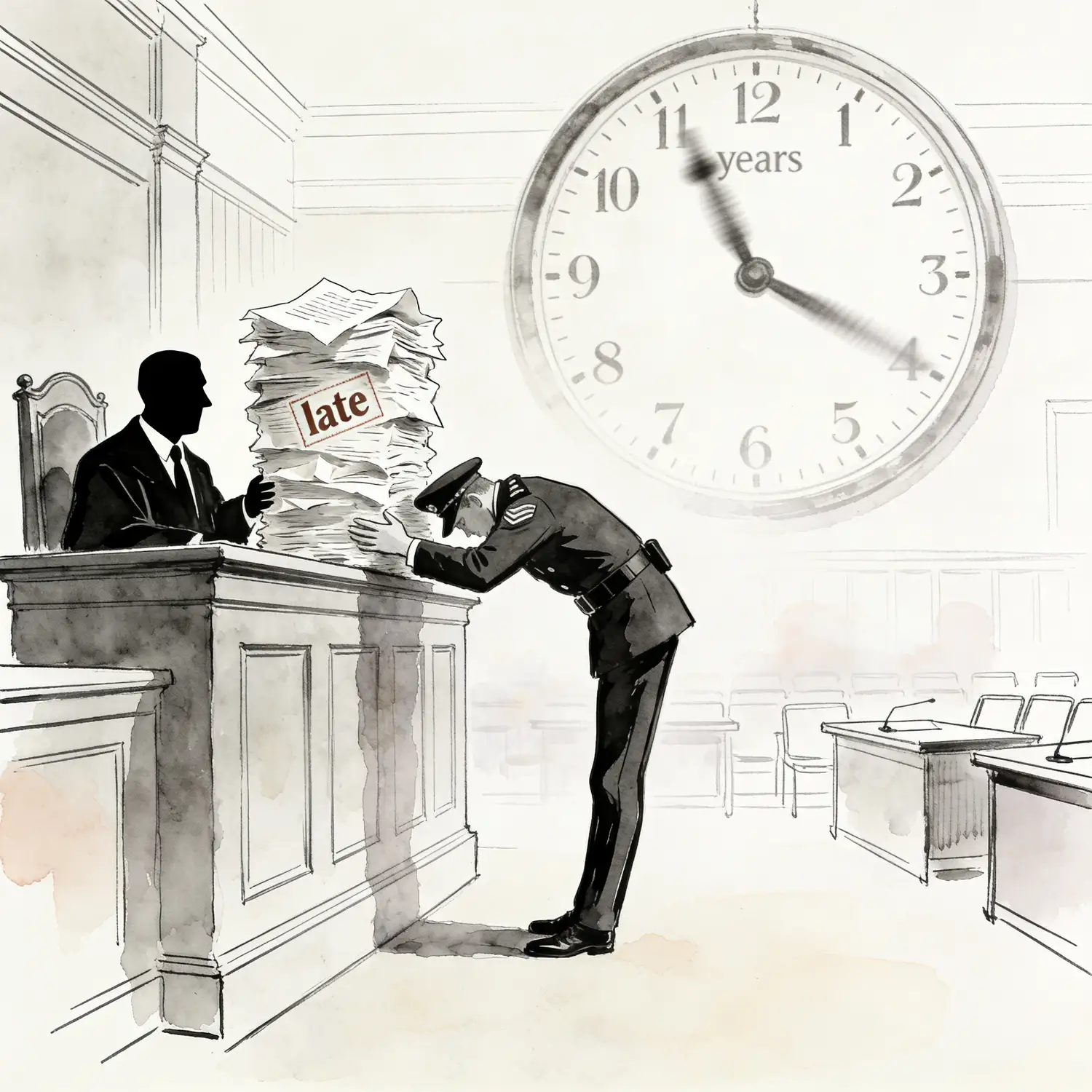
A Fair Employment Tribunal has dismissed all discrimination claims brought by a former Belfast City Council security operative after ruling it would not be just and equitable to extend the statutory time limits for any of them. Employment Judge Ward, sitting alone, issued the judgment on 21 April 2026 following a hearing in Belfast on 3 December 2025.
Stewart Brown, who worked for Belfast City Council as a security and control room operative from March 1998 until his ill-health retirement in July 2024, brought claims of sex discrimination, disability discrimination, and religious belief discrimination. He submitted his ET1 claim form on 13 January 2025. It was not disputed that all three claims were lodged outside the relevant three-month statutory time limits. The sole issue before the tribunal was whether time should be extended on just and equitable grounds.
On the sex discrimination claim, which related to allegations of sexual harassment dating from 2000 and resuming in 2015, the tribunal found the latest possible date from which time began to run was 2019. That placed the claim at least five years outside the time limit. On the disability discrimination claim - relating to an alleged failure to rotate lighter duties to accommodate the claimant's arthritis from 2017 - and the religious belief discrimination claim - relating to alleged preferential allocation of overtime and lighter duties to a Catholic colleague from 2014 - the tribunal found both claims were at least two years and eleven months out of time, with the latest possible start date for time running being 18 February 2022, the last day the claimant was in the workplace before his suspension.
Brown had been suspended on 18 February 2022 pending investigation into an alleged assault on a colleague. He remained absent from work and his employment was terminated by reason of ill-health retirement on 13 July 2024. The tribunal found he worked as door security on a part-time basis during 2023.
The claimant argued his delay was due to fear of losing his job and his medical condition. The tribunal rejected both explanations. On the question of fear of job loss, the tribunal noted that his employment ended in July 2024 but he did not file his claim until January 2025, some six months later. On his health, the tribunal found his medical condition had not prevented him from working as door security during 2023 and would not have made him incapable of filing a claim earlier. Medical evidence before the tribunal included GP and counselling records from 2022 and notes from twelve counselling sessions between December 2024 and April 2025.
The tribunal found the claimant had been a member of the Unite union and had been informed as far back as around 2000 or 2001 that he could bring a sex discrimination claim, but did not pursue it. He accepted at the hearing that after his suspension he sought union assistance only regarding loss of overtime and the disciplinary process, not discrimination. The tribunal also found that the claimant had an informal consultation with a barrister in 2024 and consulted a solicitor in December 2024 before lodging his claim, and concluded he could have sought such advice at a much earlier stage.
The tribunal found the real reason for the delay was that the claimant had not considered bringing discrimination claims until 2024, after viewing media coverage of historical abuse cases and the Post Office scandal. The tribunal noted that nine of the thirteen personnel potentially involved in the claimant's allegations had since left the respondent's employment, and that there were no records for a further two, which it found would cause significant prejudice to Belfast City Council in defending the claims.
Belfast City Council had denied all claims in its ET3 response, describing them as abusive, vexatious, and malicious, as well as out of time. The tribunal did not proceed to assess the merits of those characterisations, finding instead that the absence of any just and equitable basis for extending time meant it had no jurisdiction to hear any of the claims. All three were dismissed.