Converted Wet Room Does Not Qualify for Disabled Persons' Allowance, Tribunal Rules
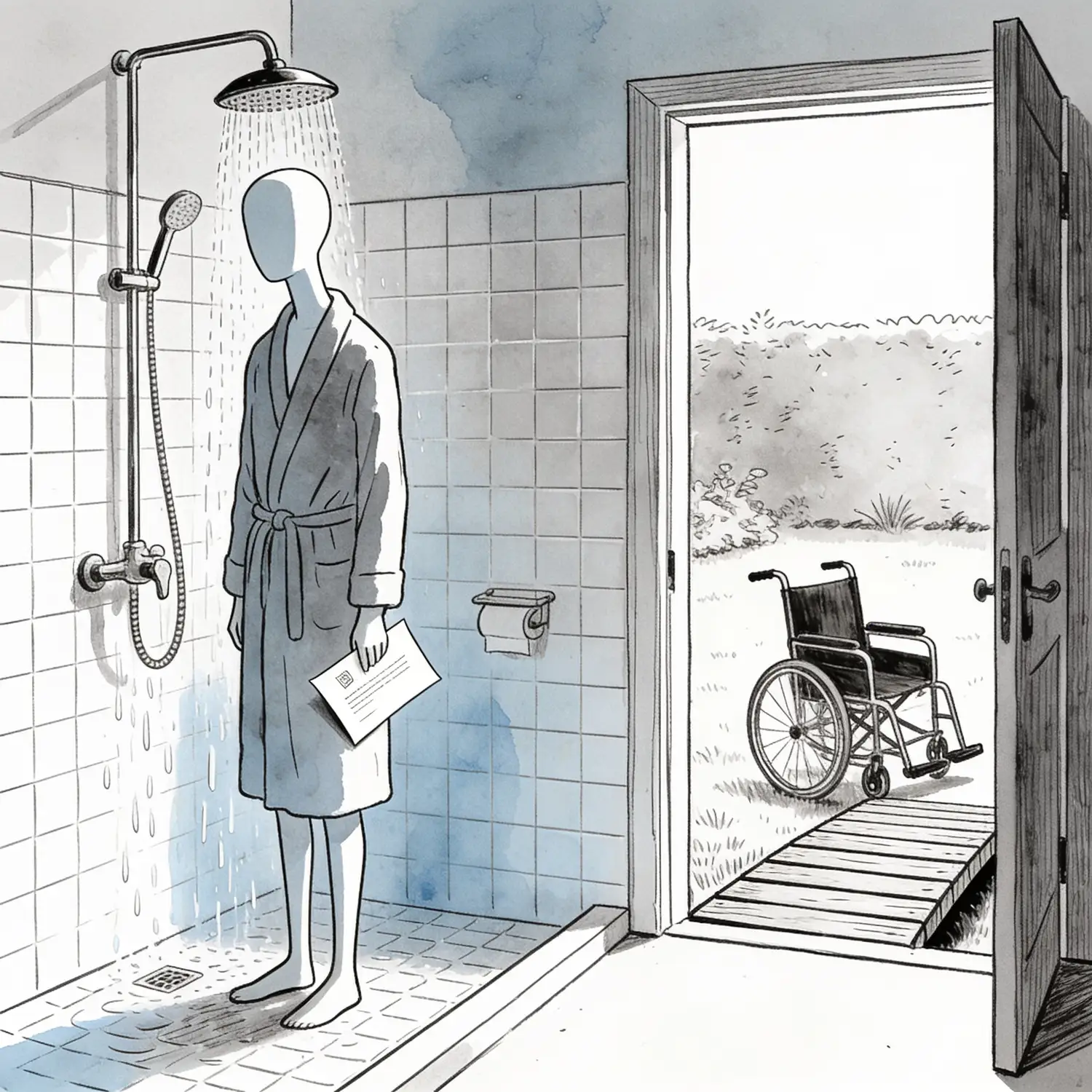
A County Fermanagh man has lost his appeal for a rates reduction after the Northern Ireland Valuation Tribunal ruled that a bathroom converted into a wet room does not constitute a qualifying facility under legislation governing Disabled Persons' Allowance (DPA). The tribunal, chaired by President James Leonard and sitting with members Brian Reid FRICS and Garry McKenna, heard the case on 25 June 2026 in Belfast, returning its unanimous decision on 20 July 2026.
The appellant, identified only as CD26, had applied to the Department of Finance for DPA on 4 February 2026. The Department refused the application on 9 February, and a subsequent internal review on 23 February upheld that refusal. CD26 then appealed to the tribunal, represented by solicitors PJ Flanagan & Co. Neither party appeared in person, with the case decided on written submissions.
The central issue was not the appellant's disability status. The Department accepted that CD26 is substantially and permanently disabled and qualifies for the higher rate of Disability Living Allowance for both mobility and care. The tribunal noted that once such a concession is made, no further medical evidence is required - the sole question becomes whether the property itself meets the statutory criteria.
DPA provides a rate rebate where a dwelling contains a facility required to meet the needs of a disabled resident. Under the relevant legislation - Article 17 of the Rates (Amendment) (Northern Ireland) Order 2006 - the qualifying facilities include a room other than a kitchen, bathroom or lavatory that is wholly or mainly used by the disabled person, an additional kitchen, bathroom or lavatory, or sufficient floor space for an indoor wheelchair.
The property had been adapted around 2007, when a bathroom was converted to a wet room with a shower, and a wheelchair ramp was installed at the back door. A physiotherapist inspected the property in 2026 and confirmed the adaptations remained safe and met the appellant's current needs. However, CD26 confirmed he does not use a wheelchair indoors and that no additional rooms had been created.
The tribunal applied the 2019 Northern Ireland Court of Appeal judgment in Department of Finance v Mary Quinn [2019] NICA 41, which it described as binding authority. In that case, Stephens LJ stated that the purpose of the DPA legislation is to provide rate relief where a dwelling's rateable value is increased by a disability-related facility, and that the relief is intended to address additional space and facilities that result in a higher valuation. The tribunal also referenced Howell Williams v Wirral Borough Council [1981], in which Fox LJ held that use of a room must relate to the disability and that Parliament did not intend a rebate simply because a room is predominantly used by a disabled person.
Applying that reasoning, the tribunal found that the converted bathroom was not an additional facility - it replaced an existing one. As no additional room or bathroom existed, and no wheelchair was used inside the property, none of the statutory qualifying conditions were met. The appeal was dismissed unanimously.