Vandalism fear after Belfast council votes for Irish signs in unionist areas
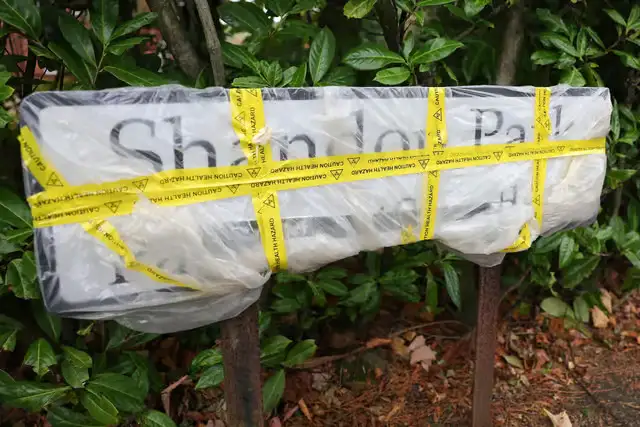
Belfast City Council has voted to install Irish language street signs along two stretches of road in north Belfast despite existing policy that would restrict the signs to sections where they have local backing.
The decision last week concerned Donegall Park Avenue and Oldpark Road, both of which are designated as "long streets" under the council’s dual language sign policy. That policy, previously agreed by all parties, means signs are normally only erected on parts of a longer road where residents support them.
Sinn Féin successfully argued that Donegall Park Avenue should not be treated as a long street, enabling Irish signs to be placed along its entire length, including a unionist area near the Shore Road junction where opposition outnumbers support by a ratio of five to one. Council officials had advised following the long-streets designation, but the motion passed with backing from the SDLP, People Before Profit and the Green Party.
TUV councillor Ron McDowell said the move exposed double standards, comparing it to restrictions on Orange Order parades through nationalist districts. He described the signs as a permanent imposition of nationalist culture on unionist communities, contrasting it with what he called the policing of unionist cultural displays.
McDowell warned that the signs would be seen as territory-marking and predicted they would be cut down. He argued that parties which talk about shared space often refuse to accommodate unionist and loyalist identity, and that using official processes to promote one culture while restricting another breeds resentment.
The councillor said responsibility for any vandalism would rest with those who forced through the change. He referenced a previous incident in east Belfast where an Irish language sign in a heavily unionist area was attacked with an angle grinder.