John Kelly, Bloody Sunday campaigner, dies aged 76
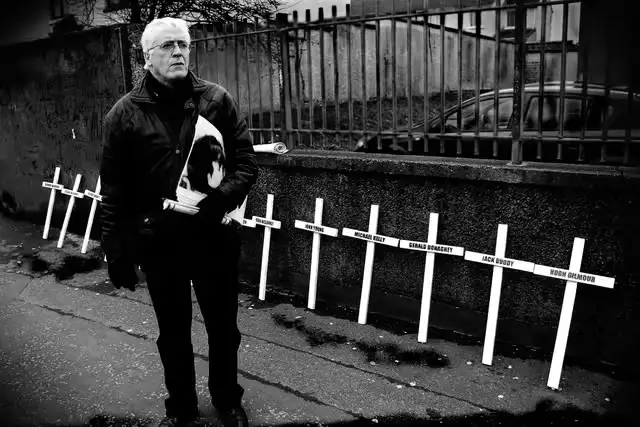
John Kelly, a prominent campaigner for justice for the victims of Bloody Sunday, has died at his home in the Westway area of Derry. He was 76. His death was announced by the Bloody Sunday Trust and the Museum of Free Derry, which described him as a dear friend and colleague.
Mr Kelly's brother Michael, aged 17, was one of those killed on Bloody Sunday in the Bogside on 30 January 1972. Mr Kelly was a former chair of the Bloody Sunday Campaign and an honorary chair of the Bloody Sunday Trust. He served as a family liaison officer during the Bloody Sunday Inquiry and later worked at the Museum of Free Derry as education and outreach officer from its opening in 2006 until his retirement in 2024. A toolmaker by trade, he had worked for the Trust since 1997.
Born in Creggan in 1948, he was the son of Kathleen and John Kelly. He married Margaret in 1969 and had six sons - John, Michael, Emmet, Mark, Niall and Martin. Margaret died previously.
Tony Doherty, chairperson of the Bloody Sunday Trust, said Mr Kelly had been at the forefront of the campaign from the beginning to the end and had never let go of the idea of getting justice for his brother and all those killed and wounded. Mr Doherty said Mr Kelly's work had supported the families through the Saville Inquiry and that he had taught younger staff at the museum. He said campaigners for justice across Ireland had lost an inspirational figure.
SDLP Foyle MP Colum Eastwood said Mr Kelly's work and determination were recognised far beyond Derry. He said Mr Kelly had repeatedly faced down the might of the British establishment and refused to allow the truth about what happened in January 1972 to be buried. He described Mr Kelly as a man of quiet dignity who was the same whether meeting governments and dignitaries or stopping for a chat on the street.
Sinn Féin MLA Pádraig Delargy said Mr Kelly had dedicated his life to challenging injustice and had shown remarkable courage, dignity and resilience. He said Mr Kelly would be remembered across Ireland and internationally as a man who took on the might of the British state and won.
Mr Kelly is survived by his sons, his grandchildren, and his sisters and brother.