First video of puffin chick recorded on Copeland Islands
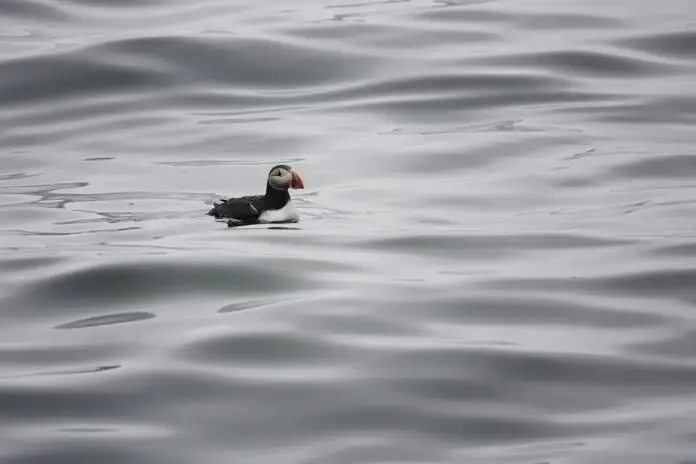
Puffins have established a breeding population on the Copeland Islands after an introduction scheme that began around 2013, with about 30 pairs now returning to Lighthouse Island each April.
The island, located just north of Donaghadee in County Down, had no indigenous puffin population. Attempts to attract the seabirds included placing decoy puffins and using a solar-powered speaker system to broadcast calls.
Earlier this month, a wildlife camera near the burrows captured footage of a puffling outside its burrow while an adult puffin brought fish back to feed it. Copeland Bird Observatory, based on Lighthouse Island, said this is the first time a puffling has been recorded on the island.
Adam Ringland, from the observatory, said the puffins are thriving because of the grassy slopes and burrows already dug by rabbits and Manx shearwaters. Lighthouse Island has no permanent residents; only volunteers and weekend visitors to the observatory are present, which Ringland said has given the puffins space to grow and breed.
Access to Lighthouse Island is controlled by the bird observatory and requires an approved charter boat. Ringland noted that conservation work is important at a time when some seabird populations are declining. He said puffins help regulate fish stocks and fertilise the land, and that seeing them can connect people to nature and support mental health.