Giant’s Causeway welcomes more than 600,000 visitors annually, generating £180m
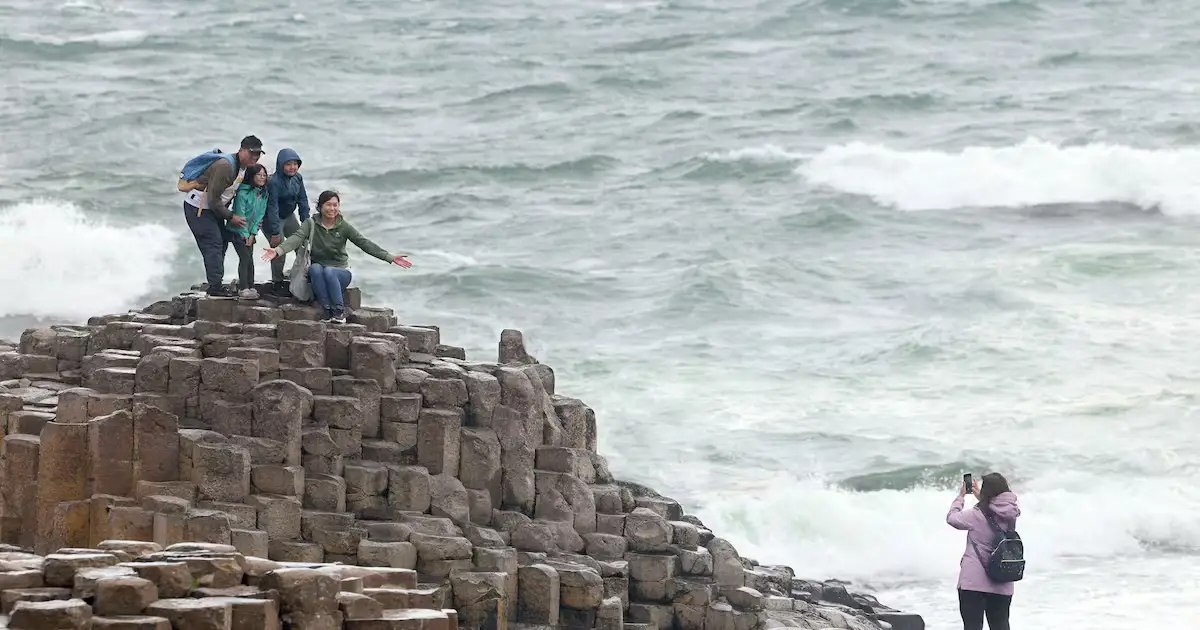
The Giant’s Causeway, a UNESCO World Heritage Site on the north Antrim coast, was formed 60 million years ago by volcanic activity that created more than 40,000 interlocking basalt columns. The site is one of only four UNESCO designations on the island of Ireland.
Jennifer Michael, business development manager with the National Trust, said the formation provides insight into the breakup of the Pangaea continent and the shaping of the Earth. The trust holds guardianship of the Causeway and several other conservation areas in the region.
The attraction draws more than 600,000 visitors each year, still recovering from pre-pandemic levels that exceeded one million. Almost 40 per cent of tourists come from North America, with a further 34 per cent from Ireland and Britain, according to the National Trust.
Tourism Northern Ireland figures indicate the wider Causeway Coast and Glens council area accounted for nearly a quarter of all overnight trips in Northern Ireland in 2025, generating a spend of £180 million.
A popular myth associated with the site involves the giant Finn McCool building a causeway to Scotland, then tricking a Scottish giant by pretending to be a baby and scaring him away. The story continues to engage younger visitors.
Ciara Allen, interim general manager for the trust on the north coast, noted that the Causeway’s popularity helps fund the upkeep of less-visited but ecologically important sites. She described a sense of pride among staff and locals in having the landmark on their doorstep.
Visitor impressions often focus on the dramatic weather. One tourist from Liverpool remarked that stormy conditions made the crashing waves more atmospheric. A visitor from Berlin called the rock formation unique, saying he had not encountered anything like it even in Norway or Iceland.