Deep partial solar eclipse to be visible across Northern Ireland on Wednesday
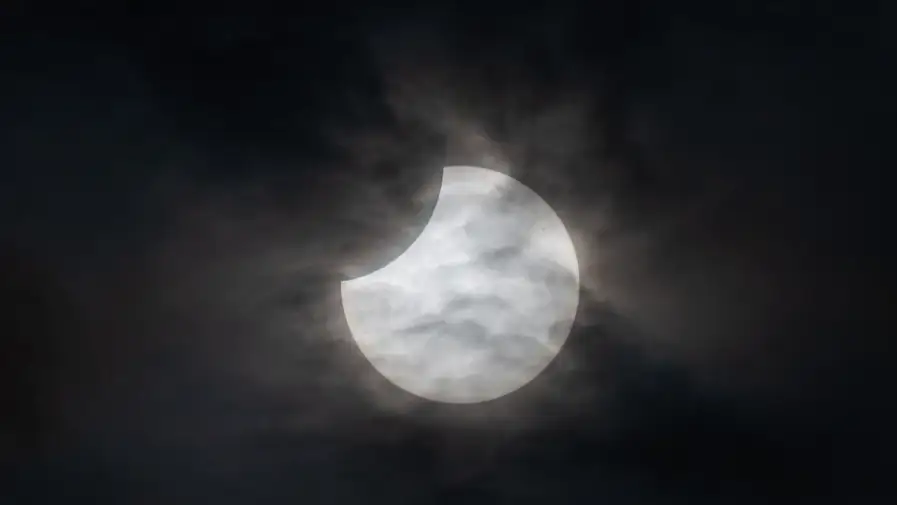
A partial solar eclipse will obscure more than 90 percent of the sun across Northern Ireland on Wednesday evening, marking the deepest such event visible from the island until September 2090.
The eclipse is set to begin around 18:10 BST, with timings varying slightly by location. In Belfast, 93.05 percent of the sun will be covered at the peak at 19:08, ending by 20:03. Derry will see 93.77 percent obscuration, Armagh 93.66 percent, and Omagh 93.97 percent.
Dr Rok Nežič of Armagh Observatory and Planetarium said the darkening should be noticeable, comparable to thick cloud cover. He stressed that viewing the sun directly is dangerous because the retina has no pain receptors, so damage can occur without warning. Certified eclipse glasses are required for naked-eye viewing, but they must not be used with binoculars or telescopes.
Safer alternatives include projecting an image of the sun onto a white card using a telescope, creating a pinhole viewer from a cereal box, or using a kitchen colander. Pointing an unfiltered smartphone or digital camera at the sun is also discouraged, as the intense light can damage sensors.
Several hours after the eclipse, the Perseid meteor shower will peak overnight into Thursday. A new moon will keep moonlight to a minimum, offering good viewing conditions if skies are clear. Observers in dark locations away from streetlights could see up to 100 meteors per hour after allowing at least 10 minutes for their eyes to adjust. The Perseids are debris from comet Swift-Tuttle burning up in the atmosphere, appearing to radiate from the constellation Perseus.
Astronomy Ireland Magazine editor David Moore highlighted the coincidence of the eclipse and the meteor shower, adding that a total solar eclipse will be visible from parts of Spain the same evening, the first such event in western Europe since 1999. The last total solar eclipse on Irish soil was in 1724 and the next will not occur until 2090.