Near-Total Solar Eclipse to be Visible from Derry on August 12
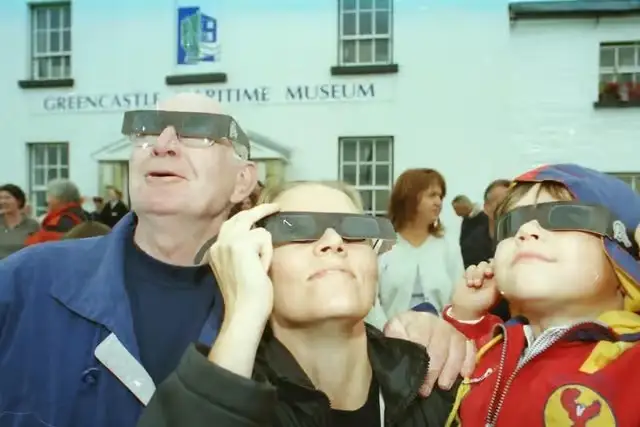
The moon will pass between the sun and Earth on the evening of Wednesday, August 12, creating a near-total solar eclipse visible from Northern Ireland. In Derry, 93.7 percent of the sun's surface will be covered. The event will begin at 6:09 p.m., reach its midpoint at 7:07 p.m., and end at 8:02 p.m.
This is the deepest partial solar eclipse that will be seen from Ireland until a total eclipse in 2090, according to Astronomy Ireland. Research Ireland, a state agency, notes that the maximum coverage will reach up to 97 percent in the far southwest of the country, but even from Derry the phenomenon will be dramatic.
Observers will notice changes in ambient light only once the sun is about 80 percent obscured. John Flannery of the Irish Astronomical Society, writing for the European Space Agency's ESERO Ireland project, describes how the light will drop abruptly as the eclipse deepens. Colours may appear to bleed from the landscape, and shadows will sharpen. At its peak, the sky will resemble an overcast winter's day or dusk shortly before sunset. In areas with the deepest coverage, streetlights may automatically switch on and birds may begin to roost.
The process will reverse after the midpoint, with the sun slowly re-emerging. Eye safety is critical: looking directly at the sun without protection can cause permanent damage, even when most of it is hidden. Binoculars and telescopes should never be used for direct viewing. Special solar eclipse glasses are required, or indirect viewers can be constructed using guidance available at eclipse26.ie.