Rathlin Seabirds Get Boost from Pipe Repurposing and New Government Strategy
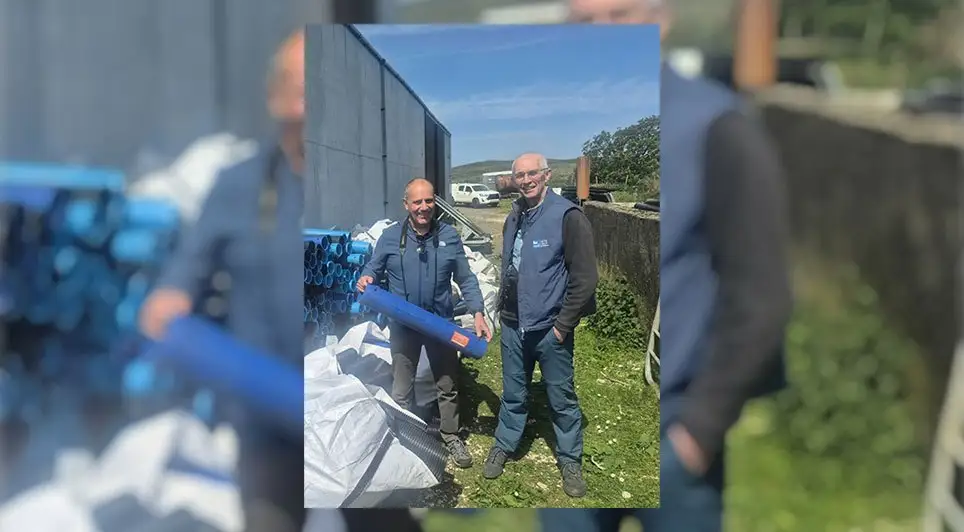
Northern Ireland’s Environment Minister has launched a new seabird conservation strategy during a visit to Rathlin Island, where decommissioned water pipes are being repurposed to protect threatened bird colonies.
The Northern Ireland Seabird Conservation Strategy 2026-2035 sets out a framework to improve the status of 30 priority species that frequent local waters, including breeding puffins, razorbills, guillemots and kittiwakes. DAERA Minister Andrew Muir acknowledged that seabirds are under unprecedented pressure from food shortages, invasive species, climate change and avian influenza.
On Rathlin, the LIFE Raft project has converted surplus watermain pipes donated by NI Water into rat bait stations. The stations are part of an effort to eradicate invasive rats that prey on ground-nesting birds. Rathlin Island hosts one of the largest seabird colonies in the UK and Ireland.
The five-year, £4.5 million restoration scheme is led by RSPB NI and the Rathlin Development and Community Association. Funding comes from EU LIFE, The National Lottery Heritage Fund, the Garfield Weston Foundation and DAERA. Project leaders say the pipe reuse has delivered the rat-eradication component in a sustainable, cost-effective manner.
LIFE Raft programme manager Erin McKeown stated that the initiative relied on strong partnerships, with NI Water providing crucial support during a critical phase. NI Water catchment manager Roy Taylor noted that donating surplus pipes contributed to protecting Northern Ireland’s unique biodiversity while promoting resource reuse.
The project has already recorded the return of Manx shearwaters after a 20-year absence, following the world-first eradication of non-native ferrets on the island. Minister Muir described the LIFE Raft work as a transformative nature restoration effort.
RSPB NI director Joanne Sherwood said seabird populations have declined by over 60% in the past two decades. She welcomed the conservation strategy as a milestone but stressed that it must be properly resourced to turn ambition into action.
The strategy was developed in collaboration with environmental NGOs and the marine and fisheries industry. It calls for coordinated action across government, conservation organisations and local communities to deliver meaningful outcomes for seabirds over the next decade.