Coroner Rules Army Killings of Five Springhill and Westrock Civilians Were Unjustified
A coroner has delivered verdicts finding that five civilians killed by British Army soldiers in the Springhill and Westrock area of west Belfast on 9 July 1972 were not lawfully shot. The five - John Joseph Dougal, Patrick Joseph Butler, Father John Noel Fitzpatrick, David McCafferty and Margaret Gargan - died during a period of intense violence that followed the breakdown of a Provisional IRA ceasefire. A jury at a 1973 inquest returned open verdicts in all five cases. The Attorney General for Northern Ireland directed a fresh inquest in December 2014, and a coroner was appointed in December 2022.
The deaths were grouped into three incidents. Incident 1 concerned the death of John Dougal, along with injuries sustained by Martin Dudley and Brian Petticrew. Incident 2 concerned the deaths of Father Fitzpatrick, Patrick Butler and David McCafferty. Incident 3 concerned the death of Margaret Gargan. The coroner found that none of the five deceased was armed at the time they were shot, and each was innocent of any wrongdoing that could have justified the use of lethal force against them.
The inquest took place against a backdrop of significant legal and evidential difficulty. The shootings occurred more than 50 years before the findings were delivered. The coroner noted that the Royal Military Police investigation at the time was cursory. Witness statements were taken from soldiers using ciphers to protect their identities, but the cipher list linking those ciphers to named individuals has been lost. No soldier gave oral evidence admitting to having fired a lethal shot, and a number of both military and civilian witnesses relied on their privilege against self-incrimination.
The coroner, Scoffield J sitting as a coroner, conducted approximately 70 days of hearings. Evidence-gathering concluded on 30 April 2024. The findings address the planning and control of the military operation, the circumstances in which each person was shot, and whether soldiers complied with the yellow card - the army's own rules governing the use of lethal force, revised in November 1971. The yellow card required soldiers to use only the minimum necessary force, to fire only aimed shots, and generally to give a warning before opening fire.
The five deaths occurred on the evening of 9 July 1972, the night the PIRA ceasefire formally ended. Tension had spread from the Lenadoon area of Belfast, where earlier that afternoon a confrontation over housing had escalated into a gun battle involving IRA volunteers using Armalite rifles. Army radio logs recorded an IRA broadcast at 17.12 directing all IRA battalions to report to Lenadoon Avenue. An official announcement from PIRA headquarters in Dublin, timed at approximately 9pm, instructed all IRA units to resume offensive action. Two soldiers from 1 Kings Regiment - the unit on duty in Corry's Wood Yard - were shot and seriously wounded in the same area earlier that evening.
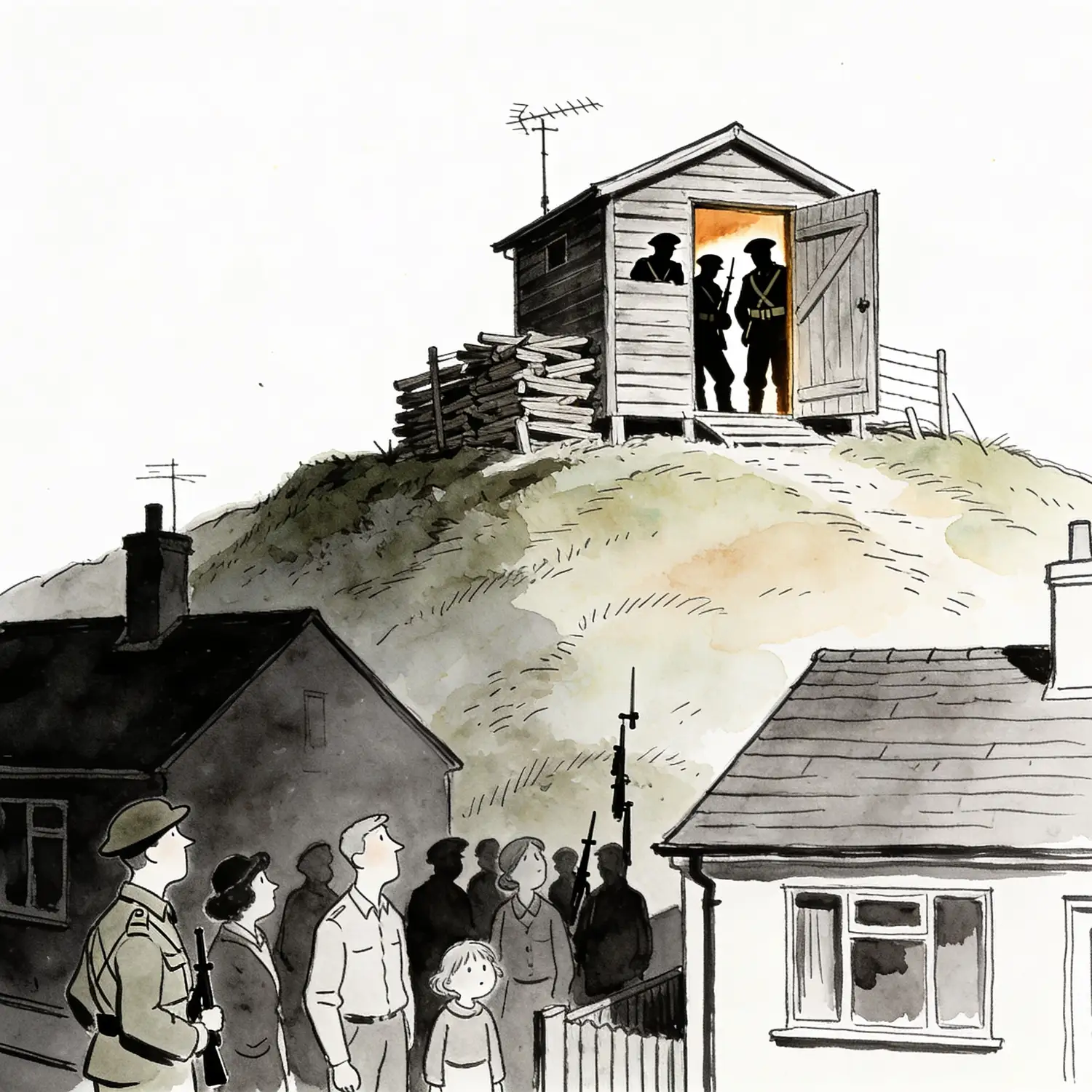
Corry's Wood Yard, a working timber yard on land elevated above the Westrock and Springhill estates, had been used by the army as an observation post location since April 1972. The yard had been subject to repeated attack in the preceding months, including a major incident in early May 1972 during which a mechanical excavator was used to damage the wall and observation posts. The coroner found that soldiers positioned inside the wood shed on the night of 9 July fired shots that killed the five civilians in the streets and bungalow areas below.
The coroner ruled that Article 2 of the European Convention on Human Rights was not engaged in the inquest, as the deaths occurred in July 1972 - well outside the temporal limit established by the UK Supreme Court in Re Dalton's Application [2023] UKSC 36. Following guidance from the Northern Ireland Court of Appeal in Re Bradley and Duffy's Applications [2025] NICA 30, the coroner nonetheless conducted a broad inquiry into the planning, control and execution of the operation, and delivered comprehensive narrative findings on the core issues. The coroner exercised restraint in declining to make an express finding that each shooting was justified or unjustified, but the factual findings in each verdict address the circumstances of the death and the conduct of the soldiers involved.
The coroner expressed condolences to the families of all five deceased and acknowledged their long wait for answers. Personal statements were given at the opening of the inquest by relatives of each of the deceased. The coroner also noted the burden placed on all legal teams by the requirement, under section 44 of the Northern Ireland Troubles (Legacy and Reconciliation) Act 2023, to complete inquest hearings before 1 May 2024.