Four Troubles Legacy Judicial Reviews Adjourned Pending Supreme Court Ruling
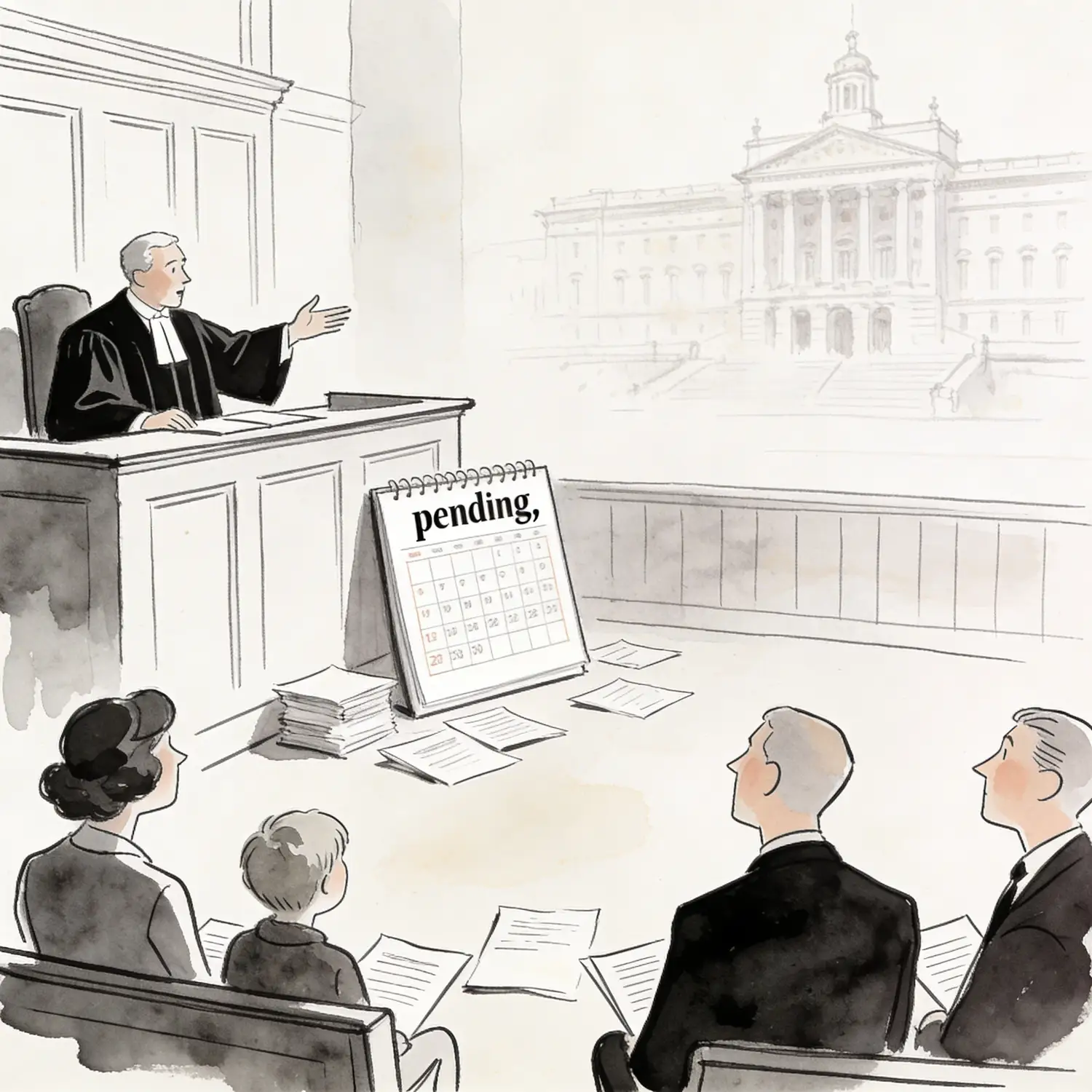
The High Court in Belfast has adjourned four applications for leave to apply for judicial review, all seeking to compel the Secretary of State for Northern Ireland to establish public inquiries into Troubles-era murders. The cases, brought by Bernadette McKearney, Anthony Fox, Linda Hewitt and Raymond McCord, were heard together on 2 February 2026. Mr Justice McLaughlin delivered judgment on 3 March 2026, concluding that all four leave applications should be deferred until the Supreme Court issues its judgment in Re Dillon.
Each of the four applicants is a family member of a person murdered during the Troubles. Kevin McKearney and his uncle John were shot dead in Moy, County Tyrone on 3 January 1992. Charles and Teresa Fox were shot dead in their home on 6 September 1992. Samuel Marshall was shot and killed by loyalist paramilitaries on 7 March 1990 after signing bail at Lurgan RUC station. Raymond McCord Jr was found beaten to death at Ballyduff Quarry on 9 November 1997. In each case, the deaths were the subject of inquests involving allegations of state involvement and national security sensitive materials. Three of the inquests - those concerning Fox, McKearney and Hewitt - were closed by the respective coroners because the volume of public interest immunity materials prevented completion within the agreed scope. The McCord inquest was closed under section 16A of the Coroners (NI) Act 1959, as inserted by the Northern Ireland Troubles (Legacy and Reconciliation) Act 2023, before any PII rulings were made.
All four applicants relied on the Northern Ireland Court of Appeal decision in Re Brown, in which a mandatory order was granted requiring the Secretary of State to establish a public inquiry into the 1997 murder of Sean Brown. In that case, the Court of Appeal held that the only lawful option available to the Secretary of State was to order a public inquiry, describing the choice as a binary one. The Secretary of State has appealed that decision to the Supreme Court, but that permission application has been stayed pending the outcome of Re Dillon.
The Re Dillon appeal concerns the compatibility of key provisions of the 2023 Act with the European Convention on Human Rights, including the capacity of the Independent Commission for Reconciliation and Information Recovery (ICRIR) to conduct Article 2-compliant investigations. The Supreme Court heard the Re Dillon appeal between 14 and 16 October 2025 and judgment remains outstanding. The Secretary of State did not dispute that the four cases were arguable on the basis of current law in Northern Ireland, but asked the court to adjourn or stay them pending the Supreme Court decision, arguing it could be dispositive of the claims.
Mr Justice McLaughlin identified the capacity of ICRIR to conduct Article 2-compliant investigations involving national security sensitive materials as the central legal question in all four cases. He concluded that awaiting the Supreme Court judgment would serve two related legitimate aims - ensuring the court has information directly relevant to, and potentially dispositive of, these proceedings, and minimising the risk of wasted effort if the legal landscape changes before the cases are determined. He noted that if the Supreme Court overturns the Court of Appeal in Re Dillon and upholds the original High Court finding on ICRIR's capacity, that outcome could be entirely dispositive of all four cases.
The judge also noted that, unlike Re Brown, the Secretary of State had not reconsidered his decisions to refuse public inquiries in the Fox, McKearney and Hewitt cases following the Court of Appeal ruling in Re Dillon. He observed that granting leave now would likely require such a reconsideration, and that any fresh advice to the Secretary of State might itself recommend awaiting the Supreme Court judgment, creating a risk of unnecessary circularity. He described the task before him as identifying the least risky path and found the adjournment to be a proportionate case management decision.
The Northern Ireland Troubles Bill, introduced in the House of Commons on 14 October 2025 and currently at Committee Stage, was also referenced in the judgment. The Bill proposes to replace parts of the 2023 Act, establish a new Legacy Commission in place of ICRIR, and address Article 2 investigative deficiencies identified in Re Dillon. The court noted there is no available timescale for the Bill's progression and made no prediction about its final content. Costs in all four cases were reserved to a future date. Parties will be informed of a date for further review once the Supreme Court judgment in Re Dillon is published.