Assembly Backs Irish-Medium Education Workforce Bill at Second Stage as Justice Minister Warns of £215m Budget Shortfall
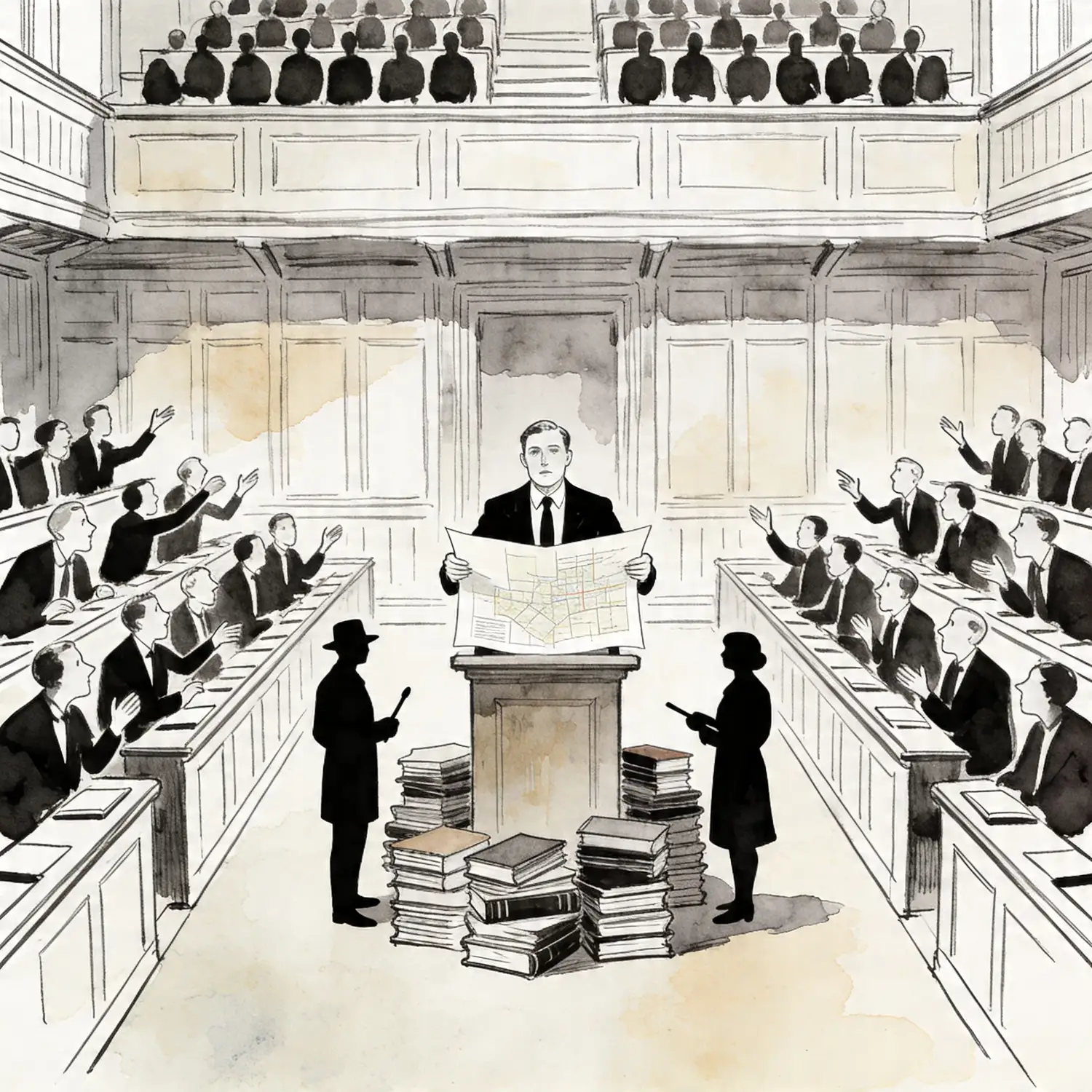
The Northern Ireland Assembly passed the Second Stage of the Irish-Medium Education (Workforce Plan) Bill on Tuesday, with Sinn Féin MLA Pat Sheehan arguing that decades of underinvestment had left the sector in a staffing crisis despite rapid growth. The Bill, which contains two clauses, would place a statutory duty on the Department of Education to prepare, publish and regularly review a workforce plan for Irish-medium education, including measurable targets and a report to the Assembly within 18 months of each plan being laid. Sheehan told the Chamber that consultation responses were overwhelming, with almost 98% of the 529 respondents agreeing that the Department needed to do more to facilitate and encourage Irish-medium education, and noted that "one respondent put it plainly: 'There's no long-term vision, we're firefighting staffing year on year.'" The Bill now proceeds to Committee Stage.
Education Minister Paul Givan spoke against the legislation, arguing that a dedicated Irish-medium education strategy already under development would address the same issues more flexibly. He pointed to existing protections for the sector, including bursary schemes under TransformED and protected teacher training intake numbers even when reductions were applied to other sectors, and questioned why a statutory workforce planning duty should apply to one sector and not others. "Legislation is not necessary and may, in fact, constrain our ability to respond flexibly to changing circumstances," the Minister said. He added that a fixed five-year review cycle did not reflect the dynamic nature of the sector.
Alliance MLA and Education Committee Chair John Mathison gave his support to the Bill, noting that research from Comhairle na Gaelscolaíochta, Stranmillis University College and Queen's University Belfast had consistently highlighted workforce pressures and that, 28 years after the statutory duty to encourage and facilitate Irish-medium education was introduced, no workforce plan had yet been produced. TUV MLA Timothy Gaston opposed the Bill, arguing it amounted to "special treatment" by creating statutory obligations for one sector that did not exist for controlled, maintained, integrated or special schools, while Ulster Unionist MLA Steve Burrows said accountability for the Minister's existing duty should come through Assembly scrutiny rather than new legislation.
Sheehan, in his winding-up speech, addressed the equality argument directly, clarifying that Irish-medium schools span multiple sectors and that the Bill was about parity of access rather than privilege, particularly for children with special educational needs. He said that SEN support services delivered through Irish did not currently exist in a consistent or systematic way, unlike the fully developed infrastructure available to English-medium schools. He noted that teachers in Irish-medium schools still had to translate materials themselves, describing it as "a stain on the Department of Education" after 28 years of the statutory duty being in place.
Justice Minister Naomi Long used Question Time to warn that her Department faced budget pressures of £101 million in 2026-27, rising to £215 million in 2028-29, describing the situation as "catastrophic for the justice system in Northern Ireland." She told MLAs that the figure of £215 million was equivalent to the combined budgets of the Prison Service, the Probation Board, the Youth Justice Agency and Forensic Science. The Minister also confirmed that an accelerated review of Crown Court legal aid fees, commissioned to resolve the Criminal Bar Association service withdrawal, was due to conclude no later than 27 April 2026, and called on all Members to press the CBA to return to full service.
On prisons, Long rejected DUP MLA Jonathan Buckley's characterisation of the Northern Ireland Prison Service as being in chaos following a reported assault on a prison officer in which his jaw was broken. She said the portrayal "simply does not stack up against the evidence," noting that two of the three best-functioning prisons in the UK were in Northern Ireland, and confirmed she had spoken to the director general of prisons as recently as the previous day. She acknowledged drugs remained a serious challenge and outlined measures including full body scanning introduced to reduce the smuggling of illicit material.
On ending violence against women and girls, Long told the Assembly that her Department had allocated £1.9 million specifically to that programme over the past two financial years, with total spend by her Department and non-departmental public bodies amounting to £0.8 million in 2024-25 and £1.1 million in 2025-26. She also confirmed a seven-year, £8.4 million commitment to ASSIST NI to support high-risk victims of domestic and sexual abuse. The Minister said she intended to introduce new offences targeting the creation of non-consensual sexually explicit deepfake images of adults online, a measure she said would disproportionately benefit women and girls.
In Members' Statements, Alliance MLA Nuala McAllister raised concerns about breast cancer referral times, saying statistics showed that just 6% of women waiting for a red-flag appointment were seen within the two-week target window. She called for a long-term workforce and service strategy from the Department of Health, saying it was "nothing short of a disgrace" and that trying to frame such statistics as an improvement was inadequate. McAllister paid tribute to clinicians working overtime but warned the situation was "not sustainable."
UUP MLA Robin Swann raised the issue of youth services funding, warning that the Education Minister's decision to remove ring-fenced funding for youth services placed approximately 1,600 youth organisations and 165,000 young people at risk. East Belfast MLA Peter McReynolds described attending what he called a "crisis meeting" at Ledley Hall and said his request for an urgent ministerial meeting had been declined, which he described as "completely disrespectful." He called on the Minister to urgently reverse the decision.
DUP MLA Diane Dodds and independent MLA Gary Middleton's replacement, Julie Middleton, was formally welcomed to the Chamber by the Speaker and other MLAs on her first day. The House also passed the Local Government Auditor's draft code of audit practice 2026, which sets out the framework for auditing district councils and other local government bodies and comes into force on 15 April 2026. The Hospital Parking Charges Bill passed its Further Consideration Stage without debate, as no amendments had been tabled, and was referred to the Speaker ahead of Final Stage.