Casement Park Clawback Motion Defeated as Assembly Divides Along Sectarian Lines
Casement Park Clawback Motion Defeated as Assembly Divides Along Sectarian Lines
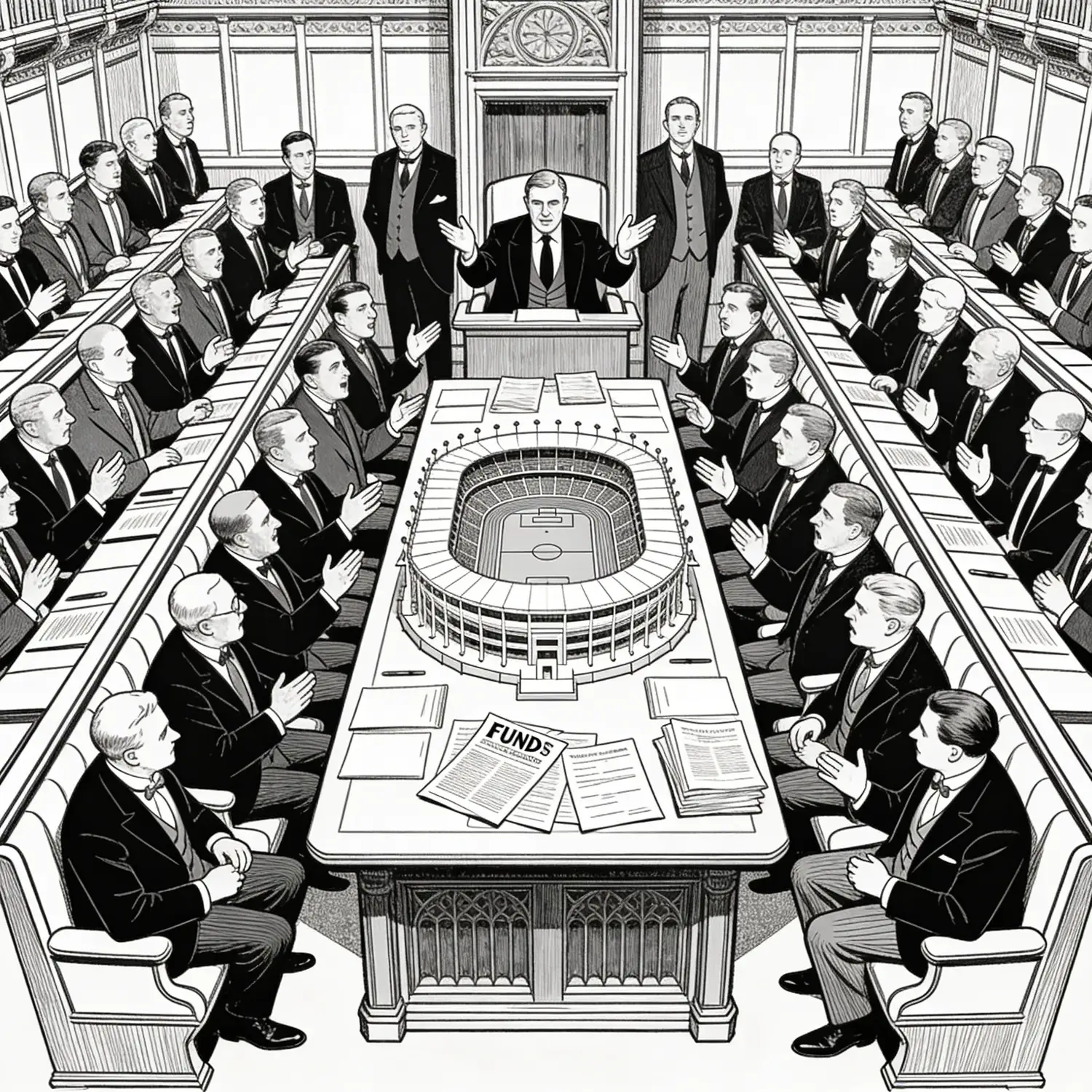
The Northern Ireland Assembly rejected a TUV motion calling for a legally enforceable clawback mechanism on commercial revenues from non-GAA events at Casement Park by 46 votes to 31. The debate, which dominated private members' business on Tuesday, also saw a broader amendment tabled by People Before Profit MLA Gerry Carroll defeated by the same margin. Both votes divided largely along unionist and nationalist lines, with Communities Minister Gordon Lyons breaking from the overall Executive position by publicly backing the principle of the motion and the amendment.
TUV MLA Timothy Gaston, who proposed the motion, made clear his personal opposition to the GAA but argued the debate was about public money and accountability rather than sport or culture. He noted that the project now involves over £170 million in public funding, including £62.5 million from the Executive, £50 million from the UK Government and up to £50 million from the Irish Government, with only £15 million committed by the GAA itself. "The question is not whether money will be made; the question is who will benefit from it," he told the Assembly. Gaston argued that a clawback mechanism, which he described as standard practice in public finance, should apply to any future public money allocated to the stadium.
Nationalist and republican MLAs rejected the motion as a targeted attack on the GAA. Sinn Fein's Sinead Ennis said she would not waste time trying to convince those "who do not want to be convinced" of the GAA's value, and accused unionism of attempting to "punish and debase" the organisation. SDLP MLA Mark Durkan said the motion was "more about rabble-rousing than revenue raising" and described it as "another potshot at the big, bad boogeyman that is the GAA." Both Sinn Fein and the SDLP said they would support neither the motion nor the amendment.
Gerry Carroll's amendment sought to broaden the motion's scope so that any clawback obligation would apply to all publicly funded stadia currently under construction or to be built in future, rather than singling out Casement Park. Carroll, who declared membership of Casement Social Club and described most of his family as GAA members, was critical of what he called the GAA's "vanity project" approach to stadium sizing, arguing that a smaller 15,000 to 20,000 capacity ground could have been built as far back as 2011. He also criticised Sinn Fein for what he described as ignoring residents' concerns around the development. Mr Gaston opposed the amendment on the grounds that its reference to stadia "currently in construction" could create uncertainty for projects already under way based on existing funding agreements.
Communities Minister Gordon Lyons gave the most significant ministerial intervention, stating clearly that he supported the principle of a clawback mechanism. He told the Assembly that any new funding agreement for Casement Park would need to be examined, noting that no funding agreement for Casement had yet been finalised, unlike for Windsor Park and Ravenhill. "If your concern is that this is only about the GAA, vote for the amendment and make sure that, from here on, everybody is treated equally," he said, urging parties to support Carroll's amendment. Alliance, which supports the Casement redevelopment, said it would not back a motion that it believed singled out one sport, but indicated that a consistent clawback principle applied to all publicly funded stadia would be more acceptable.
DUP MLA Philip Brett rejected the framing that unionist politicians were responsible for delays to Casement Park, pointing to what he described as unlawful planning decisions by SDLP minister Mark Durkan and opposition to the project from Sinn Fein-aligned figures including Carroll himself. Brett read into the record remarks from former SDLP MLA Alex Attwood opposing earlier plans and criticised Carroll for having previously called Casement a "vanity project" and for standing on a picket line against the development. The debate included a notable procedural intervention from Madam Principal Deputy Speaker, who challenged Carroll's references to safety concerns at the stadium during his speech.
Earlier in the day, the Assembly passed the Consideration Stage of the Insolvency (Amendment) Bill, including a single technical ministerial amendment to clause 119. Economy Minister Caoimhe Archibald explained that the amendment corrects an omission by ensuring that orders amending Acts of Parliament are subject to the same Assembly scrutiny as orders amending Northern Ireland legislation. The Economy Committee Chair Philip Brett confirmed the Committee had agreed to support the amendment following clause-by-clause scrutiny in November 2025.
During oral questions to the Communities Minister, Members raised a series of concerns about the severe weather emergency protocol (SWEP) after a period of cold weather. SDLP MLA Mark Durkan cited figures showing 58 deaths among the homeless community last year and questioned why confusion had arisen around SWEP activation the previous evening. Minister Lyons said he had been informed the protocol was in place and operating as intended but committed to providing further information. He also noted that SWEP funding had increased from £9,837 in 2023-24 to £51,523 under his tenure. Separately, Sinn Fein MLA Cathy Mason raised a point of order after Lyons referred to her as acting "like a child" during the exchange, and the Principal Deputy Speaker undertook to refer the matter to the Speaker for review.
On housing, the Minister faced questions about vacant properties, the social housing development programme and the local growth fund. He confirmed that he had put proposals to the Executive to ring-fence the social housing development programme budget at the start of each financial year, arguing that late-year capital allocations were inadequate for meeting Programme for Government targets. He was critical of what he described as opposition from both Sinn Fein and Alliance on the Communities Committee to that proposal, and the Committee's handling of the issue attracted extended criticism from the Minister throughout Question Time. On the local growth fund, he acknowledged concern about the impact of reduced UK Government funding on the community and voluntary sector and said the Finance Minister should address the matter urgently.
Following Question Time, the Assembly moved to a private members' debate on Troubles-related sexual crimes and child sexual abuse, brought by Ulster Unionist leader Doug Beattie. The motion called on the UK Government to ensure that victims of Troubles-related sexual violence can seek a legacy investigation as part of the proposed Legacy Commission, with crimes of a sexual nature included as a separate qualifying criterion alongside serious injury and death. It also called on the First Minister and deputy First Minister to write to the UK Government to that effect. Beattie said the motion was intended to shape the legacy Bill currently being developed and highlighted what he described as the persistent and unspoken fear still experienced by victims of abuse carried out by paramilitary organisations.
Members' statements at the start of the sitting covered a range of local and policy issues. Mid-Ulster MLA Emma Sheerin praised an occupational therapy pilot programme at St Colm's High School in Ballinascreen, run in partnership with Ulster University and the Northern Health and Social Care Trust, which helps pupils manage anxiety and mental health. South Down MLA Chris Donnelly raised serious concerns about ambulance handover times, citing a 19-hour wait outside the Ulster Hospital and reporting that 40% of ambulance arrivals at that hospital waited more than two hours in one month. He called for structural reforms to patient flow rather than reliance on seasonal preparedness plans. Foyle MLA Sinead McLaughlin marked the 50th anniversary of the Northlands addiction treatment centre in Derry, calling for greater investment in residential addiction services in the north-west.