Omagh bomb inquiry examines witness accounts and police response
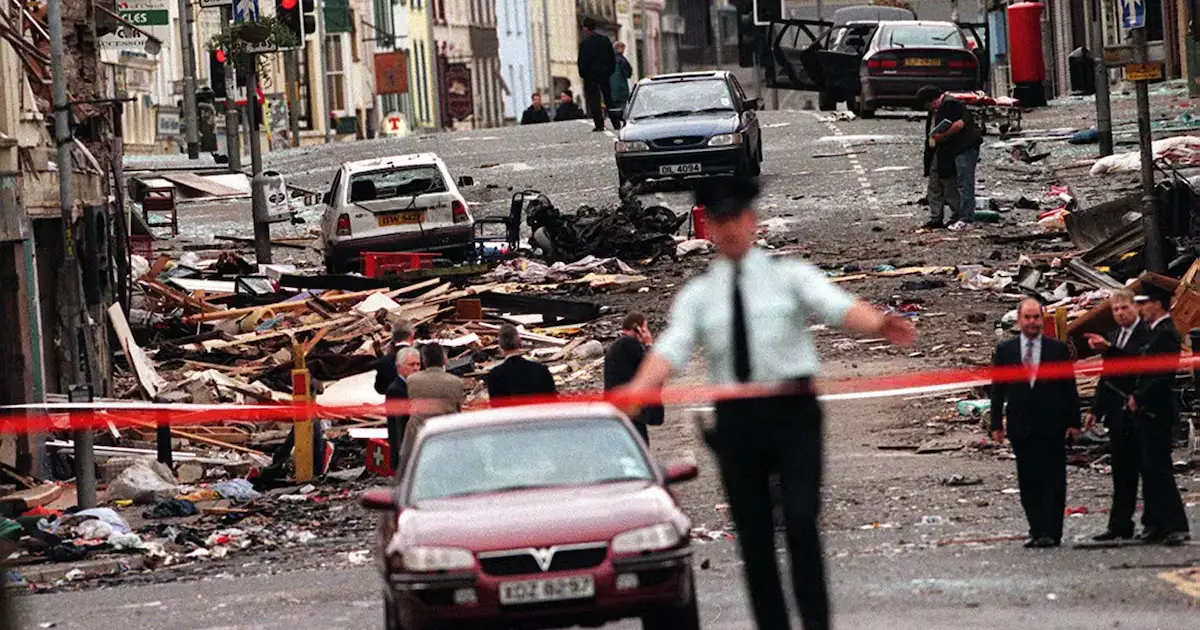
The Omagh bomb inquiry at a Belfast court has heard evidence from former soldiers and police about the immediate aftermath of the 1998 explosion and the events leading up to it.
The bombing, carried out by the Real IRA on August 15, 1998, killed 29 people, including a woman pregnant with twins, and injured hundreds more. The inquiry, which opened in 2024, is examining whether the atrocity could have been prevented by British state authorities.
Lance Corporal Errol Thompson, who was on duty at Lisanelly army barracks, made the first written record of the explosion in a logbook at 3.05pm, noting a large bomb had exploded at an unknown location.
Former RUC constable Alan Palmer told the inquiry he was hit by glass from shop windows and saw people lying dead or seriously injured in front of him.
Former captain Michael Peebles, who was in the barracks operations room, recalled hearing screams and cries over the RUC radio. He said the British army was not notified about bomb warnings by the RUC but learned of them from listening to the radio, as was the custom at the time.
Soldiers were not deployed to Omagh until after the explosion because they were not requested by the RUC, in line with procedure. A barrister for bereaved families asked Peebles if 15 extra soldiers could have been on the streets if the RUC had requested support at 2.30pm, but Peebles said the outcome will never be known.
The inquiry's working hypothesis is that the Real IRA was responsible, but at an organisational level both the Real IRA and Continuity IRA planned and carried out the bombing. It has identified 27 key individuals, 14 of whom have convictions for terrorist offences.
Evidence from mobile phone cell site data showed handsets connected to Seamus McKenna and Seamus Daly moving over the border to Omagh on the day and reappearing on the southern side after the explosion. The inquiry believes McKenna was in the bomb car and Daly in a scout car, but there is no conclusive eyewitness testimony or CCTV footage.
An eyewitness later told police he saw two men reading a map on the roof of a car outside Omagh at about 2pm, with another man in a passenger seat matching the description of the bomb car. Detective Chief Inspector Peter Billingsley confirmed there was no follow-up of this sighting and the second car was never identified.
Another eyewitness, Ruth Buchanan, thought she saw the car parked on Market Street and the driver and passenger walked away. She said the passenger caught eye contact with her and grinned, while the driver appeared to have a serious expression.
The first of three warning calls was made to UTV at 2.29pm from a call box in the Newry area, using a recognised code word. Police began a clearance operation outside the courthouse, but Billingsley said the inaccurate locations in the warnings caused the evacuation to direct people towards the bomb. The streets near the courthouse were cleared and sealed off at 2.58pm, six minutes before the explosion.