Moderate summer heat and humidity can depress dairy cow fertility, CAFRE adviser says
Heat stress is an underappreciated threat to fertility in Northern Ireland’s dairy herds, according to Emma Neville, a dairy adviser with the College of Agriculture, Food and Rural Enterprise (CAFRE). High-yielding cows producing 35-50 litres of milk a day generate substantial metabolic heat and can begin to experience stress at temperatures as low as 18-20 degrees Celsius, she said.
The condition arises when cows cannot shed excess body heat quickly enough, leading to faster breathing, reduced feed intake, and elevated body temperature. This physiological strain disrupts several reproductive processes: follicle development is impaired, oestrous behaviour weakens, ovulation is delayed, and the quality of oocytes declines. The combined effect is a drop in conception rates and a rise in early embryo loss.
The damage is not short-lived. Research cited by Neville indicates that it can take two to three oestrous cycles for reproductive quality to recover after a bout of heat stress. That lag helps explain why infertility problems often appear in autumn, well after temperatures have cooled.
Although Northern Ireland rarely sees prolonged extreme heat, consistently high humidity means the Temperature-Humidity Index (THI) frequently crosses the critical threshold of 68 on warm, humid days, especially in poorly ventilated sheds. At that point heat stress becomes a real risk.
Early detection is key. Farmers should watch for a 10-30 percent drop in dry matter intake, a sharp increase in water consumption, panting at 40-60 breaths per minute, less time spent lying down, and animals clustering in shaded or cooler areas. These indicators allow management adjustments to be made in time.
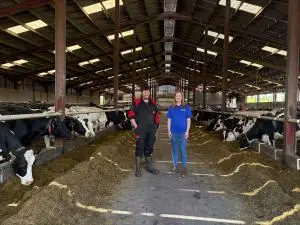
In fully housed herds, simple improvements can make a significant difference. Boosting airflow, installing fans, avoiding overcrowding, and providing constant access to clean, fresh water all help reduce stress. Feeding high-quality, easily digestible rations during cooler parts of the day and maintaining adequate fibre support rumen health. One farmer, Jonathan Gillespie of Killylea, County Armagh, has already applied several of these measures. He changed his shed roofing to keep internal temperatures lower and closely monitors cow behaviour to fine-tune feeding times and ventilation.
Grazing systems are also affected, particularly where shade is absent. Neville advises ensuring easy access to clean water via high-pressure refill troughs and positioning them to minimise walking distances, which boosts intakes and resilience on hot, humid days.
By taking these practical steps, Northern Ireland dairy farmers can mitigate the impact of heat stress and protect herd fertility heading into the breeding season.