Katie Simpson Review Published: Minister Long Outlines Sweeping Reforms After Murder Investigation Failures
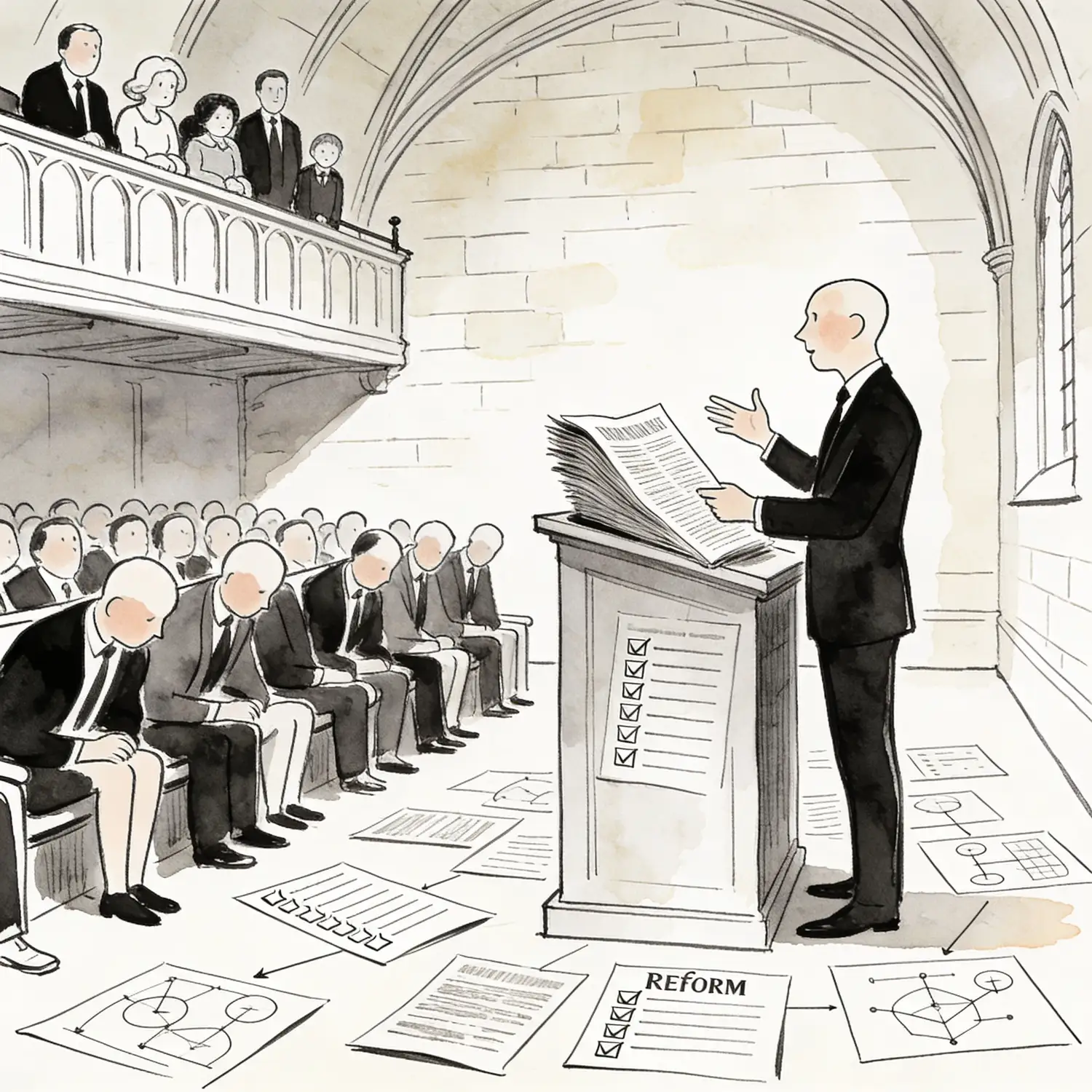
The Northern Ireland Assembly heard a significant ministerial statement from Justice Minister Naomi Long on Tuesday as she presented the findings of an independent review into the murder of Katie Simpson, a young woman killed by Jonathan Creswell, a convicted abuser who was later found dead at his home on the second day of his criminal trial. The review, conducted by Dr Jan Melia, identified 16 detailed recommendations aimed at transforming how statutory agencies respond to coercive control, domestic abuse, and suspicious deaths. Long told Members that since 2020, 30 women have been violently killed in Northern Ireland, describing murder as "the ultimate manifestation of domestic and sexual violence and abuse."
The Minister paid tribute to Katie Simpson's family, some of whom were present in the Public Gallery, describing them as showing "courage and determination to seek answers to ensure that Katie's death was not in vain." Long stated clearly: "It is abundantly clear that investigative practices and mindsets must change," highlighting that Katie's death was concealed and staged as a suicide, and that the investigation suffered from cognitive bias, confirmation bias, and victim-blaming narratives. The review found that coercive control was not recognised as a serious and potentially lethal factor, and that investigations were passed between departments without a designated lead.
Among the most significant recommendations are the development of six new indicators of concealed homicide to be embedded across sudden death investigations, mandatory specialist domestic abuse input from the outset of any investigation where there is a history of violence, and a requirement for pathologists to consider coercive control and staged suicide as part of their analysis. The review also calls for mandatory safeguarding policies and vetting across all equestrian facilities, following findings that systemic safeguarding failures existed in that sector, which was central to Katie's young life.
On the issue of bail, the Minister acknowledged that the decision to grant Jonathan Creswell bail, despite his being charged with murder and having already attempted to interfere with witnesses, was "deeply flawed." She said that risk to victims and witnesses must be properly considered in bail decisions, particularly in cases involving coercive control, though she noted such decisions rest with the PSNI and courts rather than her Department. Responding to a question from John Burrows, who argued the justice system gave too much weight to suspects' rights, Long said: "I do not agree with the Member when he says that the pendulum has swung too far towards the rights of those who are accused, but I agree that there has to be a careful balance."
MLA Nicola Mallon raised concerns about police officers under investigation in the case who had retired or resigned before proceedings concluded. Long confirmed she is progressing legislative proposals, including amendments to the Justice Bill, that would create a barred and advisory list for policing in Northern Ireland and facilitate misconduct proceedings against former officers. She said: "I am committed to ensuring that we work to close the gaps in the misconduct process and to ensure that officers who have committed wrongdoing do not walk away from policing with a clean slate."
In response to questions about wider systemic issues, Long confirmed that a comprehensive review of the statutory guidance underpinning the Public Protection Arrangements Northern Ireland, first introduced in 2008, is being scoped. She also confirmed that a new enhanced multi-agency model to replace the Multi-Agency Risk Assessment Conference process is being developed and will be in place in 2026-27. Dr Melia will chair an implementation group to oversee delivery of the 16 recommendations.
The Assembly began its day with a Matter of the Day statement on the Springhill inquest findings, which last week concluded that five people shot dead by the British Army on 9 July 1972 were killed using unreasonable and excessive force. The five victims were Father Noel Fitzpatrick, Patrick Butler, Margaret Gargan aged 13, David McCafferty aged 15, and John Dougal aged 16. Gerry Carroll paid tribute to the families who had fought for 54 years for recognition, stating the court found soldiers "lost control" and that "the force used was not reasonable." Sinn Fein's Liz Reilly described the British Government's approach to legacy as "disgraceful" and said any legacy process must be article 2-compliant.
Unionist Members offered a different perspective on the inquest findings. Paul Frew of the DUP acknowledged the findings but asked the republican movement to "come out and tell that truth so that all of the families affected by the Troubles can rest easy." Doug Beattie of the UUP stated that while the killing of the five was "of course" wrong, he noted that hundreds of people were killed in July 1972, including his uncle, for whom no inquest has been held. Jonathan Buckley pointed to what he described as double standards from Sinn Fein, citing the party's non-participation in the Kingsmills inquest. Matthew O'Toole of the SDLP said that those given a legal monopoly on the use of force must be held to the highest legal standards, and expressed solidarity with the Springhill families.
During Members' Statements, a number of other issues were raised. Concerns about domiciliary care provision in rural areas were highlighted by Diane Dodds, who warned that an independent provider is threatening to withdraw services and criticised the Health Minister for failing to act despite repeated promises. Alan McMurray raised the ongoing damage caused by deliberate wildfires in the Mourne Mountains, noting that over 90% of invertebrates on Slieve Donard were lost in a 2021 fire and have still not recovered five years later. Órla Hunter paid tribute to Jordan and Cian Adams, two brothers who are running 32 marathons in 32 days to raise awareness of frontotemporal dementia, the condition that took their mother and which they have been told they are almost certain to develop themselves.
The Assembly also moved to Consideration Stage of the Northern Ireland Fiscal Council Bill, which would place the council on a statutory footing following commitments in the New Decade, New Approach agreement. Matthew O'Toole, in his capacity as Finance Committee Chair, outlined the Committee's detailed scrutiny of the Bill and moved several amendments, including one to require Budget assessment reports to consider the extent to which a proposed budget is aligned with the most recently agreed Programme for Government. A separate amendment tabled by Robbie Tennyson on duplicated public service provision costs was also considered as part of the debate.