DUP Blocked Minimum Unit Pricing Despite Evidence It Would Save Lives, Assembly Told
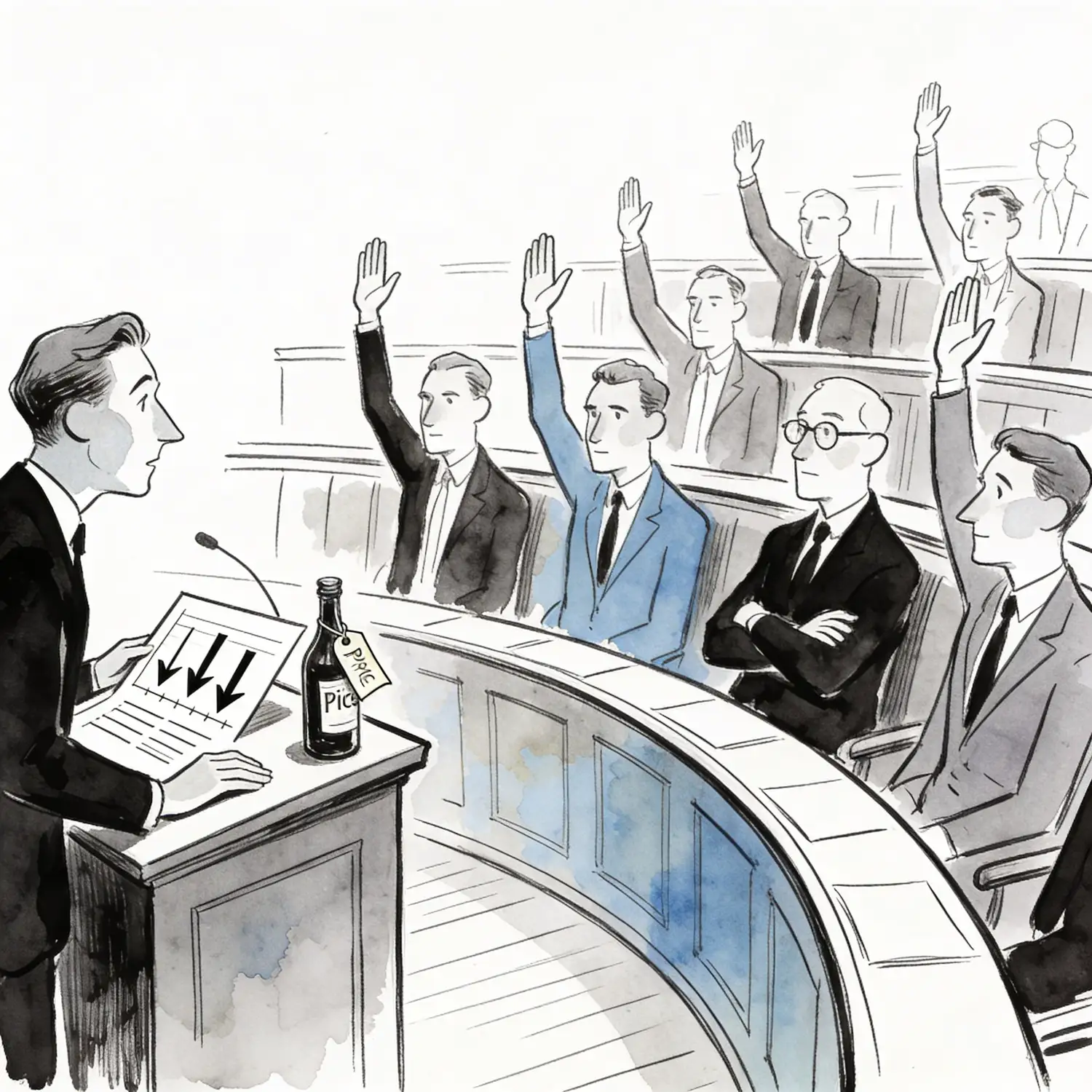
The Northern Ireland Assembly was told on Tuesday that minimum unit pricing (MUP) for alcohol will not be introduced before the end of the current mandate after the Executive failed to reach agreement, with Health Minister Mike Nesbitt expressing deep regret and multiple parties pointing the finger directly at the DUP for blocking the measure. Nesbitt confirmed that, despite support from his own Ulster Unionist Party, Sinn Féin, Alliance and the SDLP, he had been unable to secure Executive agreement, and primary legislation had now become undeliverable in the current term. He told the Assembly that alcohol causes twice as many deaths each year in Northern Ireland as illicit drugs, with an estimated 676 people dying annually as a direct result of their alcohol consumption.
Nesbitt set out extensive evidence in favour of MUP, citing modelling suggesting a 65p minimum unit price would reduce alcohol-related deaths by 82 per year, cut hospital admissions by 3,482 annually, reduce crime by 3,188 offences per year, and deliver healthcare savings of £117.4 million over 20 years. He referenced Scotland's experience, where MUP is estimated to have led to 120 fewer alcohol deaths every year. He stated: "I feel that not introducing minimum unit pricing is a missed opportunity — an opportunity that would have allowed the Assembly to make a meaningful difference to reducing alcohol-related harms and inequalities across our region."
Committee for Health Chair Philip McGuigan placed the blame squarely on the DUP, telling the Chamber it had "opted to ignore the scientific evidence and health advice" and that "people will die alcohol-related deaths because the DUP is blocking this very important health legislation." Sinn Féin's Órlaithí Flynn described the blocking as "a disgrace," noting an 80% increase in alcohol-related deaths since 2014, reaching 397 in 2024. DUP members Diane Dodds and Deborah Erskine responded by calling for greater focus on treatment services for dependent drinkers, though Nesbitt dismissed the line of questioning as "pure deflection."
The Assembly also heard a ministerial statement from Communities Minister Gordon Lyons on his visit to the United States to promote Northern Ireland's connections with America ahead of the 250th anniversary of the signing of the Declaration of Independence. Lyons announced that he had secured the loan of key historical records from American institutions, including an original printed Declaration of Independence and a letter from Charles Thomson, for display in Northern Ireland. He said a major exhibition would be hosted by the Public Record Office of Northern Ireland (PRONI) this autumn. He told the Chamber: "The ties between Ulster and America have never been stronger."
The ministerial statement drew sharp criticism from SDLP member Mark Durkan and Sinn Féin's Declan McHugh, who questioned the cost of the trip at a time when people were struggling with energy bills and the cost of living. Lyons defended the visit robustly, confirming that eight million people in the New York media market had seen promotional coverage of Northern Ireland during the St Patrick's Day parade on NBC. He said he did not yet have a final cost for the trip but would make it public. Sinn Féin's Pat Sheehan questioned the £5,000 spent on a genealogy report exploring JD Vance's Ulster-Scots ancestry, which he claimed proved no links existed. Lyons rejected that characterisation.
The Assembly passed the Final Stage of the Insolvency (Amendment) Bill, which introduces around 30 targeted improvements to insolvency procedures for individuals, companies and partnerships. Key changes include allowing creditors to participate in meetings remotely rather than in person, streamlining processes for insolvency practitioners, giving administrators new powers to pursue directors guilty of fraudulent or wrongful trading, and ensuring small creditors owed less than £1,000 are paid more swiftly. Economy Minister Conor Murphy described it as ensuring the insolvency framework is "modern, responsible and fully equipped to meet the evolving needs of our economy." The Committee for Economy Chair Phillip Brett confirmed the Committee's support for the Bill.
The Assembly then moved to the Consideration Stage of the Sign Language Bill, introduced by Communities Minister Gordon Lyons. A series of amendments were debated, including a ministerial amendment to make sign language classes available free of charge and to raise the age threshold for family classes from under 19 to under 25, reflecting that language development continues into early adulthood. MLA Kate Kneafsey Armstrong tabled a further amendment to extend provision to adults aged 25 and over who become deaf, along with their families and carers, with provision for a fee to be charged. Lyons said he did not oppose the principle but argued primary legislation was not required, noting that deaf sector organisations had told his Department demand from deafened adults was low. He said the Department would instead fund a pilot programme of classes for deafened adults to assess demand.
In Members' Statements, the Assembly heard a tribute to Natalie McNally from MLA Stephen Tennyson, the day after her killer was convicted. Tennyson said: "Although justice was served yesterday, that will not bring Natalie back, though I hope that it brings the family some comfort and closure." He called on the Chamber to commit to building "a society that is kinder, more compassionate and inclusive and in which men treat women with the dignity and respect that they deserve."
MLA Nuala McAllister raised Ovarian Cancer Awareness Month and reported tangible progress following her campaign with Target Ovarian Cancer, including an update to cervical screening invitation letters from this month to clarify that the test does not screen for other gynaecological cancers. She noted research indicating 46% of women in Northern Ireland incorrectly believed cervical screening would detect ovarian cancer. SDLP MLA Matthew O'Toole used a Member's Statement to criticise the Infrastructure Minister's developer contributions policy, published last week under embargo without a debate in the Chamber. He described the voluntary scheme as "a glorified tip jar" that would not compel any developer to contribute to tackling the waste water infrastructure crisis. The Assembly also heard tributes to former Grosvenor Grammar School principal John Lockett OBE, who recently passed away, and to retiring senior usher Billy Mooney, who had served Parliament Buildings since 1998.