NI Assembly Debates Criminal Justice Bill, Energy Crisis and Middle East Conflict at Stormont
The Northern Ireland Assembly debated the Second Stage of the Criminal Justice (Sentencing etc) Bill, a sweeping piece of legislation covering sentencing reform, Charlotte's law, hate crime aggravators, assaults on public workers and increased road traffic penalties, with the families of victims including Charlotte Murray, Lisa Dorrian and Enda Dolan present in the Public Gallery. Justice Minister Naomi Long described the Bill as "another step forward" in reforming the justice system, emphasising its aim to improve "transparency, understanding and effectiveness of sentencing." The Bill passed its Second Stage and was referred to the Justice Committee for scrutiny.
A central and deeply emotional element of the Bill is Part 5, which introduces what has been termed Charlotte's law, requiring courts to increase custodial sentences where a convicted killer refuses to disclose the location of a victim's remains, with a minimum additional period of 30% of the original sentence. The Minister paid tribute to the families of Charlotte Murray and Lisa Dorrian, noting that "the pain endured by those two families is unimaginable." Lisa Dorrian's father and sister Joanne were present in the gallery to witness proceedings.
Part 7 of the Bill increases the maximum sentence for causing death or serious injury through dangerous driving from 14 years to 20 years, and also introduces the possibility of a life sentence for repeat offenders. The Minister acknowledged the Dolan family, noting that Friday 20 March would have been Enda Dolan's thirtieth birthday. Enda was killed at 18 years old when a van driver who had taken drink and drugs mounted a pavement and struck him on the Malone Road in Belfast in 2014.
Committee Chair Paul Frew welcomed the Bill but raised concerns about whether suspended sentence orders should be available for offenders given sentences of between five and seven years, arguing that some serious crimes may be incompatible with such orders. He also questioned why the unduly lenient sentencing provisions in Part 4 apply only to Crown Court cases and not to the Magistrates' Court, a concern echoed by Ulster Unionist leader Doug Beattie. Beattie also called for a formal sentencing council to be established, arguing Northern Ireland is "the outlier in these islands" on the matter. The Minister indicated the question of a sentencing council had been included in the ongoing sentencing review.
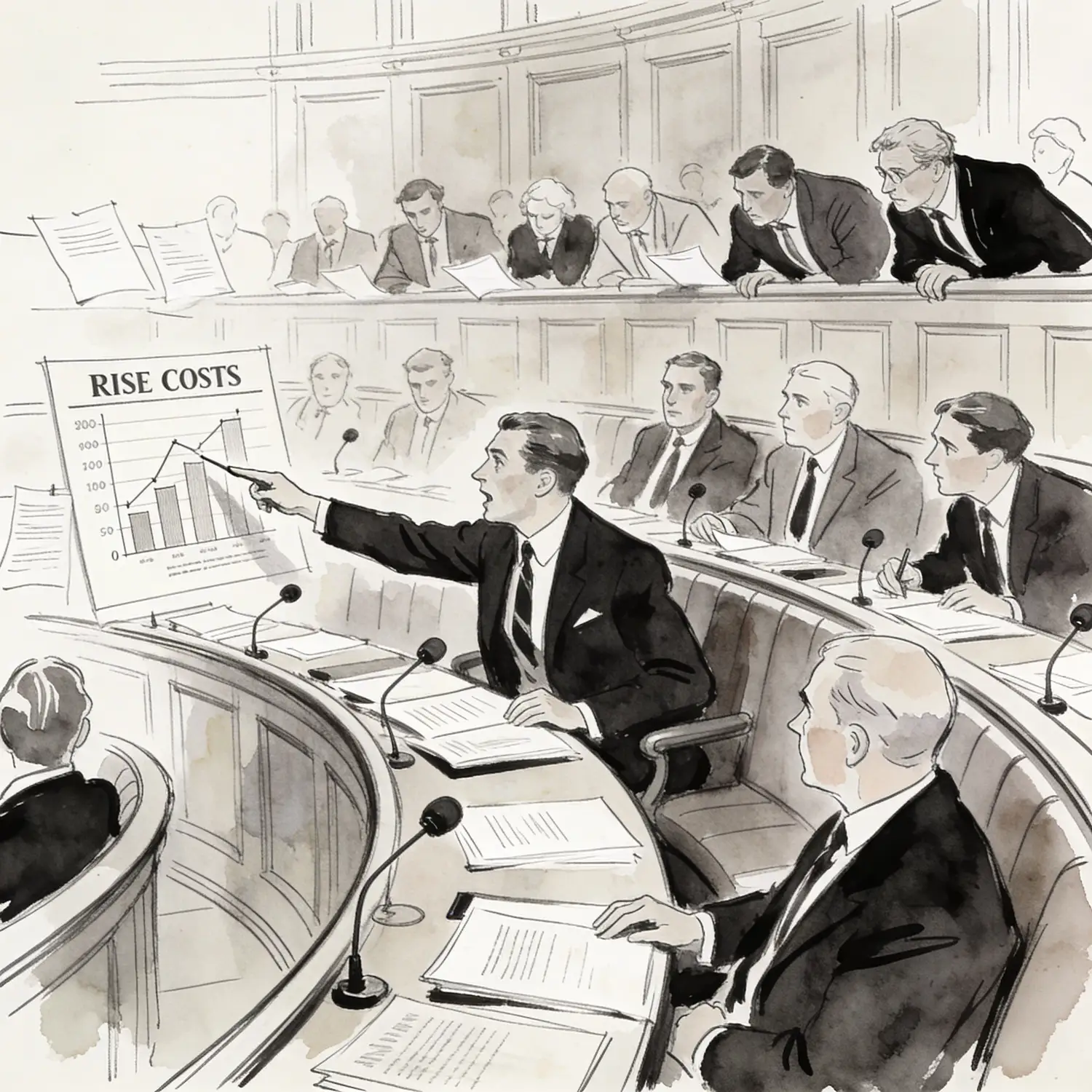
During Question Time, First Minister Michelle O'Neill faced repeated questions about the Executive's response to the conflict in Iran and its impact on rising energy costs for households. O'Neill stated that an almost immediate impact had been felt locally, with oil prices exceeding $100 a barrel, and described the £17 million announced by the UK Government this morning as "a real slap in the face" to struggling families, adding that it amounted to roughly £30 per household if distributed evenly. She said the announcement "does not touch the surface of what is required."
O'Neill faced pressure from SDLP leader Matthew O'Toole, who asked why the Executive had not convened a formal working group of ministers and officials to design a support scheme before approaching the UK Government for funding. O'Neill rejected the framing, insisting that from "day 1" the Executive had been fighting for households and making the case to the Treasury. She argued that the firepower needed to support households had to come from Westminster and said the focus should be on collective advocacy rather than internal blame.
The DUP was criticised by O'Neill and Sinn Féin colleagues for what they described as "cheerleading" for the war from its outset, and for what they characterised as deliberate misrepresentations about the availability of £81 million for household support. O'Neill said the £81 million required Westminster legislation to release and was not sitting in Executive coffers. Alliance MLA Stephen Honeyford, speaking during Members' Statements, described the Economy Committee's handling of the issue earlier in the day as a "political pantomime" between the DUP and Sinn Féin, saying it "generated considerably more heat than the £81 million that we were there to discuss."
Finance Minister John O'Dowd updated the Assembly on the multi-year Budget process, confirming that the public consultation closed on 3 March and that the open-book review with the Treasury is progressing. He noted that the spring statement provided an additional £387 million across the Budget period but that reserve claim repayments of £80 million in 2026-27 and £160 million in each of the two following years largely offset the additional funding. O'Dowd also confirmed that baby loss certificate regulations are expected to be brought before the Finance Committee before the Easter recess, with a scheme potentially open for applications by June, and that certificates will be available retrospectively with no time limit.
During Members' Statements, DUP MLA Paul Frew pushed back against what he described as the Alliance Party's accusation at its weekend conference that unionists were "demonising" Justice Minister Long, insisting that rigorous scrutiny of ministers was a core function of the Assembly. He pointed to figures showing the median time for court cases has risen to 750 days, 200 days longer than in 2020. UUP MLA Claire Sugden returned to the Chamber after several months of absence due to ill health and spoke movingly about her experience as a patient at Causeway Hospital, using her statement to call for greater embedding of trauma-informed approaches across health and public services in what she described as "a post-conflict society."
Sinn Féin MLA Pat Sheehan used his Members' Statement to welcome the dismissal of the British Government's appeal against musician Liam Óg Ó hAnnaidh of the group Kneecap, stating that the original decision to pursue the appeal "should never have been taken" and that the case was "about the abuse of state power to pursue and intimidate an artist." Alliance MLA John Blair marked the upcoming Global Recycling Day on 18 March, calling on Northern Ireland to move more decisively toward higher recycling rates and a circular economy. SDLP MLA Sinéad McLaughlin highlighted Jessie Buckley's Oscar win for best actress in the film Hamnet, using the occasion to call for greater local investment in the arts.
The Marriage and Civil Partnership Bill was introduced at its First Stage by Finance Minister O'Dowd. The Bill makes provision regarding the persons who may solemnise marriage and sets out a minimum age for marriage and civil partnership.