NI Assembly Passes Budget Bill Amid Warnings of Looming Financial Crisis
NI Assembly Passes Budget Bill Amid Warnings of Looming Financial Crisis
The Northern Ireland Assembly debated the Second Stage of the Budget Bill on Tuesday, authorising revised expenditure of £28.1 billion from the Consolidated Fund and resources totalling £32.7 billion for the 2025-26 financial year. The Bill, which was granted accelerated passage by the Finance Committee, also includes a 45% Vote on Account to allow Departments to continue operating into the 2026-27 financial year. Finance Minister John O'Dowd described the legislation as essential to ensure that public services could continue to be delivered before the end of the financial year on 31 March.
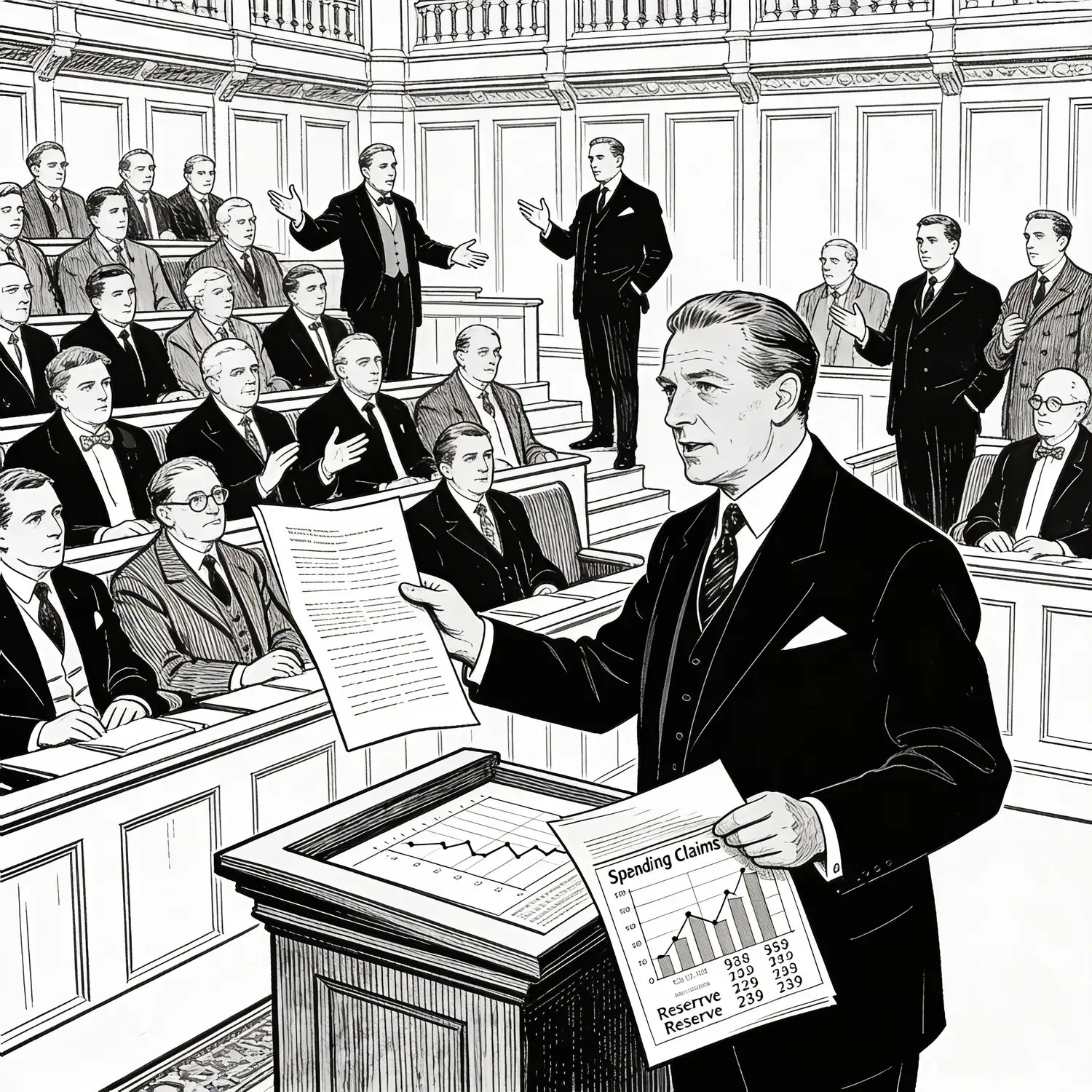
The debate was dominated by warnings from across the chamber about the sustainability of public finances. The SDLP's Matthew O'Toole, speaking as leader of the Opposition, noted that the independent Fiscal Council had that day described the £400 million reserve claim secured from the Treasury as "a de facto bailout". He argued that two years after the Executive's restoration, there was still no agreed multi-year Budget, no meaningful transformation of public services and no credible plan to address structural underfunding. "Today is an exercise in legally authorising spending in the absence of an agreed strategic plan," he said. "That is the bare minimum that the public should expect when they elect a Government."
Finance Minister O'Dowd defended the Executive's record, saying that £1.3 billion in additional funding had been secured from the Treasury since the Executive was restored and that £120 million in transformation funding had already been announced. He attributed the ongoing financial difficulties primarily to chronic underfunding by successive British Governments, pointing in particular to the abrupt ending of a £520 million stabilisation fund. He told the Assembly that an open-book review of departmental spending with the Treasury was expected to begin "in the next 24 hours" and be completed by mid-March, with the outcome intended to support a multi-year Budget agreement and inform wider fiscal framework negotiations.
Speaking as Chair of the Finance Committee, O'Toole acknowledged the Committee's unanimous agreement to grant the Bill accelerated passage, while cautioning that this should not be regarded as a formality. He raised concerns about the £400 million reserve claim needing to be repaid over the next three financial years - £80 million in 2026-27 and £120 million in each of the following two years - warning that Departments should not continue to overcommit budgets in the hope that Treasury transfers would cover shortfalls.
Philip McGuigan, Chair of the Health Committee, welcomed the more than £8.5 billion allocated to health but stressed that a multi-year Budget was essential. He cited the need to address waiting lists, workforce planning, capital investment and the development of all-island cooperation in specialist services. He quoted the Department of Health's permanent secretary as saying: "I do not believe that it is right to keep going back to the Budget and saying that we need more for health and social care ... The answer is not to think that we should argue for more and more funding but to ask how we will realign the funding that we have so that we spend it better."
DUP justice spokesperson Paul Frew, speaking as Chair of the Justice Committee, highlighted the Department of Justice's projected shortfall of £101 million in the coming year and an annual capital funding gap of £150 million. He raised concerns about the demand-led nature of the justice budget, pointing to rising court caseloads - particularly for sexual offences - a growing prison population and the need to rebuild PSNI officer numbers to an establishment figure of 7,000. He also criticised the Executive more broadly for failing to align Budget decisions with Programme for Government priorities.
DUP health spokesperson Diane Dodds raised concerns about the new maternity hospital on the Royal site in Belfast, which she said had been handed over to the Belfast Trust nearly two years ago but remained unusable due to water safety issues. She said the repair work could take a further 28 months and called for an independent inquiry into how the situation had been allowed to develop. She also criticised the failure to fund a full-time 24/7 thrombectomy service, which she said could save 160 lives a year.
Paula Bradshaw, speaking as Chair of the Executive Office Committee, highlighted concerns about the recovery of costs from institutions responsible for abuse in mother-and-baby homes. She said the Committee had "no idea as yet on how much the institutions will pay back to the public purse" and called for greater transparency. She also urged the Finance Minister to press the Treasury for funding for the new legacy commission and for community groups supporting Troubles victims.
Colm Gildernew, Chair of the Communities Committee, told the Assembly that 330,000 people in Northern Ireland lived in poverty, including one in four children, and warned that the community and voluntary sector faced severe uncertainty, particularly regarding the local growth fund. He said the Department for Communities faced a projected resource shortfall of £174.4 million and a capital shortfall of £88.2 million in the coming year.
During Question Time, Finance Minister O'Dowd was questioned on a range of issues. On Reval2026, which he paused in January following concerns from businesses, he said he had not ruled out any engagement options and was open to proposals for an alternative methodology for calculating non-domestic rates. On Civil Service recruitment, he highlighted a successful pilot scheme in the north-west that filled 155 posts within 12 weeks, describing it as a significant shift towards a more agile recruitment model. On bank branch closures, he expressed serious concern about the impact on vulnerable communities and said he was pressing for Northern Ireland to have representation on the Government's financial inclusion advisory committee.
Earlier in the day, Members' Statements covered a wide range of issues. East Antrim MLA John Blair's colleague Sydney Anderson raised the case of Mark Dyer, a cancer patient who died after an allergy to dexamethasone was not recorded on his electronic patient record. His daughter Rachel has proposed "Mark's Law", calling for coloured wristbands for patients with serious allergies, a review of allergen recording processes and upgraded staff training. Members also heard statements on PSNI recruitment and the low proportion of applications from the Catholic community, the A5 road following a serious accident overnight, the UNISON Good Work campaign for classroom assistants, eating disorders awareness, the Líofa Gaeltacht bursary scheme, childcare costs and the 21st anniversary of the disappearance of Lisa Dorrian.