CAFRE issues silage testing guidance for housed livestock
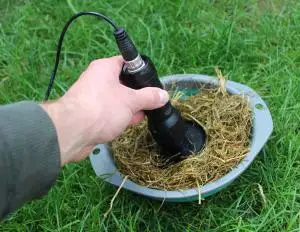
College of Agriculture, Food and Rural Enterprise (CAFRE) beef and sheep adviser Faith Stewart has advised farmers to test silage regularly as livestock are housed for the winter.
Stewart said feed costs are a large contributor to variable costs in any livestock system. She said monitoring silage quality and only balancing the ration with concentrates when required is important.
According to CAFRE, silage analysis provides farmers with the information needed to assess forage quality, make feeding decisions and improve the efficiency of livestock production. Not testing results in guessing and risks over- or under-feeding.
CAFRE advises that testing should take place six weeks after harvesting and ensiling to allow fermentation to occur. Samples should be taken every four weeks thereafter.
For a single-cut clamp, 10 to 12 sub-samples should be taken in a W-shape across the pit face. Where multiple cuts are layered in the clamp, samples should be kept separate for testing. Bales from the same field should be sampled separately. A core sampler allows bales and clamps to be tested without opening. Areas of waste or spoilage should be avoided, and air should be expressed from the sample bag to prevent deterioration.
The main parameters of a silage analysis are dry matter, energy, protein and fermentation values.
Dry matter measures how much of the silage is not water. Good quality silage should be 23% to 30% dry matter. Low dry matter silage can be acidic with low intakes, while high dry matter silage can lead to heating and spoilage.
Digestible organic matter, expressed as D-Value, should be at least 68% for good quality silage. Metabolisable energy should be at least 11 MJ ME/kgDM. Crude protein percentage is an estimate of protein quantity and does not indicate digestibility or quality.
Fermentation is represented by pH and lactic acid. pH should be between 3.8 and 4.2. Silage with a pH above 4.7 indicates poor fermentation, tends to be high in butyric acid and has a sharp, unpleasant smell. Such silage tends to be dark and spoils quickly when fed out. Silage with a pH below 3.6 may undergo secondary fermentation, reducing protein content.
Ash content above 9% is a warning of soil contamination, which can increase the risk of listeriosis in sheep. High readings can follow a wet season if ground conditions were soft.
CAFRE advises maintaining a clean, straight and tight clamp face to reduce air entering the silage and limit aerobic spoilage, moulds and mycotoxins in high dry matter silages.
The organisation provides silage analysis for Business Sustainability Group and Themed Group clients. Farmers can contact their CAFRE adviser through their local DAERA Direct office for further information.