Fermanagh-born doctor receives international regenerative medicine award
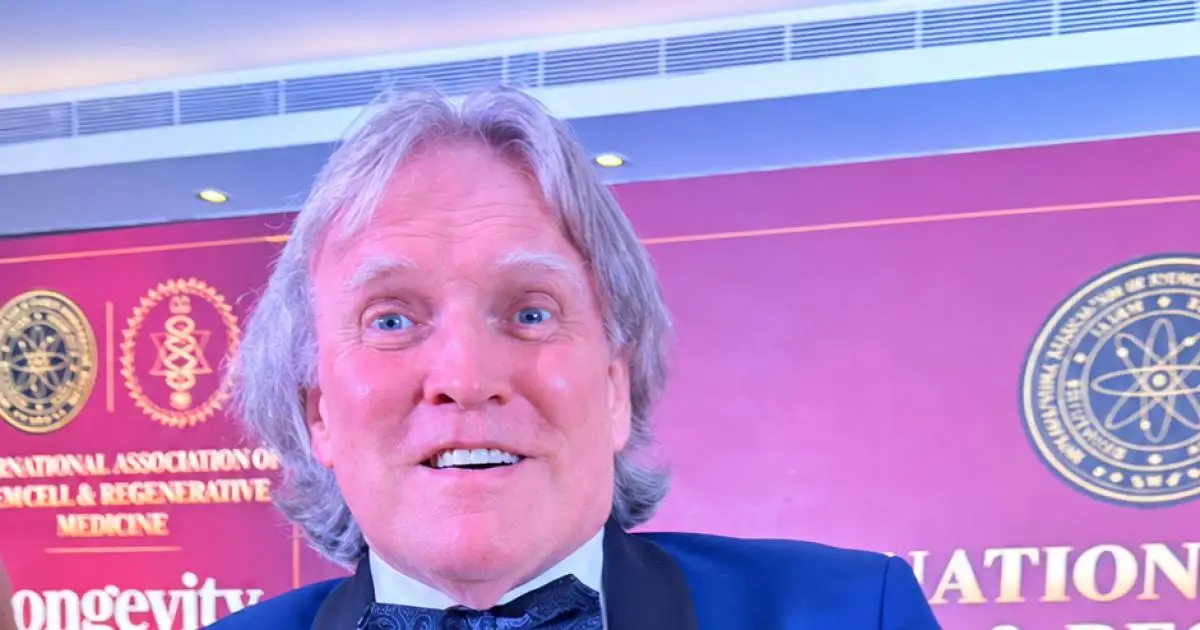
A physician and scientist born in Fermanagh has been given an International Regenerative Medicine Innovation Award. Professor Patrick Treacy received the award at the 11th IASRM World Congress, Longevity Revolution 2026, held in New Delhi. The award recognises his work in platelet-rich plasma, stem-cell approaches, photobiomodulation, and research into cellular signalling, inflammation, and the biology of ageing. Treacy studied medicine at the Royal College of Surgeons in Ireland and holds an honours degree in Biochemistry from Queen’s University Belfast. His research has included the early clinical application of platelet-rich plasma and platelet-derived growth factors, alongside stem-cell and regenerative approaches and red-light photobiomodulation. These techniques have been explored in areas including tissue repair, skin rejuvenation and hair restoration. More recently, his work has focused on the biological processes associated with ageing, including mitochondrial function, inflammation and cellular signalling. At the congress, Treacy was a keynote speaker and presented a talk titled “Pathways of Ageing and Human Longevity”. His presentation examined the biological mechanisms involved in ageing, including genomic, epigenetic, mitochondrial, inflammatory and regenerative processes. He also highlighted the importance of distinguishing between evidence that a treatment changes a biological marker and evidence that it actually improves human healthspan or lifespan. Treacy outlined a pathway from biomarkers and biological-age measurements through to tissue function and healthspan, with lifespan representing the ultimate endpoint. His work has increasingly focused on understanding the biological signals and cellular environment which determine whether damaged tissue can effectively regenerate. It has also explored how regenerative approaches might be applied not only to repairing tissue, but to understanding the cellular processes associated with ageing. The international recognition adds to Treacy’s longstanding work in regenerative medicine and his contribution to the emerging field of longevity science.