Derry forum on AI hears calls for public voice in development
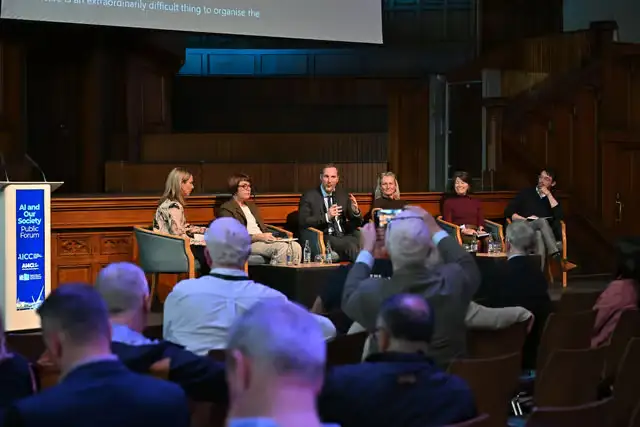
Around 130 people gathered at the Guildhall in Derry for a symposium on the impact of artificial intelligence on society.
The AI Collaboration Centre at Ulster University, in partnership with AI for Collective Intelligence, organised the AI in Our Society forum, bringing together members of the public, AI experts, and industry leaders.
David Crozier CBE, Director of the AI Collaboration Centre, said AI raises important questions about the kind of society people want to build and the values that should guide development. He noted the centre has been working with businesses across the region but recognises the technology stretches across all aspects of life. He was pleased to bring together members of the public in Derry to discuss where we are now, what the technology can do, and what must be done in partnership across business, government and academia to ensure the technology reflects public needs.
Crozier said a central theme of the evening was that people see significant potential in AI but also want the opportunity to understand it, question it and have a meaningful voice in how it develops.
Professor Seth Bullock, Director of the AI4CI Hub, said the chances that AI will be used responsibly and in ways that benefit society are increased when the public are engaged in conversations about what AI is and what it can do.
The forum examined how AI is shaping healthcare, education, public services, business and everyday life. It encouraged participants to consider the ethical, economic and social questions that accompany rapid technological change.
Attendees took part in live polling. Key responses included: 26 per cent said they deliberately use AI several times a day, while the same proportion said they never deliberately use it. A further 21 per cent reported using AI daily. 75 per cent said they felt fairly or very confident explaining, in simple terms, what AI can and cannot do.
Asked about their main concerns, the impact on children, learning and creativity emerged most frequently, followed by false or misleading information. Other concerns raised included the concentration of power, security and harmful uses, privacy and personal data, environmental impact, bias and discrimination, and the potential impact on jobs. Another focus was the environmental impact of AI alongside how AI could help tackle climate change and make a positive difference in healthcare and medicine.
The discussion was chaired by Lorraine Acheson, Independent Strategy and Policy Adviser. Panellists included Professor Michaela Black, Professor of Artificial Intelligence at Ulster University; Tadhg Hickey, Head of AI and Digital Ethics Policy at the AI Collaboration Centre; Kathryn Harkin, Head of AI Northern Ireland at NTT DATA; Mark Lee, Acting Deputy Secretary for Economic Policy Group at the Department for the Economy NI; and Patricia O’Hagan MBE, Chair of Matrix NI.
The event took place the day after the resignation of former Anthropic researcher Jacob Coxon made headlines. Coxon warned that if the AI race continues unabated it could lead to the creation of self-improving superintelligence and superhuman systems that can hack anything. He claimed that people building AI earnestly believe it could kill us all by the end of the decade.