Record Attendance at Belfast Fleadh as City Welcomes 1.65 Million Visitors
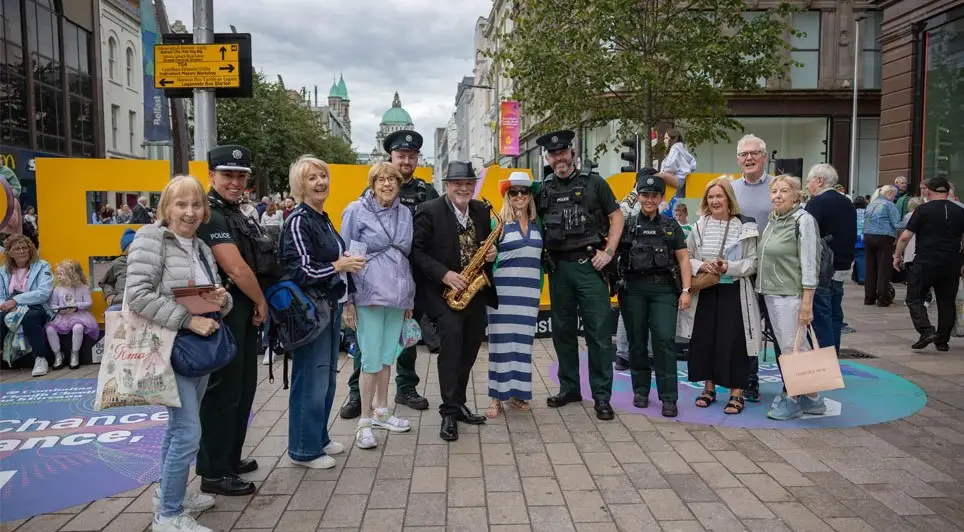
The 2026 Fleadh Cheoil na hÉireann, held in Belfast from 2 to 9 August, attracted 1,653,999 visits to the city centre, more than double the initial projection of 800,000 and an 89 per cent increase on the same week the previous year. Cameras operated by Belfast One Business Improvement District within a one-square-mile radius of City Hall recorded the footfall. The busiest day was Saturday, when 289,560 people were counted.
Assistant Chief Constable Anthony McNally, who led the policing operation, said the force focused on traffic and transport planning and public safety. Officers were deployed to assist with crowd management and were warmly received by visitors, he added.
A central medical hub was set up at Ulster University's Belfast campus, staffed by St John Ambulance Northern Ireland volunteers working alongside Health and Social Care staff and ambulance crews. Health Minister Mike Nesbitt visited the facility and praised the collaborative effort to provide on-site treatment, which he said helped ease pressure on hospitals. The university also hosted Scoil Éigse summer school and All-Ireland competitions.
Translink reported over 1.7 million passenger journeys on its network during the eight days, an increase of more than 620,000 on the equivalent period in 2025. Accommodation occupancy averaged 84.6 per cent, and the two official campsites reached full capacity for the final weekend.
More than 5,000 competitors from 22 countries took part in over 200 competitions. The programme featured 438 official events across more than 90 venues, including 107 acts on the main Gig Rig stage. A team of 1,300 volunteers distributed 200,000 guides and maps. Early reports indicated strong trading in hospitality venues.
Following the festival, Alliance Party representatives wrote to Belfast City Council, the Department for Infrastructure, the Department for Communities and Translink requesting a wide-ranging review of city centre pedestrianisation. South Belfast MLA Kate Nicholl said the temporary street closures during the Fleadh showed the benefits of designing streets around people, but stressed that any permanent changes must be planned with disabled access, drop-off points and public transport connectivity from the start.