Tribunal Dismisses Care Worker's Claims Against Housing Association as Out of Time
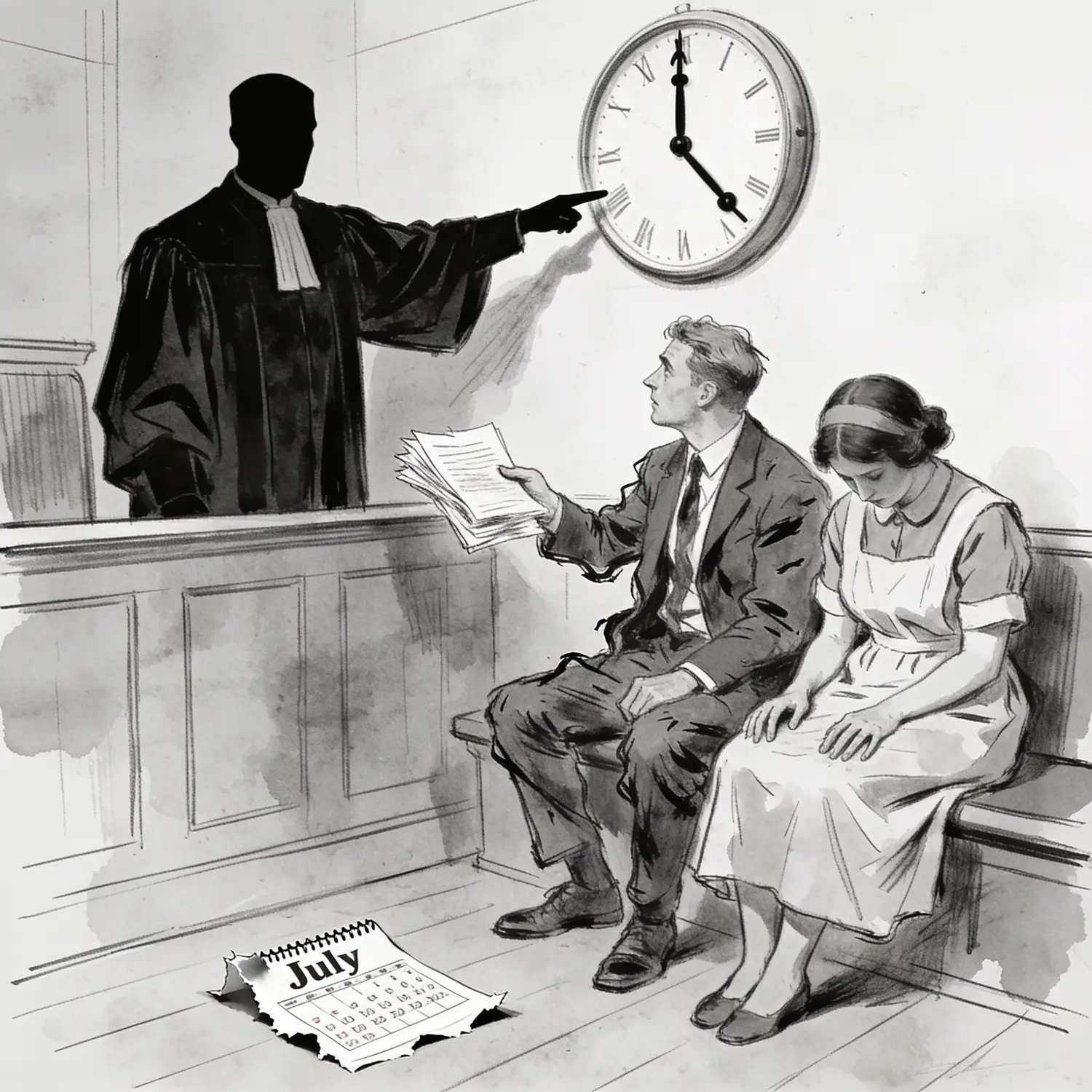
An Employment Tribunal sitting in Belfast has struck out all claims brought by a former night duty care assistant against Abbeyfield & Wesley Housing Association Limited, finding that every complaint was lodged outside the statutory time limits and that no discretionary extension was warranted.
Abiodun Abosede Akinpelu was employed by the housing association from 2 February 2023 until her dismissal on 29 February 2024. On 23 April 2025, she filed claims of unfair dismissal, breach of the Working Time Regulations (NI) 2016, and race and disability discrimination. The primary time limit for all claims expired on 28 May 2024. An Early Conciliation process extended that deadline to 20 July 2024. The claims were ultimately filed approximately nine months after that extended deadline.
Akinpelu, who was represented by her husband Reverend Wisdom Akinpelu - a non-qualified individual currently studying law - argued that serious ill health prevented her from meeting the time limits. She was diagnosed with Follicular Large B-Cell Lymphoma in July 2024 after investigations that identified a 7cm mass obstructing her nasal passage, impairing her hearing and extending into her brain. She began intensive chemotherapy in September 2024 and underwent a second course in March and April 2025. She also argued she was occupied with defending her registration before the Northern Ireland Social Care Council (NISCC), which the respondent had notified of her dismissal.
Employment Judge Sheils, sitting alone, found against the claimant on all grounds. The tribunal concluded it was reasonably practicable for the claimant to have filed her unfair dismissal and working time claims within time. The judge noted that during the relevant period the claimant had continued working, had submitted an Early Conciliation notification to the Labour Relations Agency in May 2024, and had cooperated with the NISCC investigation by preparing and submitting a written statement in July 2024. The tribunal found these activities were comparable in effort to filing tribunal proceedings.
On the NISCC argument, the tribunal found the claimant was fully aware that the professional regulatory process did not pause the tribunal time limits, and that she had acknowledged this herself. The tribunal also noted that the claimant's ability to file a second Early Conciliation notification on 15 April 2025 and then lodge claims on 23 April 2025 - during her second course of chemotherapy - undermined the argument that her health had prevented her from acting earlier during the first round of treatment.
On the race and disability discrimination claims, which require a separate just and equitable assessment for any time extension, the tribunal found it would be unfairly prejudicial to the respondent to require it to defend claims arising from events that occurred roughly eleven months before proceedings were issued. The tribunal noted that the passage of time would have adversely affected the memories of those involved, and that the respondent would have considered the matter closed once both time limits had expired.
The tribunal also addressed the claimant's argument that greater flexibility should be afforded to litigants in person. Employment Judge Sheils stated that no such additional flexibility exists beyond the statutory discretions available to all claimants, and that the same rules apply equally. The tribunal noted that both Akinpelu and her husband had made extensive use of artificial intelligence tools in preparing their case. The NISCC concluded in March 2025 that there was no real prospect of a finding of impaired fitness to practise, and her professional registration remained unaffected. All claims were dismissed at the preliminary stage. The hearing took place on 1 April 2026 and the judgment was issued to the parties on 7 July 2026.