Volunteers Assist Over 500 People Following Racist Attacks and Disorder in Belfast
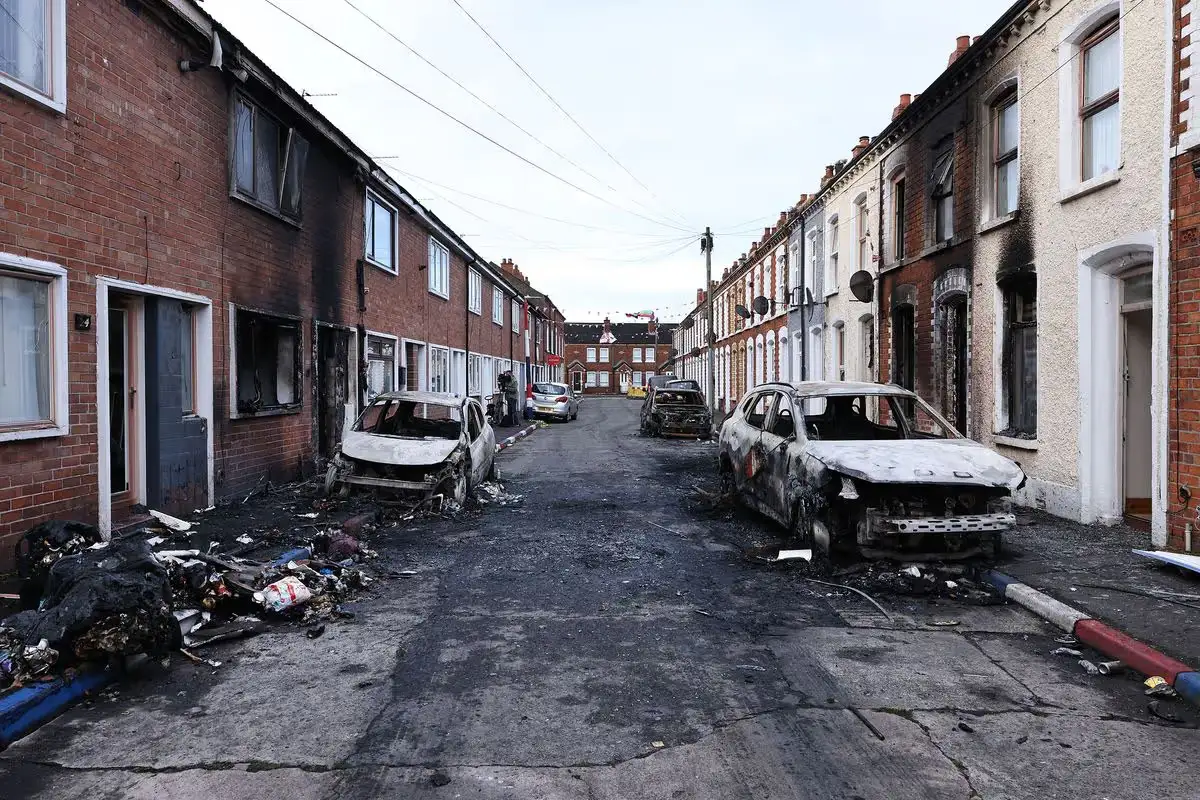
More than 500 people received help from community organisations and volunteers in the week after disorder erupted across Belfast, triggered by social media footage of a knife attack.
The attack occurred on Monday June 8 in north Belfast. Stephen Ogilvie suffered serious injuries, and Hadi Alodid, a 30-year-old man from Sudan, was charged with attempted murder.
In the following days, there were multiple racist attacks. People were threatened, intimidated, and forced from their homes by arson. At least 507 men, women, and children were affected, according to records kept by civil society and voluntary groups.
Support included temporary reception centres, help with housing applications, accommodation from hotels or private hosts, deliveries of groceries and medicine, transport to work and medical appointments, and community play spaces. At least 142 households received food and top-ups for gas and electricity.
Elfie Seymour, a coordinator with the Anaka Women’s Collective, said they used a WhatsApp group to quickly connect families with assistance. Volunteers drove people to safety while police looked on. Reception centres were set up in several parts of the city, with churches and community groups providing refuge. Seymour questioned why statutory organisations offered so little help and why a coordinated multi-agency response took a week to appear.
Therese Gorman, a Belfast resident, offered spare rooms in her home. Over several days she hosted a girl from Somalia, a girl from Nigeria, a woman from South Africa, and a family of four from Sudan, including a four-year-old non-verbal autistic boy. She described the experience as a privilege.
Marissa McMahon, assistant director of participation at the Practice of Rights, said staff and volunteers worked solidly to secure accommodation. She assisted people who should have been housed by the Northern Ireland Housing Executive or by the contractor Mears. McMahon said both the Home Office and Housing Executive systems remained too rigid during the crisis, and local people stepped in with spare rooms and fundraising to ensure no one was left without shelter at night.
In West Belfast, Glór na Móna opened its doors to 15 Somali men overnight on Wednesday June 12. Later, more than 70 displaced families attended a family day there, with food provided. Dr Feargal Mac Ionnrachtraigh, the centre’s director, said a realisation was dawning that official help was not coming and that communities needed to organise themselves against racism.
Conchúr Mac Adaim from the Community Action Tenants’ Union said the numbers he had seen were likely just a fraction of the total. He described the state’s reaction as sluggish and praised the kindness of volunteers and organised communities offering solidarity to neighbours affected by racist violence.