Court of Appeal Dismisses Challenge to Inquest Verdict on 1991 Coagh Shooting
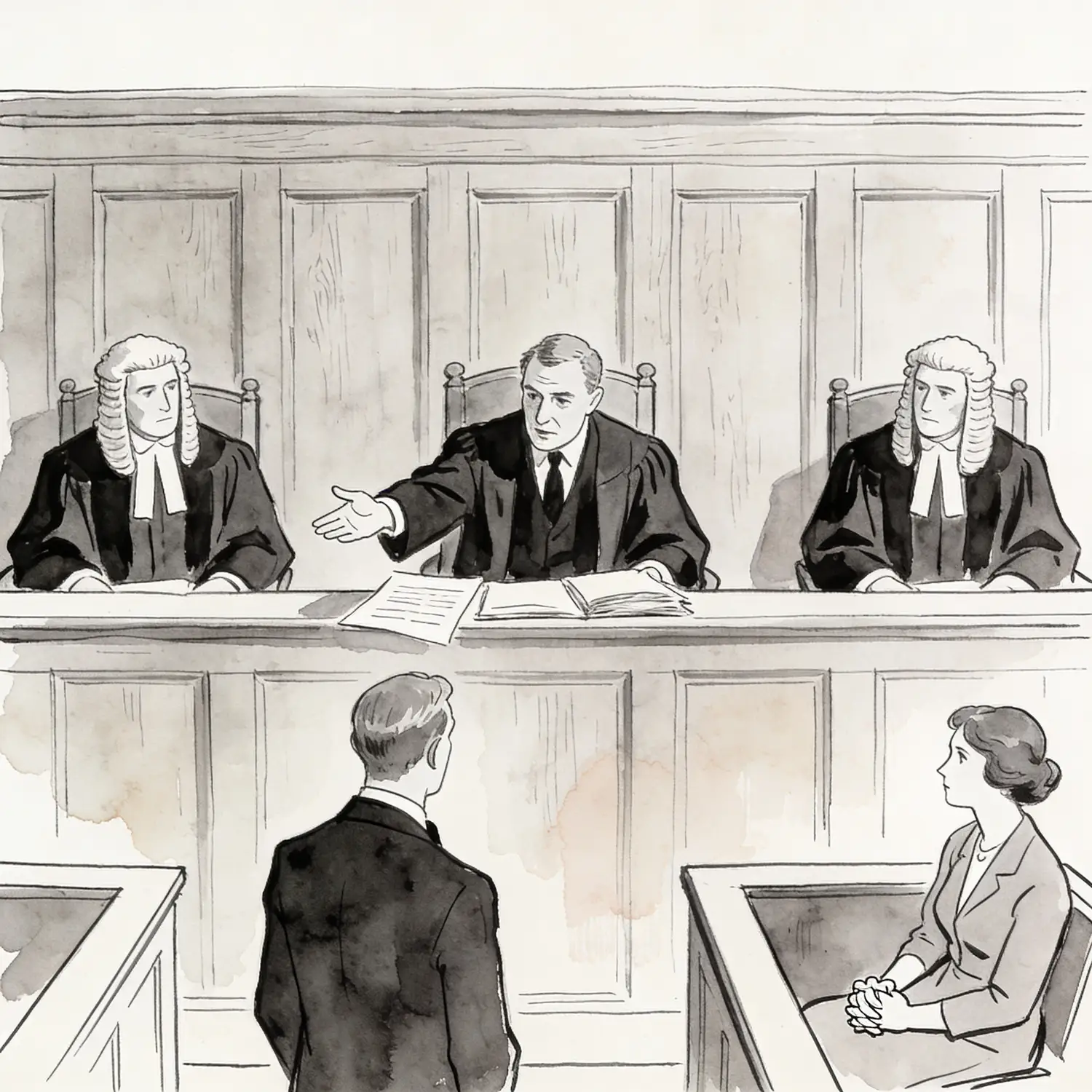
Northern Ireland's Court of Appeal has dismissed an appeal brought by Roisin Nugent, daughter of Anthony (Tony) Doris, who was shot dead by an undercover soldier at Coagh, Co Tyrone, on 3 June 1991. The court found no arguable legal error in either the original inquest verdict or the subsequent refusal of leave for judicial review.
Doris was one of three members of a Provisional IRA active service unit who arrived at Hanover Square, Coagh, intending to kill a part-time UDR soldier. Security forces, acting on covert intelligence, had mounted a joint military-police operation and deployed an undercover soldier, Soldier L, to impersonate the intended target. A concealed cover group, including Soldier B, was positioned in the rear of a flat-bed lorry opposite the car park.
When the pre-arranged signal was given, the cover group opened fire on the red Vauxhall Cavalier carrying the ASU. Soldier B fired eight aimed shots at the driver, Tony Doris. The vehicle collided with a parked car and caught fire. Two AK-style rifles were recovered from the scene. No member of the ASU discharged a weapon during the incident.
An inquest conducted by Humphreys J, sitting as coroner, delivered findings in April 2024 running to 339 paragraphs. The coroner found that the force used was justified and that the actions of the cover group, including Soldier B, fell within the guidance of the Yellow Card - the rules of engagement in force at the time. The coroner also made criticisms relating to the planning and control of the operation, though those findings were not challenged in these proceedings.
Nugent sought judicial review of specific findings relating to Soldier B's actions, arguing among other things that the coroner had failed to apply heightened Article 2 obligations applicable to trained specialist soldiers, failed to assess Soldier B's justification individually, and wrongly treated the four soldiers' actions collectively. A rolled-up leave and substantive hearing before McAlinden J in 2025 resulted in refusal of leave, with the judge finding no arguable case with realistic prospects of success.
On appeal, the Court of Appeal - comprising Keegan LCJ, Colton LJ and Fowler J - examined Soldier B's police interview from 1991, his 2022 inquest statement, and the transcript of his oral evidence. The court found that the coroner had properly engaged with Soldier B's individual evidence, made clear findings about the threat posed by all three occupants of the vehicle, and was entitled to reject any distinction between the driver and the other members of the unit given the circumstances. The court also found that the European Court of Human Rights case of Bennett v UK did not establish a separate legal standard for trained firearms officers beyond the core tests already applied, and that the coroner's approach was consistent with the principles in that case.
The court stated that none of the public law grounds advanced in relation to Article 2 compliance were arguable on the facts, and that the coroner had applied the correct legal tests and reached a rational, well-reasoned decision. The court added that even had leave been granted, the challenge would have been dismissed on its merits. The appeal was dismissed.