Troubles Bill will not give all families perfect answers, says Northern Ireland Secretary
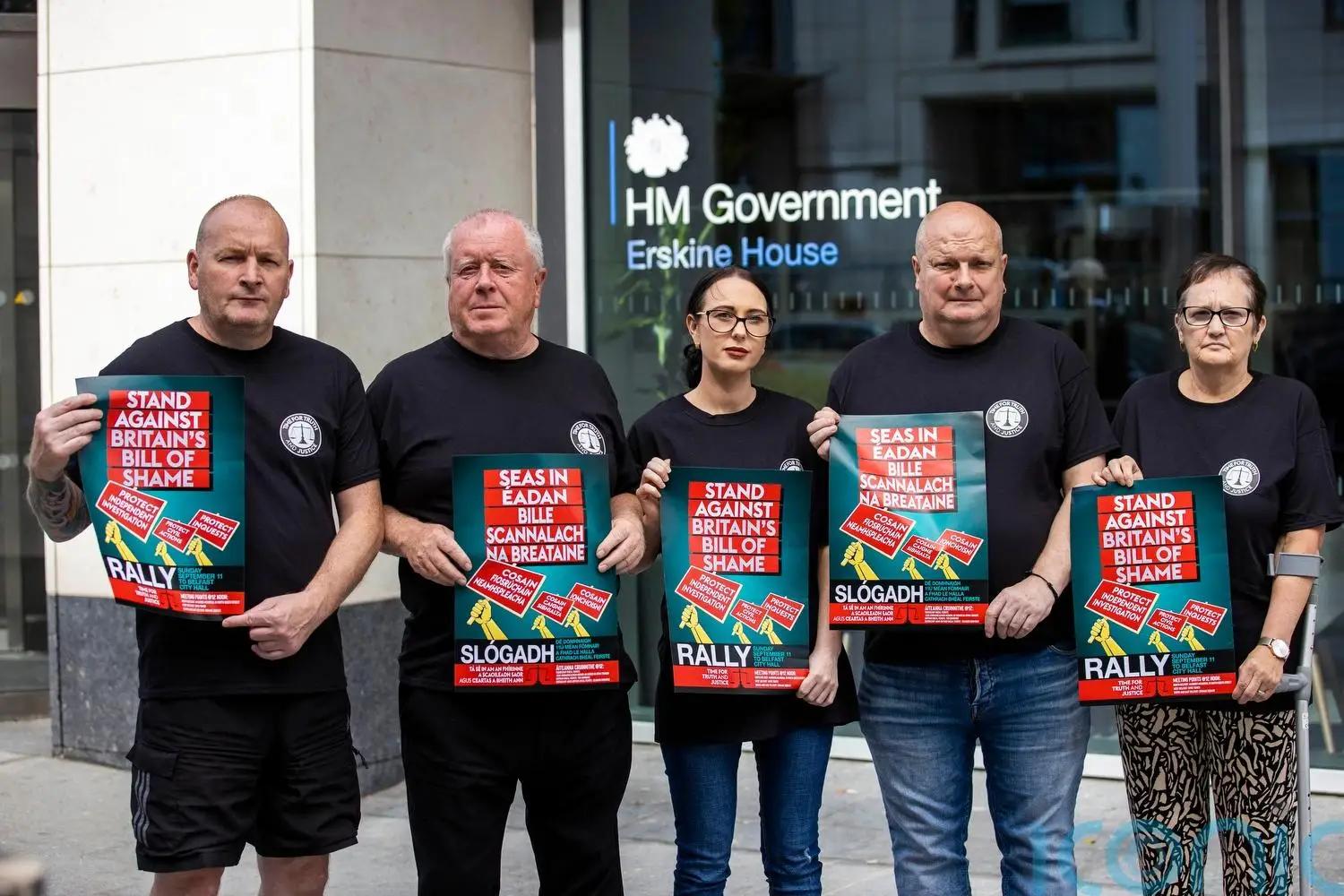
Northern Ireland Secretary Sir Chris Bryant has said the Government's proposed Troubles Bill will not provide perfect answers for all bereaved families, but he is confident it will be human rights compliant. The legislation, which is being considered in the House of Lords, is set to replace the previous government's Legacy Act, which Sir Chris described as fatally flawed.
In a video message to the first day of a conference at Queen's University, Belfast, on Monday, Sir Chris said families must be able to find out what happened to their loved ones. He said he had met people in Northern Ireland with painful experiences, including one person who described seeing the person who killed their father in a shop. He said that without answers, the fissure in people's minds and experiences is perpetuated from generation to generation.
Sir Chris said he wanted to make it clear that defending the British Army does not mean defending the indefensible. He added that the Bill is not primarily about veterans, but about families, including veterans' families who want answers because their loved ones were killed by paramilitaries. He noted that the vast majority of people killed during the Troubles were killed by paramilitaries.
He warned that there may be large gaps in evidence, which could mean the Legacy Commission has to say it has gone as far as it can and cannot provide more clarity. He said he does not believe a reconciled society in Northern Ireland or across the island of Ireland can be achieved without answers.
Last week it emerged that the Bill includes a clause to prevent indictable-only Troubles-related crimes from being prosecuted unless the Advocate General for Northern Ireland or the Attorney General for England and Wales has given consent. Sir Chris said this is important to ensure consistency, as the vast majority of cases happened in Northern Ireland but some happened in Great Britain. He explained that the prosecutorial decision will always be the same for the Attorney General: first, whether it is in the public interest to proceed, and second, whether there is more than a 50% chance of a successful prosecution. He said he is very confident that this does not breach human rights obligations and is entirely human rights compliant.