NI Veterans Commissioner criticises Republic's Troubles legacy stance
Northern Ireland's Veterans Commissioner has said the Irish government was not a neutral player during the Troubles and argues that Dublin has failed to confront its own role in the conflict.
David Johnstone, who has been extended in office for another three years, made the remarks in an interview in Dublin. He said the Republic was arguably an active participant or at the very least turned a blind eye to terrorism coming from the south.
Johnstone claimed the vast majority of IRA gelignite in the early 1970s came from the Irish Industrial Explosives factory in Enfield, Co Meath. He said a British explosives expert warned as early as 1972 that it was possible to get a case a day out without it showing up, and argued the Irish State knew what was happening.
He also said the vast majority of 500 killings along the Border were planned in the south, where perpetrators could hop over the Border and hop back into a safe haven. Johnstone said Irish politicians and officials do not want to rake over the past, while the southern public has never shown interest.
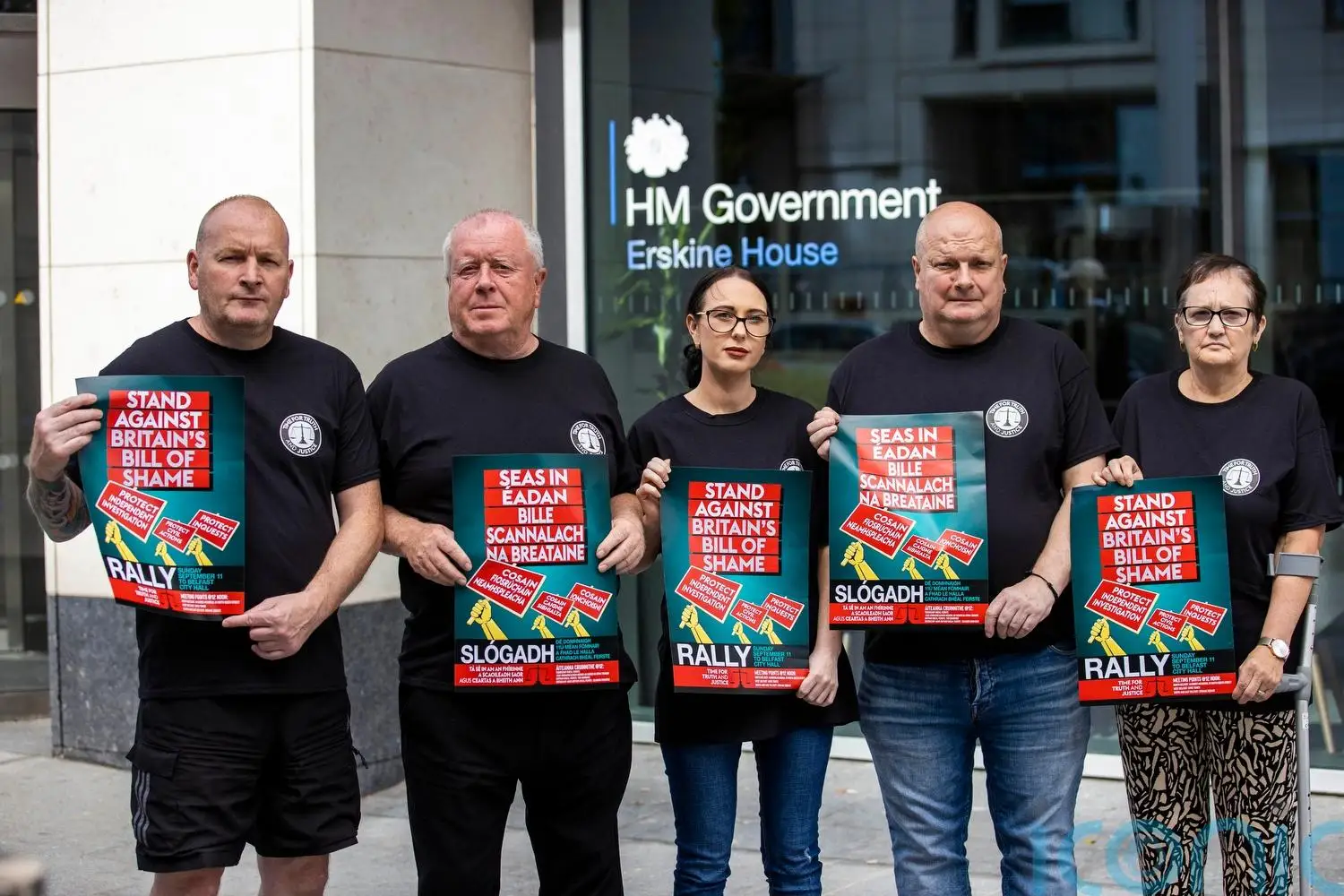
Johnstone commented on amendments to legacy legislation published by the Northern Ireland Secretary of State Chris Bryant, saying London has clearly listened to some veterans' concerns but not all. He said Dublin's pressure has played a role in London refusing a position where veterans' prosecutions would take place only if new and compelling evidence emerged that was not available at the time.
He referred to a deal last year under which Dublin will put €25 million behind a new Garda unit that will endeavour to answer questions that victims or family members may have about past Garda investigations, but not carry out fresh investigations. Johnstone contrasted this with a five-year process on the other side of the Border that will cost about £2 billion, which he called conservative.
Johnstone insisted there is no question that veterans who committed crimes while in uniform should be prosecuted. However, he said cases should not be reopened unless there is clear and compelling evidence not available when the first investigations were carried out by the British military before 1976 or afterwards by the RUC.
He acknowledged that not every investigation would stand up today, citing the difficulty in places like west Belfast where soldiers could not cordon off a spot and spend days sifting through rubble. Johnstone said it frustrates veterans that people look through today's lens and demand that what happened 30, 40, or 50 years ago is investigated again, calling it absolute folly.
Johnstone mentioned several specific cases, including the 1991 killings of three IRA men in Coagh, Co Tyrone, where a coroner's inquest ruled lethal force was reasonable and the Court of Appeal dismissed an appeal. He also referenced the 1992 SAS killings in Clonoe, Co Tyrone, and the 1987 killings of eight IRA men at Loughgall, Co Armagh.
He said operations such as Coagh, Clonoe and Loughgall were planned by senior military, signed off by the chief constable, the general officer commanding, and usually the prime minister. Johnstone argued that if there is a problem, it is not the soldiers' fault, and suggested putting the prime minister, the GOC, or the chief constable in the dock.