Budget talks entering no-deal territory, Givan warns
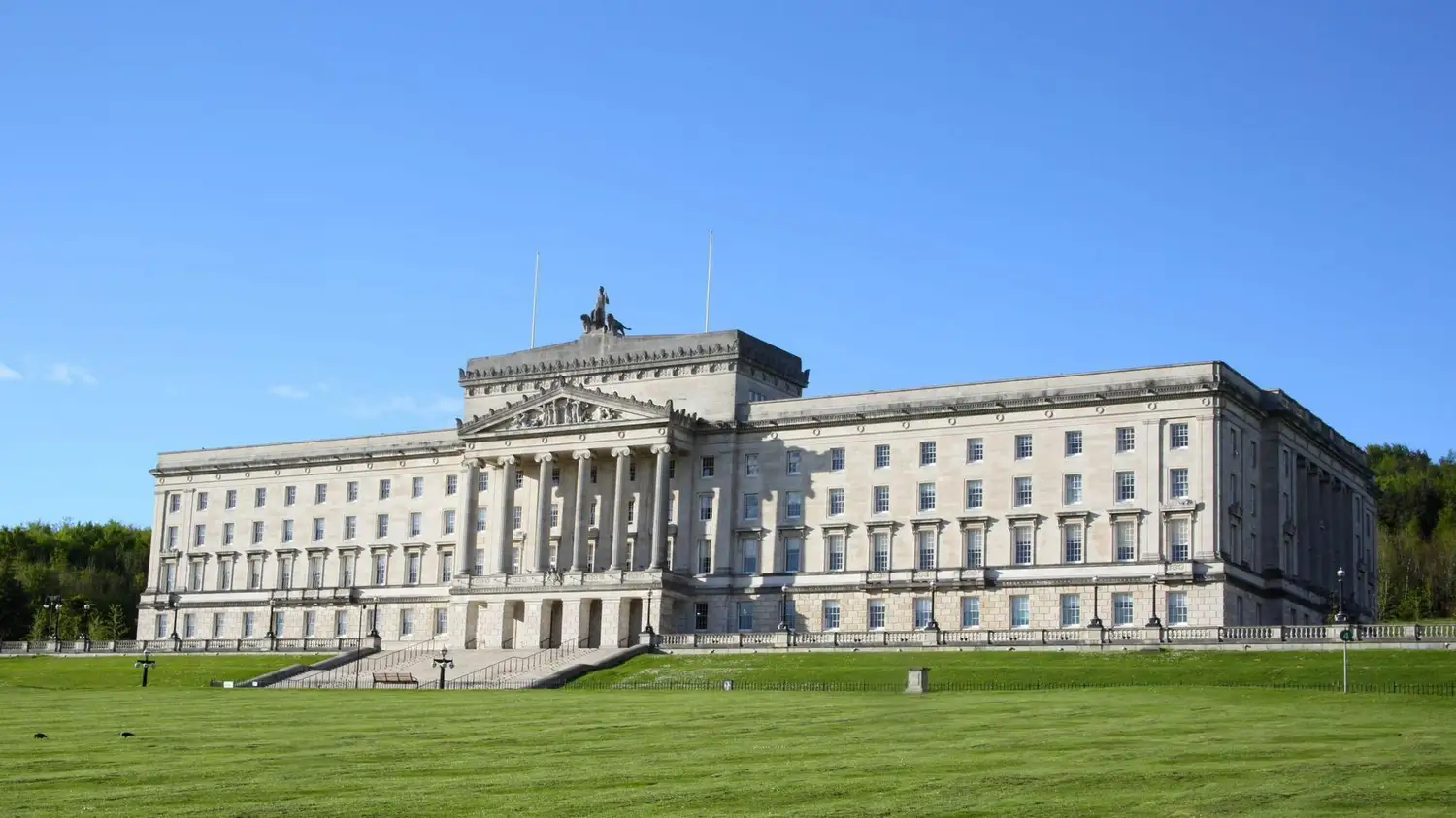
Negotiations between Stormont and the UK Government over Northern Ireland's budget are entering no-deal territory, Education Minister Paul Givan has warned.
Givan, a DUP assembly member, criticised Northern Ireland Secretary Sir Chris Bryant for his approach after the secretary told party leaders there would be no improvement on the current financial offer.
Sir Chris has asked ministers to respond to the offer by next Thursday and indicated he could set a budget for the region if devolved ministers fail to do so.
The UK Government has offered slightly more than £1.5 billion over three years to assist with balancing the budget. Stormont departments have been operating without a budget since the start of the financial year.
Givan said the offer does not come close to what is needed. He told BBC Radio Ulster's Good Morning Ulster programme that the secretary of state's ultimatum is not a good way to reach a settled outcome.
The minister said the cost of pressures and overspends for the executive this year has been calculated at £1.6 billion, and the same figure would be needed for each of the next two years.
Givan said the core issue is a funding formula discrepancy between Northern Ireland, Scotland and Wales that must be addressed. He said offers should not mask failures in the current formula.
Finance Minister John O'Dowd said the secretary of state's final offer approach does not respond to the fundamental problem. The Sinn Féin assembly member said Northern Ireland is underfunded compared to Scotland and Wales, and if funding were equal to Wales, the executive could meet most of its pressures.
O'Dowd said the biggest priority now, in the absence of a budget, is to find a way to give public sector workers a pay increase.
Ann Watt from think tank Pivotal said Northern Ireland's negotiating strategy has been successful in forcing two increased offers from the British government. She said the UK government has moved significantly and Stormont now needs to put together a plan.
Watt explained that the offer is about £525 million per year, mostly for day-to-day running of public services. Around £450 million would be spent on health, education, infrastructure and environment, with the remainder for modernising services, social housing and tackling benefits fraud.
The current offer has not changed since it was made in writing to the parties on September 10. It includes £450 million resource funding in 2026-27, then £400 million in each of the following two years, plus £50 million annually for transformation, £50 million capital for social housing in the latter two years, and a commitment to consider baselining the funding.
The executive would also keep half of funds collected from additional welfare fraud and error identified. The offer comes with conditions, and Stormont reform is being dealt with separately.