Stormont budget stand-off: Executive demands fair funding deal, Opposition says ministers must govern
Northern Ireland's Executive remains without an agreed budget for the current financial year, as ministers insist they cannot set spending plans without additional funding from the UK government.
Sinn Féin MLA Deirdre Hargey has argued that the Executive's budget problems are inseparable from Westminster's approach to financing, saying a fair and sustainable settlement is required to protect key services.
Speaking in the Assembly, the South Belfast MLA cited evidence from the Independent Fiscal Council indicating Northern Ireland should be funded according to its level of need. She said if Northern Ireland were funded above its level of need to the same degree as Wales and Scotland, the Executive would receive approximately £1-3 billion more each year.
"Our health service, schools and public services are under enormous pressure, and people are feeling the impact of years of underinvestment and austerity," Ms Hargey said.
She called for a funding model that is fair, sustainable, transparent and genuinely based on need, and said the British government cannot recognise Northern Ireland's greater relative need and then expect the Executive to deliver more with less.
The Treasury has offered an additional £500 million a year over three years, an increase on the £350 million initially proposed. But Finance Minister John O'Dowd said the offer remains insufficient to secure a sustainable budget.
"The scale of the challenges facing public services here cannot be addressed through a limited, short-term package alone," Mr O'Dowd said.
Devolved departments are currently only allowed to spend up to 95% of last year's funding levels in the absence of an agreed budget.
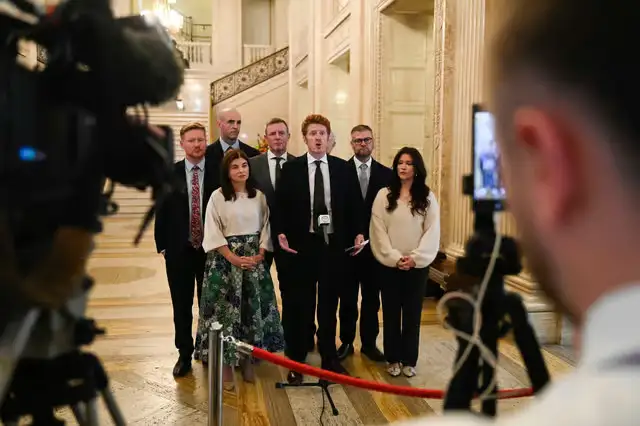
The SDLP tabled an Assembly debate on the matter as part of the first Opposition day of the autumn term. Opposition leader Matthew O'Toole said there was compelling evidence that Northern Ireland needs a fairer and more sustainable funding settlement from Westminster, but argued the Executive's failure to allocate its existing resources was damaging public services and undermining its case for additional Treasury funding.
"Ministers tell us they cannot fix public services without more money, while their failure to agree a budget means the people running those services cannot properly plan how to use the money they have," Mr O'Toole said.
He said the Executive must stop behaving like commentators and start acting like the government.
Responding to the debate, Mr O'Dowd said there had been progress in negotiations with the UK government, and accused the SDLP of failing to produce an alternative spending plan. Mr O'Toole said that could not be achieved because of limits on the Opposition's ability to work up fully costed proposals.