Assembly Debates 'Good Jobs' Bill, Emergency Care Crisis and Education Inspections Legislation
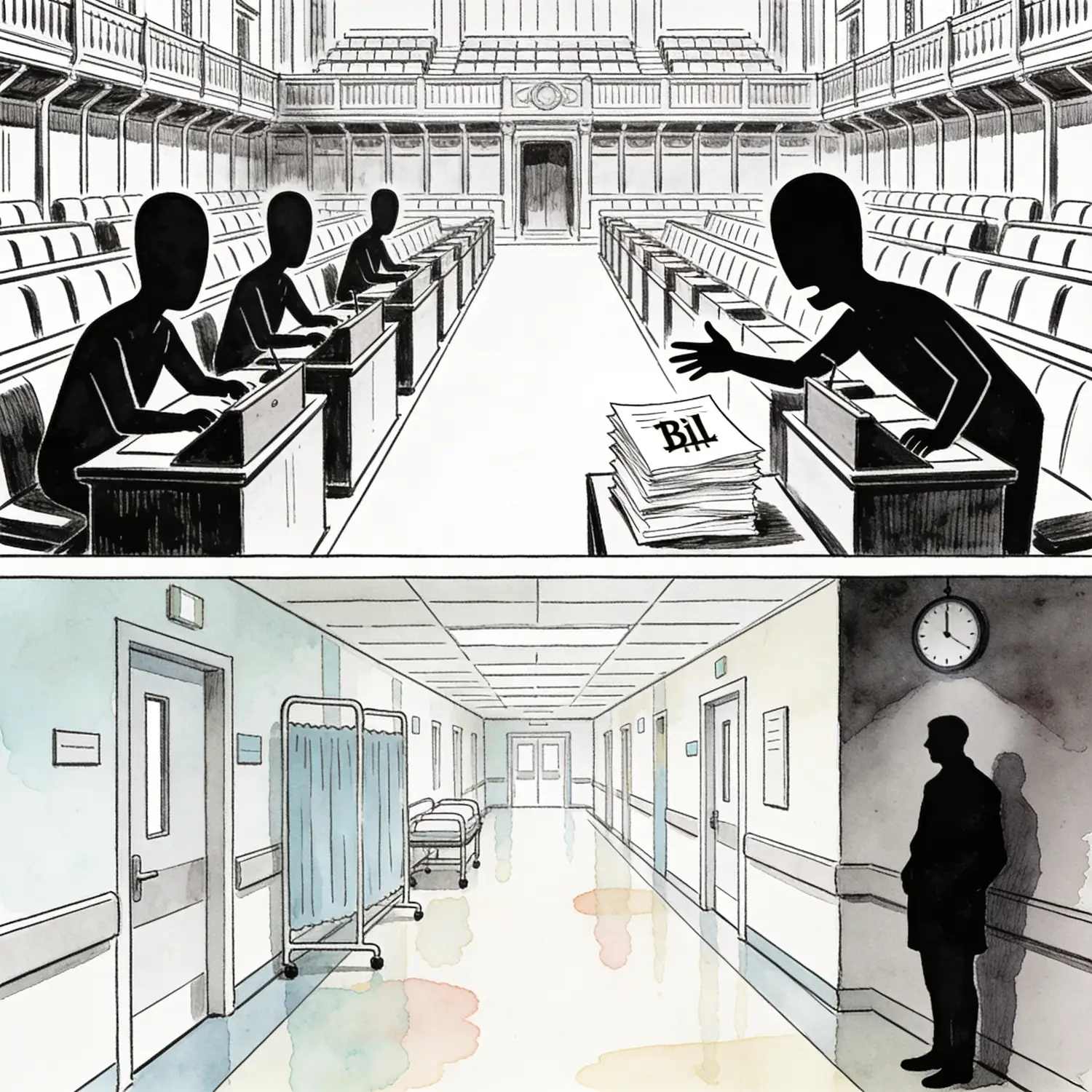
The Northern Ireland Assembly met on Monday 1 June 2026 against a backdrop of significant legislative and public service debates, including a clash over the 'Good Jobs' Bill, a stark warning about emergency care mortality rates, and the Second Stage of the Education Inspections Bill. Members also heard ministerial statements on North/South cooperation covering transport, aquaculture, and agriculture, while several constituency concerns dominated Members' Statements.
Sinn Féin MLA Philip Delargy used his Members' Statement to press strongly for the 'Good Jobs' Bill, which he said would deliver secure contracts, end fire and rehire, and introduce day-one employment rights. He directed sharp criticism at the DUP, accusing the party of blocking the Bill and showing "contempt for workers" by opposing trade union organisation. "Today, the DUP has proved beyond any reasonable doubt its contempt for workers," he said, and challenged the party to explain whether its opposition was ideological or motivated by the Bill being brought forward by a Sinn Féin Minister.
An alarming briefing from the Royal College of Emergency Medicine dominated health concerns. SDLP MLA Pat Donnelly, speaking after a Health Committee briefing, said the college had estimated 1,032 excess deaths in 2025 associated with patients waiting 12 hours or more in emergency departments before admission, roughly 20 people per week. He noted the figure stood at just 60 in 2016, calling the situation "catastrophic" and urging the Minister of Health to publish a clear public plan for sustainable reform. Donnelly also highlighted that the Minister's Release to Rescue programme, while reducing ambulance waits outside hospitals, had worsened overcrowding inside.
The Assembly heard strong cross-party condemnation of a weekend attack in Downpatrick in which a police officer was struck by a stolen police vehicle and suffered serious injuries, with an attempted murder investigation under way. DUP MLA Stephen Clarke and Alliance MLA Andrew McMurray both expressed solidarity with the injured officer and praised the response of the public at the scene. Clarke called for the courts to apply maximum sentences to those responsible, while McMurray stressed the attack was "wholly unacceptable" and "not reflective of people in Downpatrick."
Sinn Féin MLA Colm Gildernew raised the housing crisis, citing new statistics showing more than 50,000 households on the social housing waiting list, over 39,000 in housing stress, and more than 33,000 with homelessness status, a 5% rise since March 2025. He criticised the Minister for Communities, Gordon Lyons, for failing to introduce meaningful housing or homelessness legislation after over two and a half years in office, and expressed serious concern that the Programme for Government target of 5,850 new homes by the end of the mandate would be missed.
DUP MLA Diane Forsythe raised concerns about a Parades Commission decision to permit a Palestine march through Scarva in South Down, alleging the commission had ignored residents and businesses despite disorder at a similar event last year, which she said saw Hamas flags displayed and local people intimidated. She said the commission's decision amounted to "token restrictions" and accused it of being "out of touch with local residents."
Two DUP Members, Jonathan Kingston and Timothy Gaston, raised concerns about witness conduct at a recent Executive Office Committee evidence session on race relations. Kingston demanded a public apology from Daniel Holder of the Committee on the Administration of Justice after he alleged the Belfast Model School for Girls was a no-go area for ethnic minorities, a claim Kingston said was immediately contradicted at the hearing. Gaston separately raised concerns about offensive language used by a witness from Minority Ethnic Support Armagh and called for changes to Assembly Standing Orders to address contempt of the Assembly, an issue the Speaker said he would raise with the Committee Chair.
Infrastructure Minister Liz Kimmins made a ministerial statement on a North/South Ministerial Council transport meeting held in Dublin on 7 May. Key items included cross-border greenways development, with Ireland providing EUR 2 million in Shared Island funding; an ongoing Court of Appeal case over the A5 road project following a 2025 High Court ruling; progress on an all-island strategic rail review and project prioritisation strategy; and the signing of contracts for a new fleet of eight Enterprise trains for the Belfast to Dublin service at a cross-border investment of almost GBP 560 million. The Minister confirmed the Irish Government remains committed to its EUR 600 million contribution to the A5 project. Questions about a scathing judicial comment from Justice McAlinden, who described the Departments' approach to the A5 appeal as "gaslighting," drew a firm response from the Minister that she would not comment on live legal proceedings.
Agriculture Minister Andrew Muir delivered two further ministerial statements on NSMC meetings covering aquaculture and marine issues, and agriculture. On aquaculture, he reported that the Loughs Agency had responded to 101 illegal fishing incidents and 172 pollution incidents since July 2025, and noted progress on five EU-funded cross-border projects. He also confirmed that the Earl of Shaftesbury had indicated he was open to handing over the bed and soil of Lough Neagh for community use without charge. On agriculture, the Council welcomed an GBP 11.7 million Shared Island initiative to tackle bovine TB, progress on bluetongue and avian influenza cooperation, and collaboration on farm safety, with a presentation from Embrace Farm and Rural Support.
The Assembly began Second Stage debate on the Education Inspections Bill, introduced by Education Minister Paul Givan. The Bill follows an independent review of education and aims to prevent wilful obstruction of school inspections, bringing Northern Ireland into line with arrangements in England, Scotland, Wales and the Republic of Ireland. Givan said an earlier draft included provisions making obstruction a criminal offence, but that after seeking political consensus, the final version instead makes non-cooperation constitute unacceptable professional conduct. He noted that despite similar provisions existing across the British Isles, there had been zero prosecutions in their history, arguing the law was "not there to punish" but to set a clear expectation for safeguarding children.