Court of Appeal Quashes Murder Conviction After Finding 'Catalogue' of Trial Irregularities
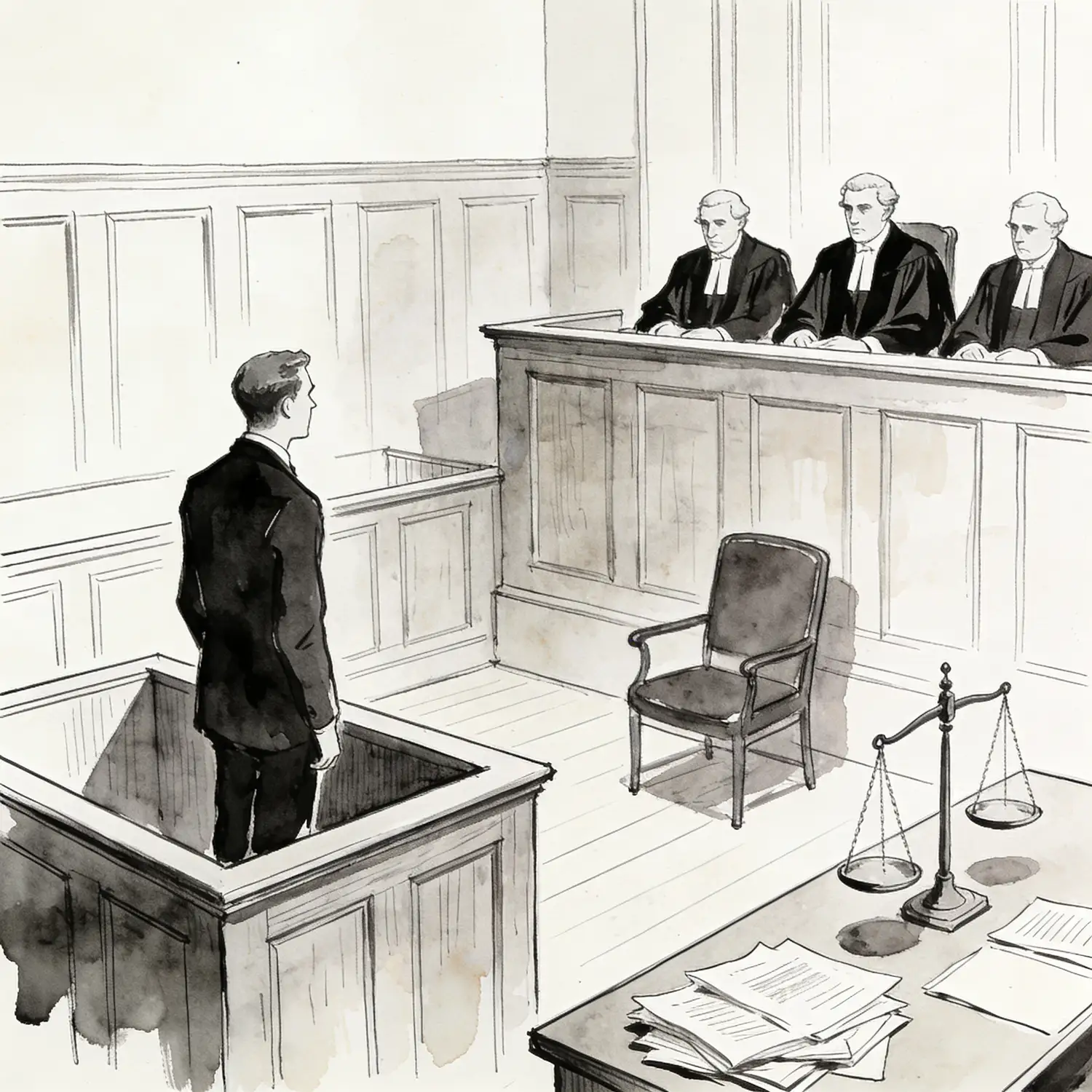
Northern Ireland's Court of Appeal has quashed the murder conviction of Sean Rodgers and ordered a retrial, ruling that a series of procedural failures made the conviction unsafe. The judgment, delivered on 8 May 2026 by Lady Chief Justice Keegan, sitting with Treacy LJ and Colton LJ, centred on whether Rodgers received a fair trial after his legal representatives withdrew mid-proceedings.
Rodgers had been convicted of the murder of Edward Meenan, who died on 25 November 2018 following a violent confrontation at a property where Rodgers and two co-accused were present. Two masked men had attended the property, leading to the altercation in which Meenan sustained fatal injuries. Rodgers was convicted at Belfast Crown Court on 15 March 2022. Co-accused Derek Cresswell had pleaded guilty to murder, and Ryan Walters was convicted of manslaughter. Rodgers also pleaded guilty to perverting the course of justice.
A first trial was abandoned after concerns arose about Rodgers' fitness to stand trial. Expert assessment subsequently found him fit to proceed but identified him as a vulnerable defendant with a low IQ and a learning disability. Special measures were put in place for the retrial, including the appointment of a Registered Intermediary.
The central problem arose during the retrial, after the prosecution closed its case, when Rodgers' legal team withdrew following what was described as an irretrievable breakdown in relations. The trial judge allowed the withdrawal and directed proceedings to continue immediately, with Rodgers representing himself. The Court of Appeal found this decision was reached without properly exploring alternatives, without a cooling-off period, without considering an adjournment, and without accurately characterising Rodgers' position - he had indicated he needed legal assistance rather than consenting to self-representation.
The court found that the absence of legal representation had material consequences. These included inadequate preparation, ineffective examination and cross-examination, failure to follow intermediary recommendations on questioning, and no ground rules hearing. The court also held that the intermediary framework was used beyond its intended statutory purpose and could not serve as a substitute for legal representation.
Further unfairness arose from the handling of evidence relating to an alleged threat made by Rodgers against co-accused Walters during transport in a prison van. The court found there had been insufficient admissibility consideration, leading questions, and inadequate opportunity for Rodgers to review the material before cross-examination. The court also found defects in the trial judge's legal directions to the jury, including failures to properly distinguish between subjective necessity and objective reasonableness in the self-defence directions, a failure to direct on the householder defence where it arguably applied, and a failure to properly direct on the statutory defence of loss of control. A Lucas direction on lies was found to be misleading, particularly given Rodgers' vulnerability, and the judge did not adequately explain his intellectual limitations to the jury.
The court rejected the prosecution's argument that the strength of the evidence was sufficient to overcome the procedural failings, reaffirming that the right to a fair trial under Article 6 of the European Convention on Human Rights is absolute. Leave to appeal was granted, the appeal was allowed, and a retrial was directed. The judgment was published promptly given the practice issues it raises, with neither prosecution nor defence objecting on grounds of potential prejudice to the retrial.