Ulster University Job Losses Dominate Assembly as MLAs Demand Action on Higher Education Funding Crisis
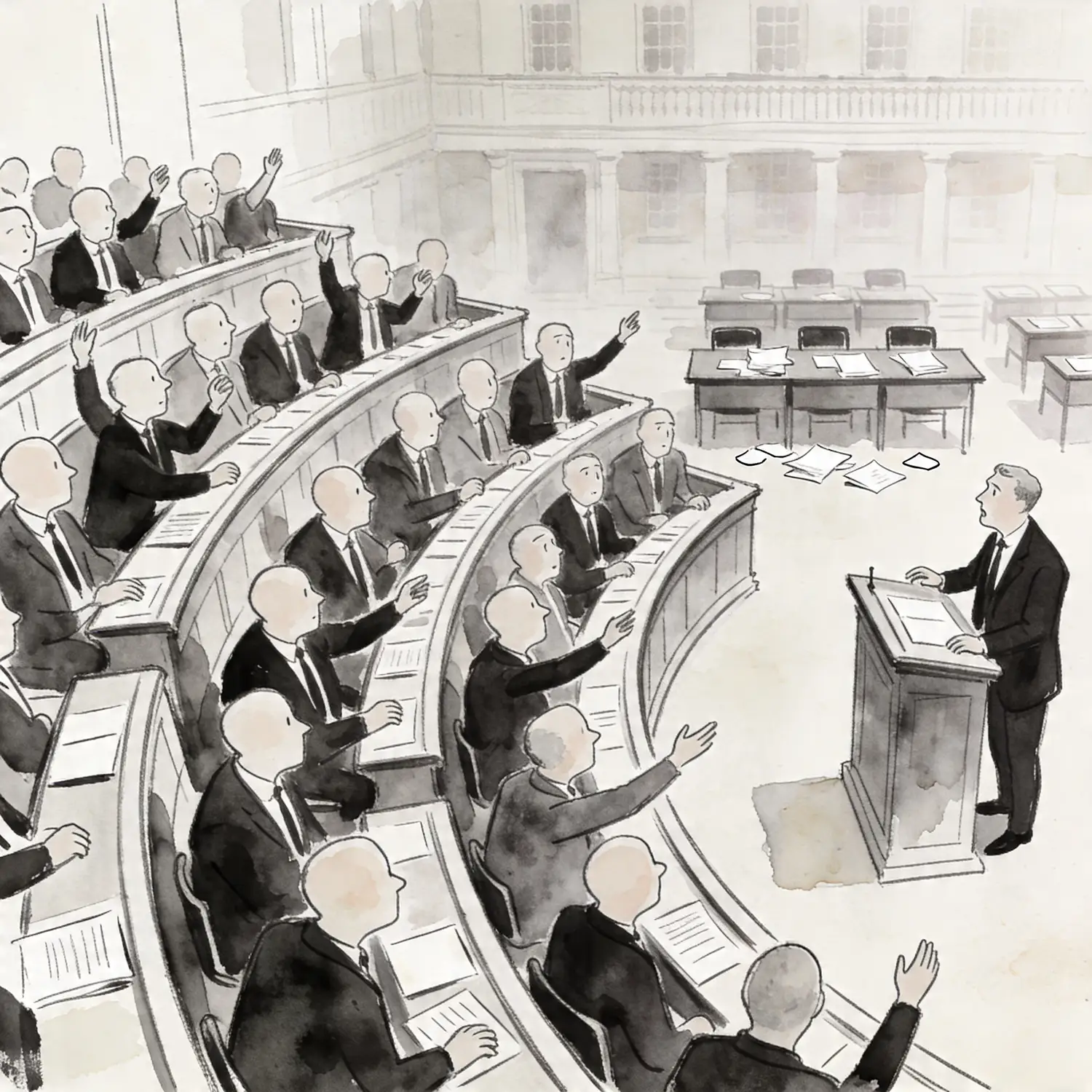
The Northern Ireland Assembly was dominated on Monday by the announcement of 450 potential job losses at Ulster University, with Members from across the political spectrum demanding accountability from the Department for the Economy. The Matter of the Day was selected by the Speaker after Economy Minister Caoimhe Archibald was unable to attend the Chamber, with the Minister for Infrastructure, Liz Kimmins, taking on her responsibilities for the day. MLAs from the Ulster Unionist Party, SDLP, Alliance, People Before Profit, DUP and Sinn Féin all lined up to express concern for affected staff and students, while pointing to years of inadequate higher education funding as the root cause.
Kate Nicholl of the Alliance Party opened the Matter of the Day, saying the announcement "came as an enormous shock" and warning that the Department for the Economy's ongoing review of higher education funding "lacks ambition and long-term vision" and has failed to bring key stakeholders on board. She called for a generational perspective on higher education investment: "To fulfil our ambitions for the economy, we need to take a generational perspective on the role of higher education and avoid being caught up in annual budgetary shortfalls."
DUP MLA Gordon Brett placed blame firmly on Sinn Féin, saying the Minister "chose inaction" and "chose delay and spin over solutions", adding that the announcement placed the planned expansion of the Magee campus in Londonderry at risk. He pointed to what he described as a broader pattern of failures in the Department for the Economy, including job losses at Cantor Fitzgerald and opposition from major business organisations to ministerial legislation. SDLP MLA Sinéad McLaughlin highlighted a contradiction at the heart of the crisis, noting that the Department's own financial needs assessment had described Ulster University as not facing "imminent financial crisis", calling the report so out of date it needed "to be put in the bin".
People Before Profit MLA Gerry Carroll, a former sabbatical officer of the Ulster University Students' Union, called the management's proposal to shed 450 workers "mistaken, ill-thought-out and regressive" and urged Ulster University's governing body to reverse what he described as a "disgraceful decision". He argued that universities had become "more wedded to marketisation than to educating" and criticised spending on a new Belfast campus that reportedly cost £350 million while staff were being issued redundancy notices. Sinn Féin MLA Pádraig Delargy defended the Executive's record, arguing that the financial situation had been building over multiple mandates and that the North could not be "a mudguard for cuts made by the British Government".
The Assembly also received a significant statement from the Speaker at the opening of proceedings. Mr Speaker addressed the sub judice rule, reminding Members that any intended reference to active legal proceedings must be notified to the Speaker's Office in advance. He also warned Members about the risks of introducing complex new areas of law through amendments at late legislative stages, referencing lessons from the Mediahuis ruling and the Hospital Parking Charges Act (Northern Ireland) 2024. The Speaker indicated he would communicate further guidance to Members in the coming weeks.
The Speaker also addressed a disciplinary matter arising from a previous sitting, in which Alliance MLA David Honeyford had challenged the authority of Deputy Speaker Aiken during a climate change debate, stating he was not there "to be directed by a Speaker about what I can and cannot say in the Chamber". The Speaker gave Mr Honeyford the opportunity to apologise or face being unable to speak for the day. Mr Honeyford offered an apology at the opening of business, saying: "I respect the ruling that you have given, and I apologise. I want to move forward."
The Finance Minister John O'Dowd moved the Second Stage of the Marriage and Civil Partnership Bill, which proposes to raise the minimum age for marriage and civil partnership from 16 to 18 and to put non-religious belief marriage on the same legislative footing as religious marriage. The Minister noted that 97% of online respondents to a public consultation supported raising the minimum age, and that more than 5,000 belief marriages had taken place under temporary arrangements since 2017. He cited UN Committee recommendations that any jurisdiction permitting marriage under 18 was permitting child marriage, and said the Bill would close a loophole allowing people from jurisdictions that had already raised their marriage age to travel to Northern Ireland to marry.
Several MLAs welcomed the Bill, with Alliance MLA Eóin Tennyson describing it as "a step that is overdue" and welcoming the criminalisation of those who arrange child marriages. Opposition leader Matthew O'Toole, speaking first as Finance Committee Chair, broadly supported the Bill but used his contribution to highlight the absence of no-fault divorce provisions, arguing Northern Ireland was now the only part of the UK and Ireland without such a mechanism. He described the omission as "another failure of the Assembly to deliver timely progress". TUV MLA Timothy Gaston raised questions about whether the Bill adequately preserved the solemnity of the marriage ceremony and asked whether evidence existed linking child marriage to specific communities in Northern Ireland.
During Agriculture, Environment and Rural Affairs questions, Minister Andrew Muir faced questions on the Mobuoy landfill remediation project, wildfires in the Mournes, coastal erosion, slurry storage, and the forthcoming fisheries and water environment Bill. On Mobuoy, the Minister confirmed that no formal cost estimate had yet been approved through public finance processes, and estimated remediation could cost between £107 million and £700 million. He repeated his support for an independent environmental protection agency, saying he was "absolutely gutted" that the proposal had been blocked by the DUP. On climate change, the Minister rejected DUP criticism of net zero targets, accusing the party of "parroting the Trump playbook" and arguing that fossil fuel dependency was the real cause of energy price pressures facing households and businesses.
During Communities questions, Minister Gordon Lyons confirmed that over 340,000 households would receive £100 in home heating oil support following Executive agreement, with £36.4 million allocated to his Department for the scheme. He acknowledged concerns about potential profiteering by suppliers and said a list of approved suppliers would be established. On private rents, the Minister faced criticism from People Before Profit MLA Gerry Carroll over a reported 53% increase in Belfast rents since 2020, with Carroll accusing the Minister of allowing "landlords to run riot". Lyons maintained that rent controls would make the situation worse and that increasing housing supply remained the only sustainable long-term solution. The Minister also confirmed that the Department of Finance had approved an extra-statutory payment to allow the Housing Executive to proceed with Finlock gutter replacements in the Ballysillan area of North Belfast, describing it as "fresh off the press" news.
A number of Members' Statements covered a range of issues. Emma Sheerin raised the CNN investigation into what she described as an international rape ring, calling for all Members to reflect on behaviour and what is endorsed publicly. Trevor Clarke raised concerns about the appointment process for the previous Police Ombudsman. Paul Frew's colleague from North Antrim, Timothy Gaston, spoke on fuel protests, arguing the police response to the Sydenham bypass demonstration had been "heavy-handed and excessive". Kate Nicholl called for urgent publication of a Northern Ireland AI strategy, warning that a draft submitted to the Executive Office in December 2025 had still not been published, while Scotland and the Republic of Ireland were already on second and third iterations of their own strategies.