High Court Strikes Out Three Defamation Claims Against Tughans Solicitors Over Conveyancing Dispute
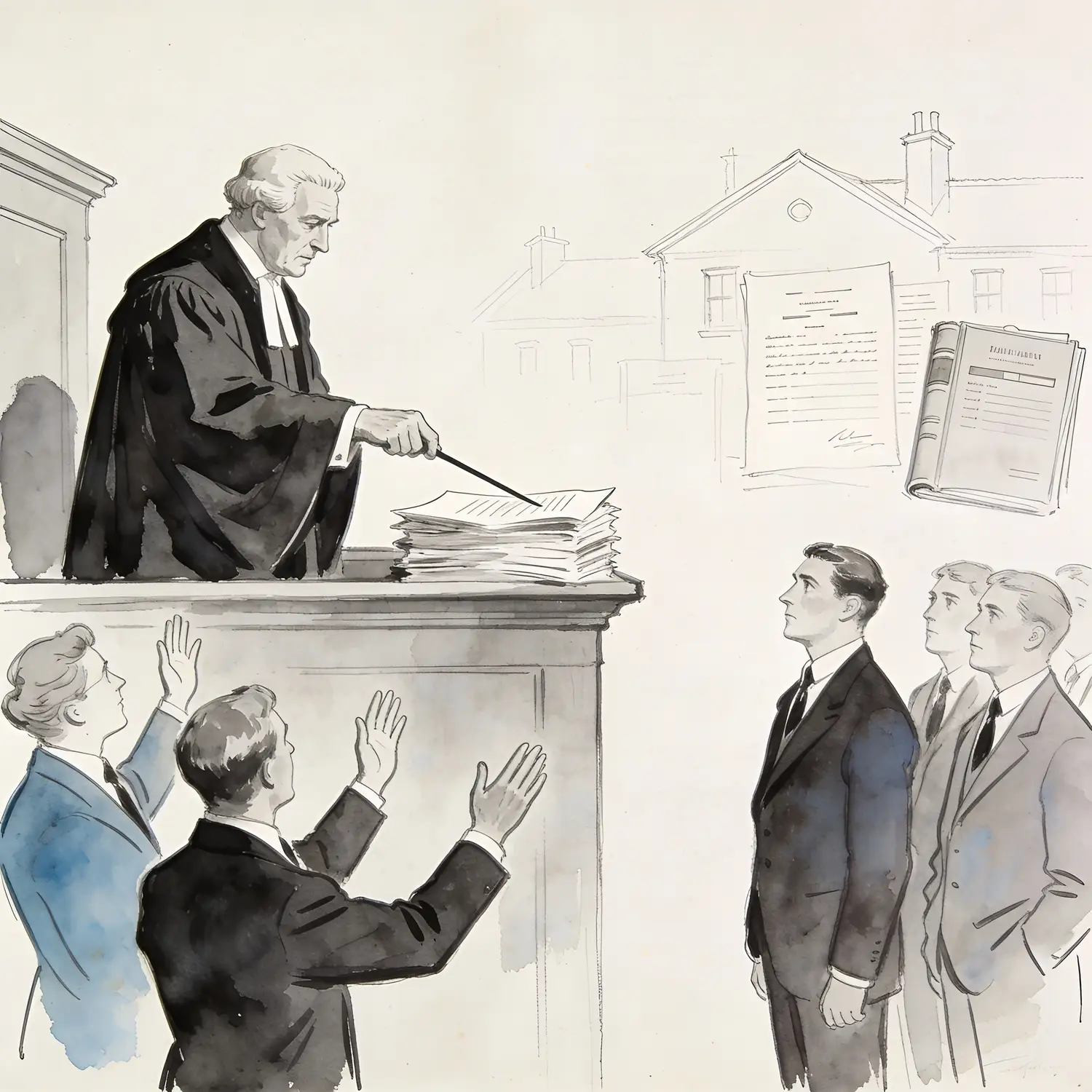
A High Court master in Northern Ireland has struck out three defamation actions brought by the firm Fisher and Fisher Solicitors against Tughans Solicitors, ruling that the claims had no realistic prospect of success and should not proceed to trial. The decision, delivered by Master Bell on 24 March 2026, also dismissed the actions on the grounds of inadequate pleading and abuse of process.
The three defamation actions arose from a conveyancing transaction in which Fisher and Fisher represented a property purchaser named Sandra Patterson, while Tughans acted for lender Assetz SME Capital Limited. The other defendants - Edward Page and Mark Reidy, both employees of broker Concept Financial Group LLP - sent emails to the client in May, September and October 2019 that the plaintiffs alleged contained defamatory statements originating from Tughans. The individual plaintiffs in the other two related actions were Meabh McArdle and Mark Kinkaid, both solicitors at Fisher and Fisher at the time of the transaction.
Tughans applied to have all three actions struck out under Order 18 Rule 19 of the Rules of the Court of Judicature and under section 8 of the Defamation Act 1996, which allows a court to dismiss defamation claims that have no realistic prospect of success. Tughans was represented by Mr Hopkins KC, instructed by DWF Solicitors. The plaintiffs were represented by Mr Lavery KC and Mrs Cleland, instructed by Fisher and Fisher.
Master Bell identified three independent grounds for dismissing the claims. On the question of privilege, the court found that any communications between Tughans and its client Assetz would be covered by either absolute or qualified privilege. If absolute privilege applied, the plaintiffs could not succeed at all. If qualified privilege applied, the plaintiffs were required to plead and prove express malice on the part of Tughans - something they had not done. The court noted that the plaintiffs' own pleadings attributed Tughans' motivation to justifying higher legal fees rather than to any desire to injure the plaintiffs. Master Bell found it difficult to perceive Tughans as having any motive to harm Fisher and Fisher, and described the suggestion that malice might emerge as either speculative or contradicted by the plaintiffs' own case.
On pleading, the court found that the plaintiffs had failed to identify the specific words they alleged were published by Tughans, the date of each publication, the individual within Tughans alleged to have made it, or whether the claim was in libel or slander. The court applied established authority requiring that the actual words complained of be pleaded with reasonable certainty, and found this had not been done. Master Bell noted that the only particularised publications were those originating from the third and fourth defendants, not from Tughans.
The court additionally found that the meaning the plaintiffs attributed to the emails would not be understood in the way alleged by a hypothetical reasonable reader, casting further doubt on the prospects of success at trial. Master Bell also ruled that even if the privilege and pleading issues had not arisen, the actions would have been dismissed as an abuse of process. Drawing on the principle that the court must consider whether the expenditure of court resources is proportionate to the benefit sought - described in the judgment using the phrase "the game is not worth the candle" - the court concluded that a dispute rooted in a disagreement over professional fees in a conveyancing transaction did not justify the resources a full defamation trial would require.
Master Bell noted that, while Northern Ireland has not introduced a statutory serious harm threshold of the kind that applies in England and Wales under the Defamation Act 2013, the overriding objective and relevant case law nonetheless require courts in this jurisdiction to decline to allow defamation actions to proceed where they do not merit the use of court resources. The question of costs was reserved, with the court indicating it would hear submissions from counsel at their convenience.