Irish-language pupils and Conradh na Gaeilge criticise petition of concern blocking Gaelscoileanna bill
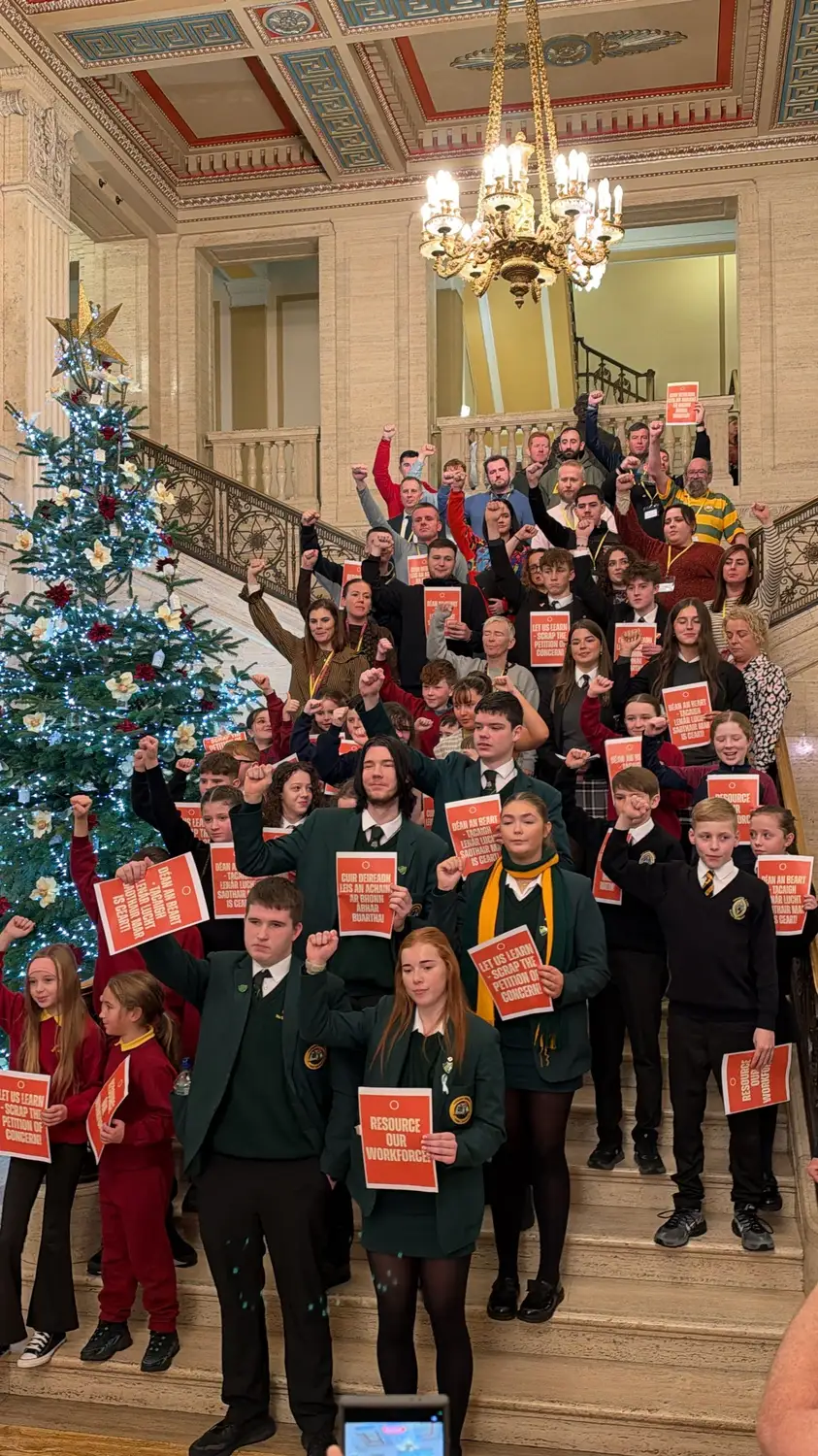
Irish-language pupils from schools across Northern Ireland and representatives of Conradh na Gaeilge spoke to the media at Stormont on Tuesday after a petition of concern was used to block a bill on Irish-medium education.
Pupils from the two Irish-medium secondary schools in the north, Coláiste Feirste and Gaelcholáiste Dhoire, were present, alongside children from Scoil An Droichid, Gaelscoil an Lonnáin, Bunscoil an tSléibhe Dhuibh, Gaelscoil Éanna and Bunscoil Bheanna Boirche.
Áine Nic an Mhanaigh, a pupil at Coláiste Feirste who said she would like to become a teacher, described the vote on the bill as scandalous. She said the school was pleased to have a special needs base but that it was not enough, and asked whether the DUP, UUP and TUV considered Irish-medium pupils to matter.
Críostor Ó Cuinneagáin, also a pupil at Coláiste Feirste, said the situation was not helping his ambition to become an accountant. He praised teachers who come in every day and do their best, and said there was no reason for Irish-medium education to be taken for granted.
Erin Nic Giolla Domhnaigh, a pupil at Gaelcholáiste Dhoire, said the school was founded in 2013 with 13 pupils and now has more than 350. She said the growth has brought needs including subject teachers, classroom assistants with high standards of Irish, and special educational provision through Irish. She asked why her school should have to suffer neglect.
Pádraig Ó Tiarnaigh, communications manager at Conradh na Gaeilge, said the decision was scandalous and that a mechanism introduced to protect minorities was being used by the DUP and UUP to push a minority community out. He said the Irish-language community would not accept the decision, would organise and would look towards the next election.
He said there was anger in the community but also confidence, and that Conradh na Gaeilge was certain the future of Irish-medium education would be secured. He referred to commitments made in 2020 and said the same old story was repeating itself.
Ó Tiarnaigh said unionist politics had dominated the Irish-language community and that the DUP did not understand equality, only dominance. He said those days were over and the community would not return to them.
He said the Good Friday Agreement promised decisive action and that the Department of Education has a statutory duty to act for these children. He said Irish-medium education is growing substantially and that the DUP cannot deny or stop that growth.
Conradh na Gaeilge president Ciarán Mac Giolla Bhéin said consultation on the bill had taken place within the Irish-language community and the Irish-medium sector. He said people opposed to the bill had an opportunity to debate it and propose amendments, but that a petition of concern designed to protect minorities had been used against one of the most marginalised minorities in the education sector.
Both men referred to the 2016 Líofa controversy, when then-communities minister Paul Givan cut £50,000 from the scheme. Mac Giolla Bhéin said comparisons had been drawn with Líofa and that the DUP had failed to learn lessons, noting that the community response to the 2016 cuts led to a new approach and Irish-language legislation.
Ó Tiarnaigh said Conradh na Gaeilge would go out to the community as before and would ask parties to sign up to commitments ahead of the election in May. He said the organisation wants equality through Irish-language standards from the commissioner and fair treatment for young people, support teachers and special needs teachers, and that these would be clear demands to every party.