Cross-border creative project launches for people with acquired brain injuries
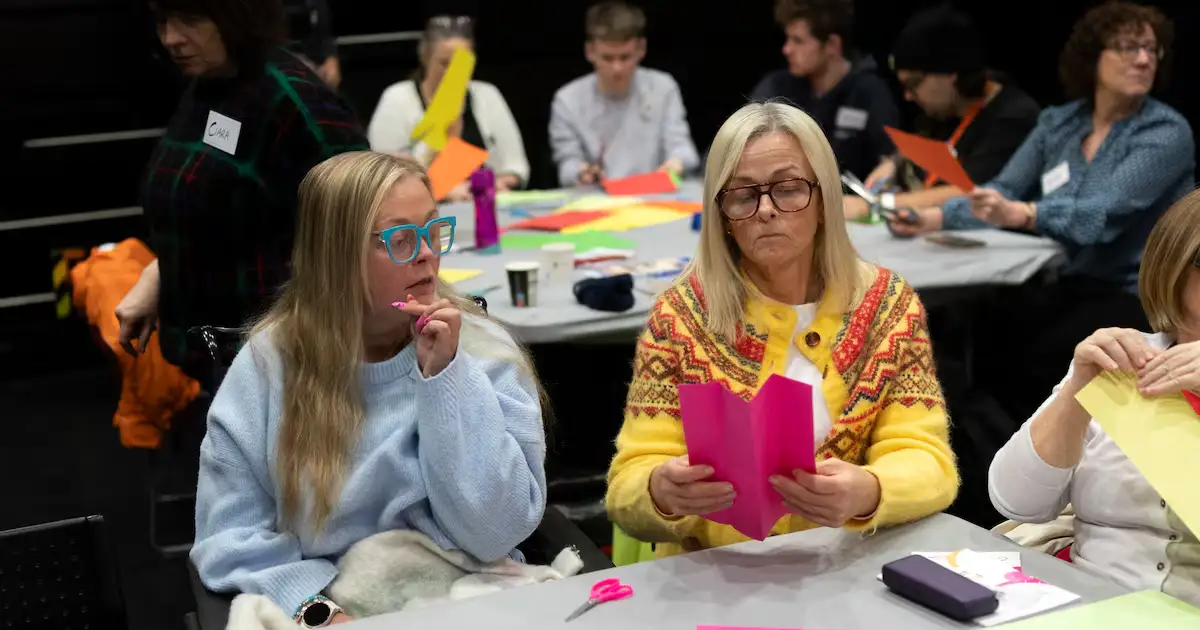
A three-year cross-border programme using creative arts to support people living with acquired brain injuries has held its inaugural two-day workshop. The project, Crafting ABI-ilty: Connecting Minds, has received a €250,000 grant and involves groups from Belfast and Dún Laoghaire.
The programme is a partnership between Brain Injury Matters in Northern Ireland and Acquired Brain Injury Ireland, a charity funded by the HSE to provide community neurorehabilitation. It also involves the National Rehabilitation Hospital in Dún Laoghaire and has been supported by the Shared Island cultural co-operation scheme and Dún Laoghaire-Rathdown County Council's Creative Ireland programme.
Artist Rachel Fitzpatrick, originally from Banbridge, Co Down, is the creative lead. She had a stroke ten years ago at age 35. Participants from both jurisdictions will attend separate fortnightly workshops and come together for two-day sessions a couple of times a year, alternating between Dublin and Belfast. The project will be evaluated by the Centre for Health Policy and Management at Trinity College Dublin's School of Medicine.
About 52 people a day in Ireland sustain a brain injury, with stroke a leading cause. An estimated 120,000 people live with disabilities as a result. Gráinne McGettrick, director of policy and research at Acquired Brain Injury Ireland, said the symptoms are largely invisible and that creative arts provide social, emotional and cultural benefits to people who have lost agency due to brain injury.
Kathryn Clarke, from east Belfast, is among participants. She had surgery for a benign brain tumour at age 20. Her mother, Gillian, said the family fought to bring her home after being told she had about three weeks to live; nine years later, she is able to walk with assistance and the tumour is gone. Clarke said she has not reached a state of acceptance about her condition.
Fitzpatrick said the after-effects of her own stroke temporarily affected her creativity and she lost confidence in making art. She said friends often stop visiting after a brain injury. Stormont and Imma are being considered as potential venues for end-of-project exhibitions.