Consultants and specialist doctors to strike on Monday as resident doctor walkout ends
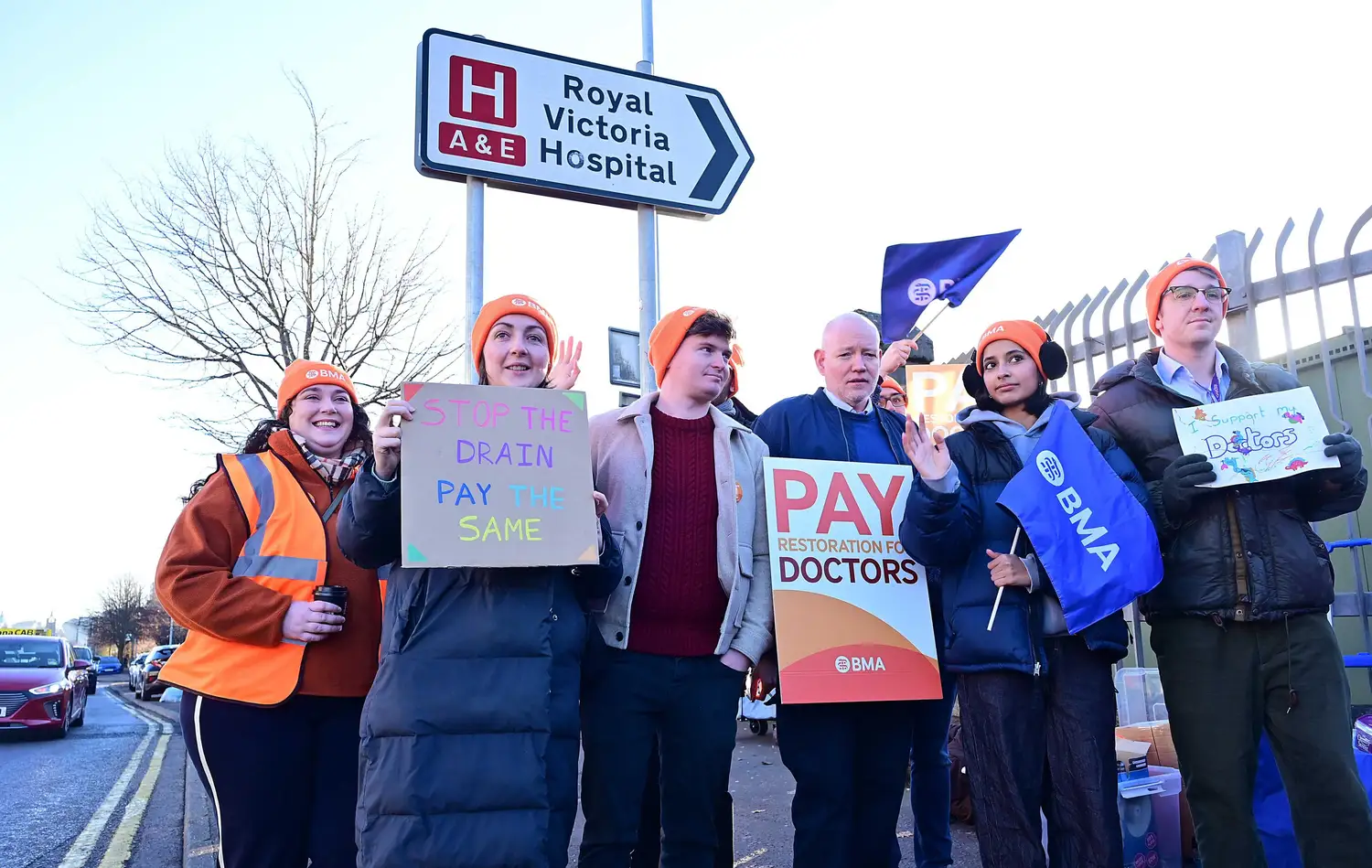
A 24-hour strike by consultants and specialist doctors in Northern Ireland will begin at 07:00 GMT on Monday, following the end of a separate 24-hour walkout by resident doctors at 07:00 GMT on Saturday.
The action is part of an ongoing pay dispute. The British Medical Association (BMA) has rejected a recommended 3.5% pay rise and is seeking to restore doctors' pay to 2008 levels in real terms.
Health Minister Robbie Butler said he had accepted the recommended rise but could not implement it without sufficient funding for his department. He said cumulative pay increases over the previous three years averaged 30% for resident doctors, 25% for specialty and associate specialist (SAS) doctors and 24% for consultants, and warned that exceeding 3.5% would have significant repercussions for the wider public sector workforce.
During the resident doctors' strike, which ran from Friday to Saturday morning, non-emergency services were affected and many planned outpatient appointments were cancelled. Urgent surgery and most GP services continued as normal because senior doctors remained on duty.
Monday's walkout will involve consultants and specialty, associate specialist and specialist grade (SAS) doctors. Routine hospital and elective services are expected to be cancelled, but emergency care will continue under Christmas Day cover arrangements.
The Western and South Eastern health trusts have asked patients with appointments on Monday to attend as planned unless their trust advises otherwise. The South Eastern Trust said the urgent care centre at Lagan Valley Hospital would be closed on Monday and that postponed appointments and procedures would be rescheduled as soon as possible.
Butler said more than 2,200 appointments were cancelled during similar strikes in June and warned the latest action would have real consequences for patients, waiting lists and service delivery. He said he had met the BMA to explain the financial pressures facing his department and intended to implement the recommended award as soon as possible.
Dr Steven Montgomery, chair of the BMA's Northern Ireland Resident Doctors Committee, said colleagues were facing burnout and emotional distress due to pressure at work. He said the union was not seeking the full restoration in one lump sum and wanted the minister to set out a plan to restore pay over time.
Dr Seamus Crumley, an anaesthetics registrar working in intensive care at the Ulster Hospital, said he had taken a pay cut when he moved from Scotland last year despite securing a more senior role. He said the medical workforce in Northern Ireland was vulnerable to losing doctors to elsewhere in the UK and to the Republic of Ireland.
Dr Oisín Fearon, a resident doctor in Belfast, said he had considered moving to Australia but family and local ties had kept him in Northern Ireland. He said he had begun registering to train in the Republic of Ireland and was keeping that option open.
Separately, the Northern Ireland Public Service Alliance (Nipsa) said 94% of its health and social care members backed strike action and 97% backed action short of a strike in a recent ballot. The union said it would consider its next steps and warned that coordinated industrial action could spread across the health service in the coming weeks.