Northern Ireland Assembly votes to advance conversion practices ban
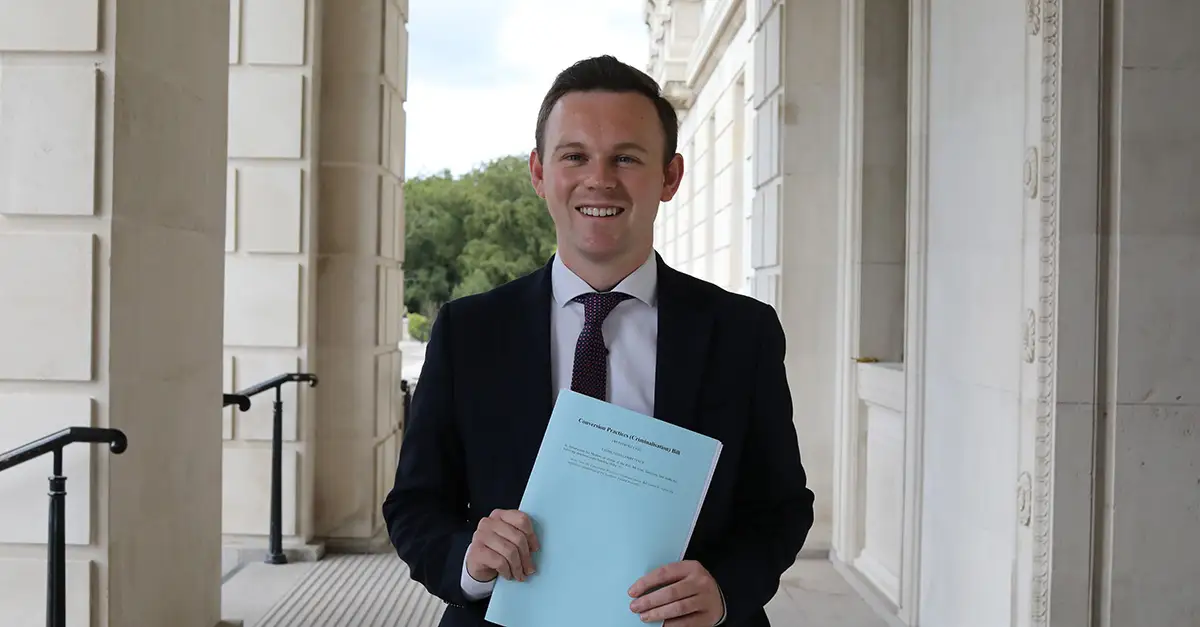
The Northern Ireland Assembly voted 46 to 29 on Monday to support the second stage of a bill that would criminalise conversion practices, sending it to committee for further scrutiny.
The Private Member’s Bill, introduced by Alliance Party deputy leader Eóin Tennyson, would make it an offence to try to change or suppress someone’s sexual orientation or gender identity, with a maximum penalty of two years in prison.
Tennyson described conversion practices as cruel and archaic, saying they have no place in society. He said the legislation is balanced, with safeguarding at its heart, and protects LGBT+ people from harm while upholding freedom of speech and religion.
Critics have raised concerns that the bill could criminalise ordinary parenting, prayer, pastoral care and preaching. James Kennedy of The Christian Institute said Christians are united in opposing genuinely abusive practices, but existing law is sufficient to tackle those. He said the bill would criminalise prayer and pastoral care in a range of scenarios and would outlaw aspects of ordinary loving parenting.
Kennedy said the bill uses broad terminology such as suppression and gender identity without defining them, making radical gender self-identification the backbone of the criminal law. He also said harm is defined as including mere distress, putting fraught conversations within the ambit of criminal sanction.
Criminal lawyer Dennis Kavanagh of the Gay Men’s Network said the bill is extremely poorly drafted and dangerous by the standards of criminal statutes. He said there is no definition of suppression, which triggers the offence, or of gender identity. Kavanagh said the low sentencing maximum of two years risks turning gay and lesbian people into second-class victims of criminal offences given that other criminal law offers more severe penalties.
Northern Ireland Humanists Coordinator Boyd Sleator welcomed the vote as a step towards ending practices that tell LGBT+ people they need to be fixed. He said evidence from Northern Ireland shows the harm these practices cause and why protection is urgently needed. Sleator said the organisation will continue to press for a comprehensive ban without loopholes that allow conversion practices to continue under the guise of prayer or pastoral support.
The bill now proceeds to committee stage for detailed scrutiny.