PSNI and PPS launch joint strategy to reduce delays in serious sexual offence cases
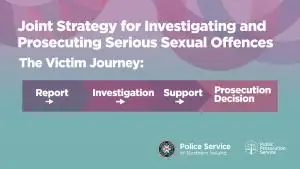
The Police Service of Northern Ireland and the Public Prosecution Service have jointly launched a five-year strategy to improve the investigation and prosecution of serious sexual offences. The strategy covers the period 2026-2031 and is the first of its kind developed by the two organisations.
The current median time from an initial police report to a prosecution decision in such cases is 224 days. The new plan sets a joint ambition to reduce that by 75 days, around one third. A detailed two-year action plan has been agreed, with implementation already underway.
Detective Chief Superintendent Zoe McKee, head of the PSNI's Public Protection Branch, said every report represents a person who has placed trust in the police at a difficult time. She acknowledged that the criminal justice process can add to trauma when cases become protracted and said victims expect thorough, compassionate and timely investigations.
PPS Senior Assistant Director and Victim Champion Marianne O'Kane said the decision to report a sexual offence takes courage and that victims should feel supported and informed. She said a key ambition is that no victim withdraws support for a case because of their experience of the process.
As part of the strategy, progress will be overseen by a new governance structure including a Sexual Violence and Abuse Strategic Oversight Board and an Independent Consultation Group, with annual public reporting.
Nicola Bannon, a 61-year-old woman abused by a teacher as a teenager, has spoken in support of the strategy. Her abuser, William Lloyd Lavery, was sentenced in April this year to two years in prison for six counts of indecent assault involving four girls aged around 13 between 1976 and 1978.
Bannon said silence is a prison and speaking up is freedom. She highlighted the use of Remote Evidence Centres, which allowed her to give pre-recorded evidence and be cross-examined by video link, avoiding direct visibility of her abuser in court. She said such measures are why victims stay in the system to get justice.